 1
Antiquity
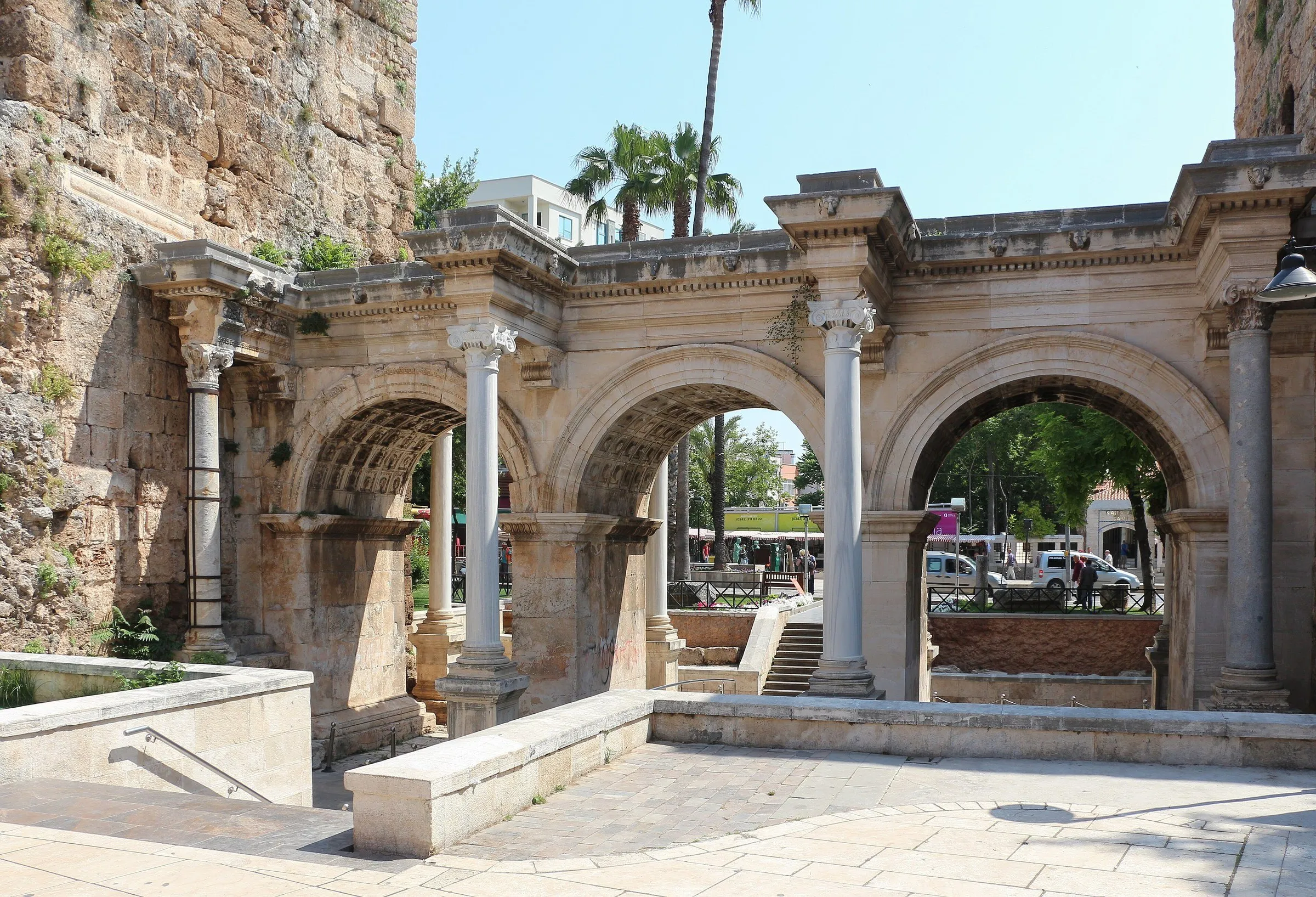
Hadrian's Gate
A three-passage Roman arch built to honor Emperor Hadrian's visit in 130. It spent centuries hidden inside the city wall and is now the doorway to Kaleiçi.
View details for Hadrian's Gate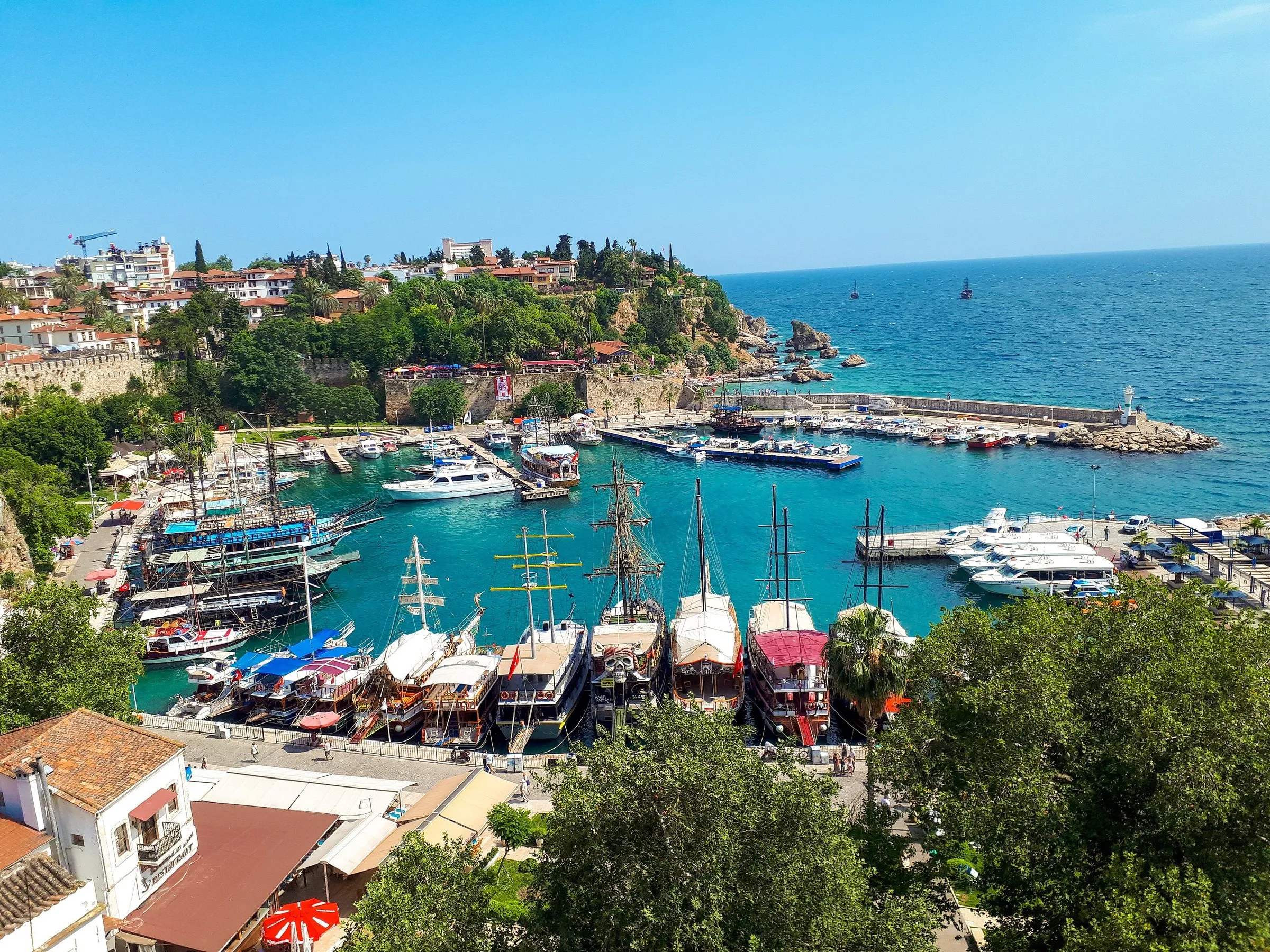
In Antalya, the city ends at a cliff and the Düden River doesn't bother looking for a beach: it plunges about 40 meters straight into the Mediterranean, in full view of anyone passing by boat below.
Antalya has a reputation as a hotel-wristband destination, and that reputation hides the best part: a city of more than 1 million people in its urban area, grown around a harbor used since antiquity. Attalos II, king of Pergamon, founded Attaleia in the 2nd century BC. Then came the Romans, including a visit from Emperor Hadrian in 130, the Byzantines, the Seljuks in 1207 and the Ottomans in 1391. Much of that sequence is stacked up inside the horseshoe-shaped walls of Kaleiçi, the old town that slopes down to the marina.
Outside the walls, Antalya opens out in both directions. To the west is Konyaaltı, a pebble beach with the Beydağları range behind it; to the east, Lara, sandy and ringed by resorts, near the waterfall that falls into the sea. In between, the center ends in cliffs, with small public beaches at the foot of the rocks. And the surrounding plain, ancient Pamphylia, holds Roman and Hellenistic ruins that justify renting a car: Perge, Aspendos and Side to the east, Termessos high in the mountains to the northwest.
Three days work well: one on foot inside the walls, another for the ruins on the plain to the east, and a third for Termessos and the beach. With a fourth day, Side makes it onto the map. In high summer, the heat sets the schedule: in July and August the average high is around 35 °C (95 °F), so ruins are a morning plan and saltwater is an afternoon plan. Spring and fall leave the order more open.
The bronze letters of the inscription honoring Hadrian were found at the foot of the gate and scattered across Europe: nine are in Vienna, two in Berlin and others in museums in England.
The Düden River vanishes into a sinkhole and reappears only 18 km further on, at a karst spring. Shortly after, it plunges from the top of the cliff straight into the sea.
From 1937 to 1972, the Antalya Museum operated inside the Yivli Minaret Mosque, before getting a building of its own.
In 2020, Antalya's airport handled more international passengers than both Istanbul airports, for the first time.
Antalya piyaz, a white bean salad with tahini sauce, has had geographical indication status since 2017.
1A three-passage Roman arch built to honor Emperor Hadrian's visit in 130. It spent centuries hidden inside the city wall and is now the doorway to Kaleiçi.
View details for Hadrian's Gate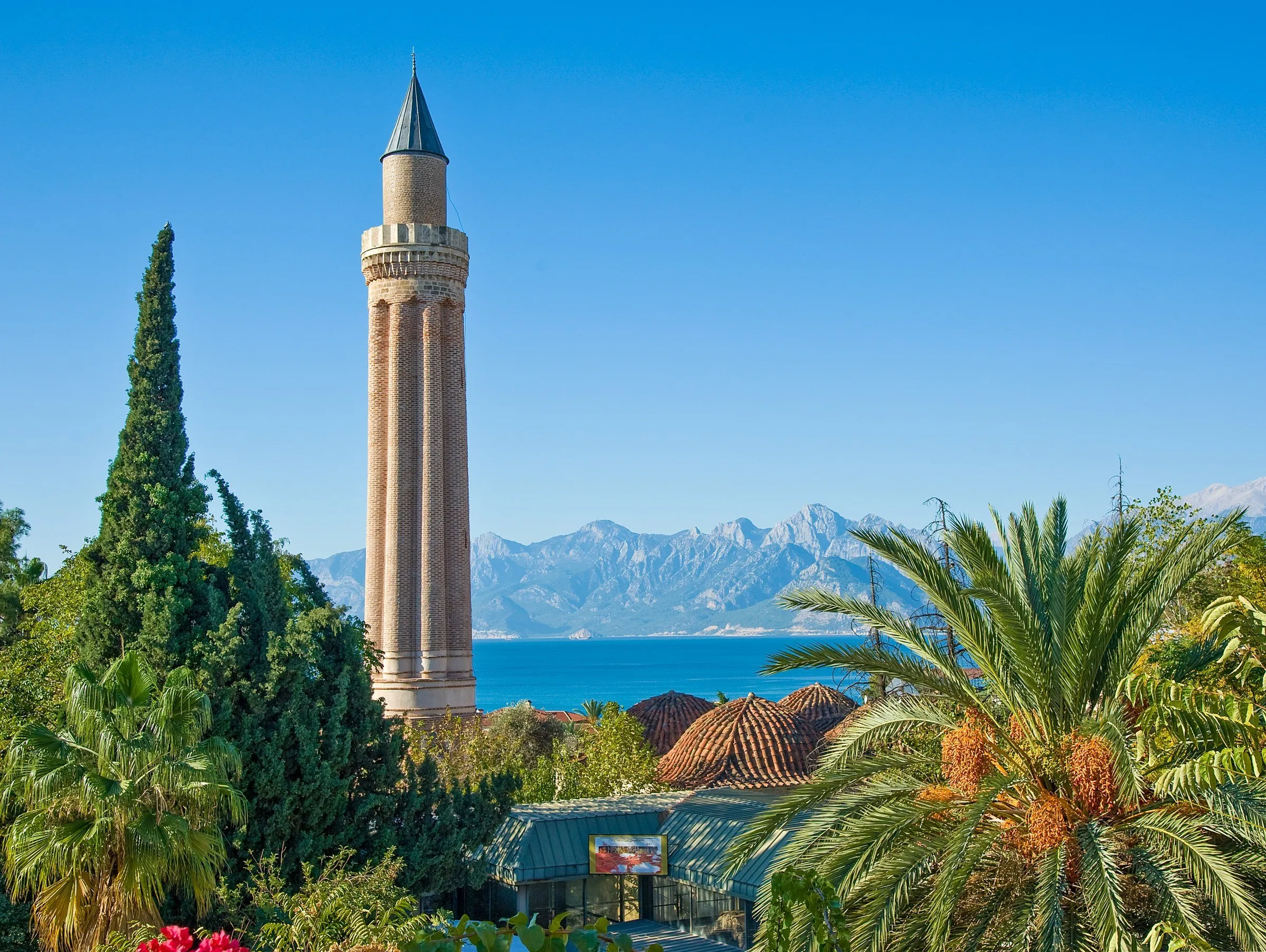 2
A red-brick Seljuk minaret with eight flutes and traces of turquoise tile, 38 meters tall and now a symbol of the city. The mosque next to it is still active.
View details for Yivli Minaret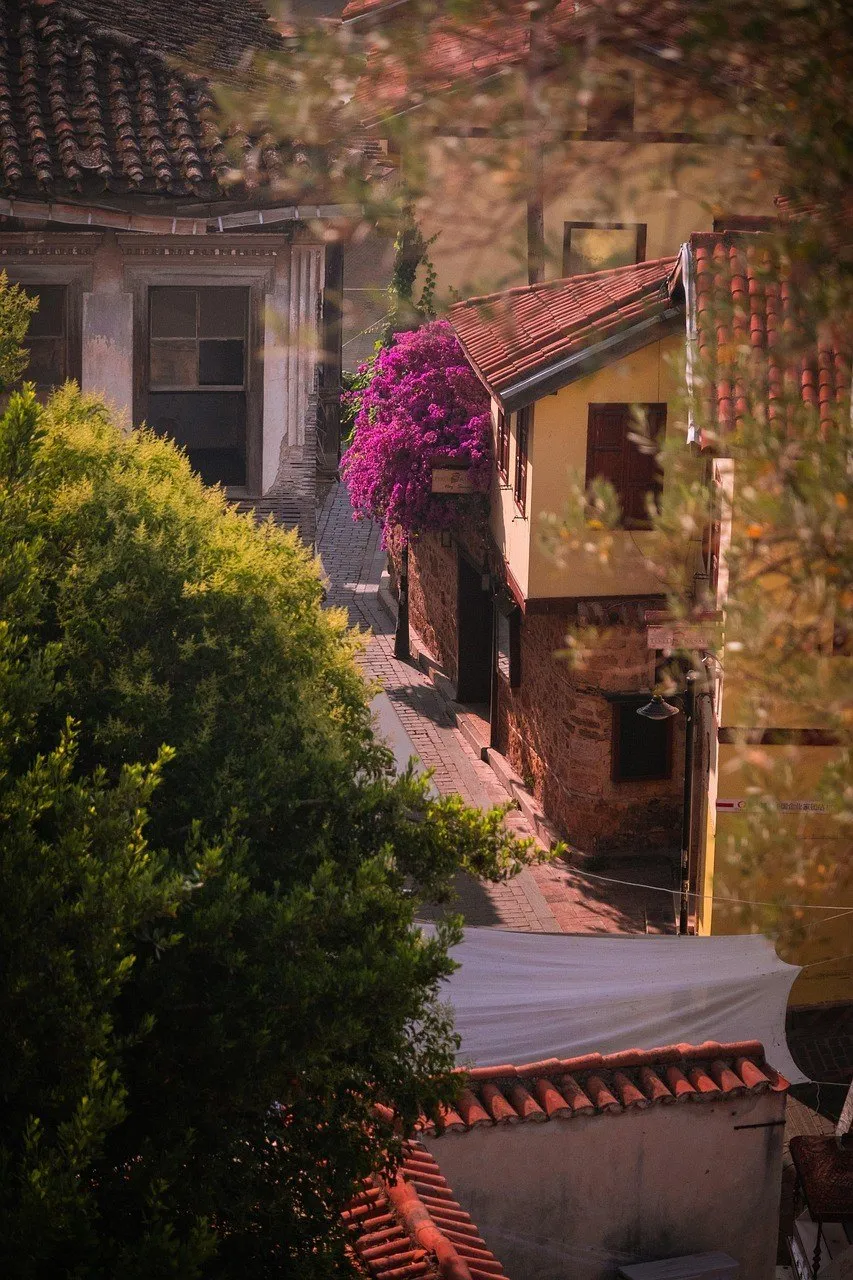 3
Antalya's walled old town: about 3,000 clay-roofed houses along stone lanes that slope down from the wall to the old harbor.
View details for Kaleiçi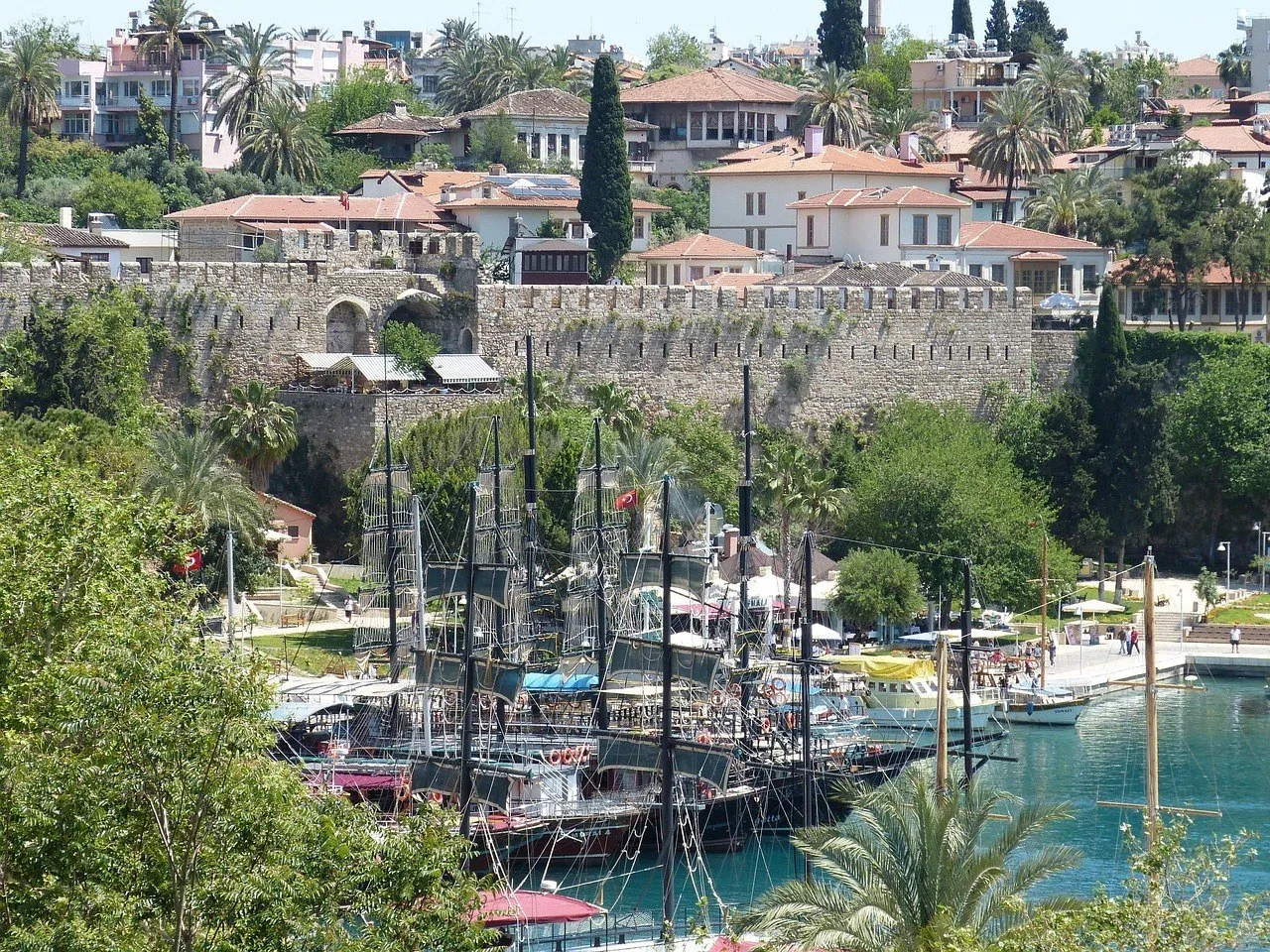 4
The Roman-era harbor, now a marina at the foot of the wall. Boats leave from here along the cliffs to the Düden waterfall, and the little Mermerli beach sits right against the rocks.
View details for Old Harbour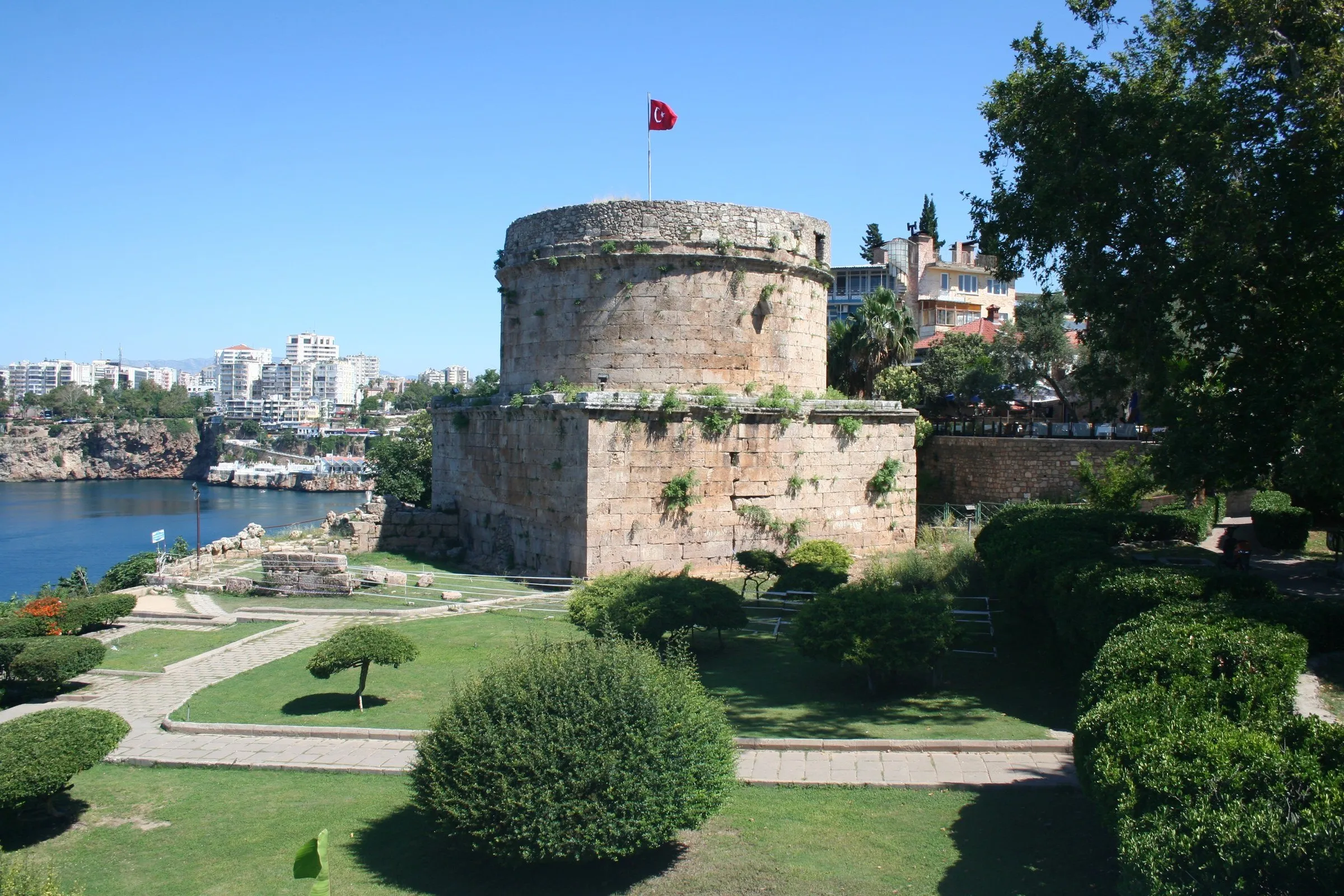 5
A 2nd-century tower, about 14 meters tall with a square base and round top, at the southwest corner of Kaleiçi's walls, next to a clifftop park for watching the end of the day.
View details for Karaalioğlu Park and Hıdırlık Tower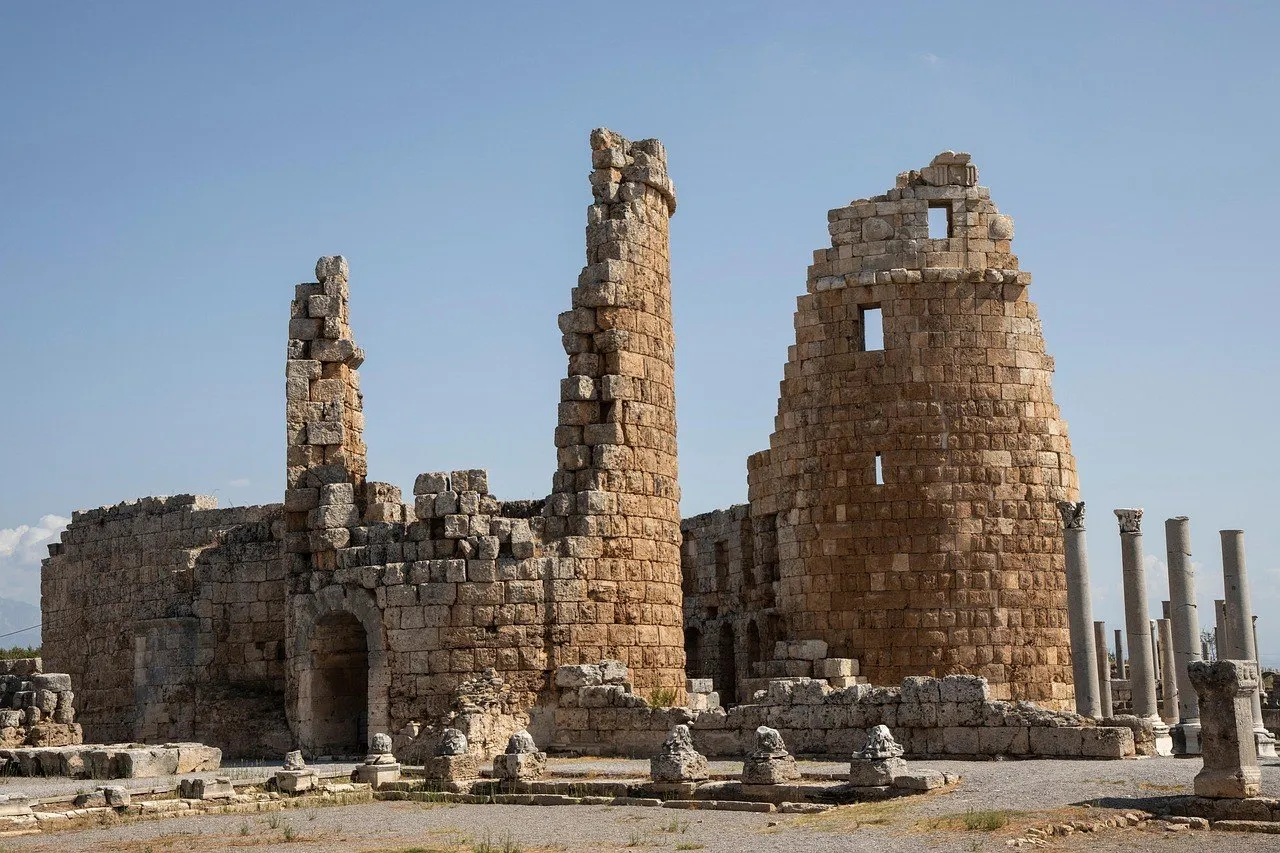 6
An ancient city about 15 km east of the center, outside Antalya itself, with a twin-towered gate, a channel that once ran down the middle of the main street and a horseshoe-shaped stadium.
View details for Perge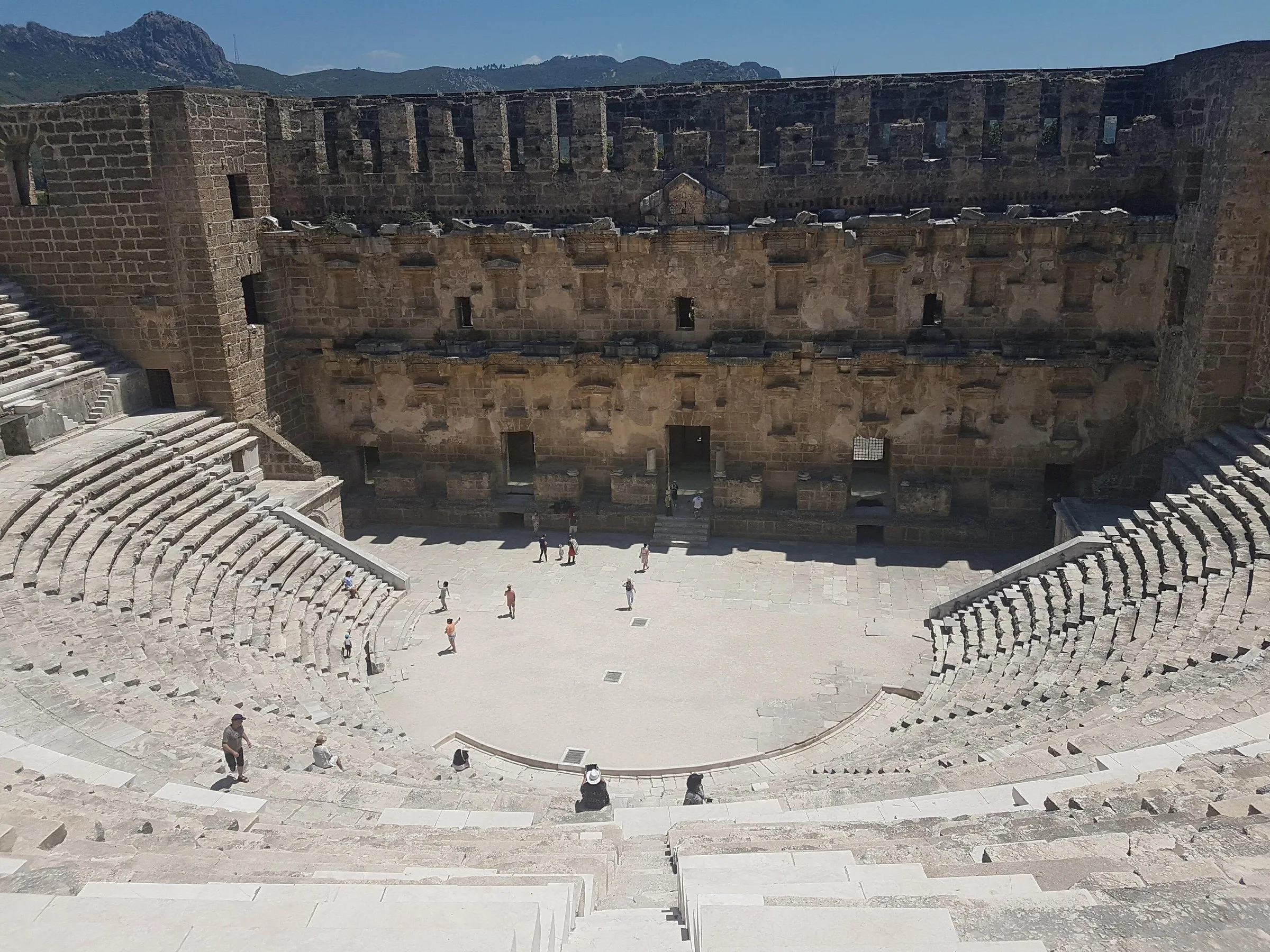 7
A 2nd-century Roman theater about 40 km east of Antalya, so well preserved that it still hosts an opera and ballet festival. The Seljuks used it as a caravanserai.
View details for Aspendos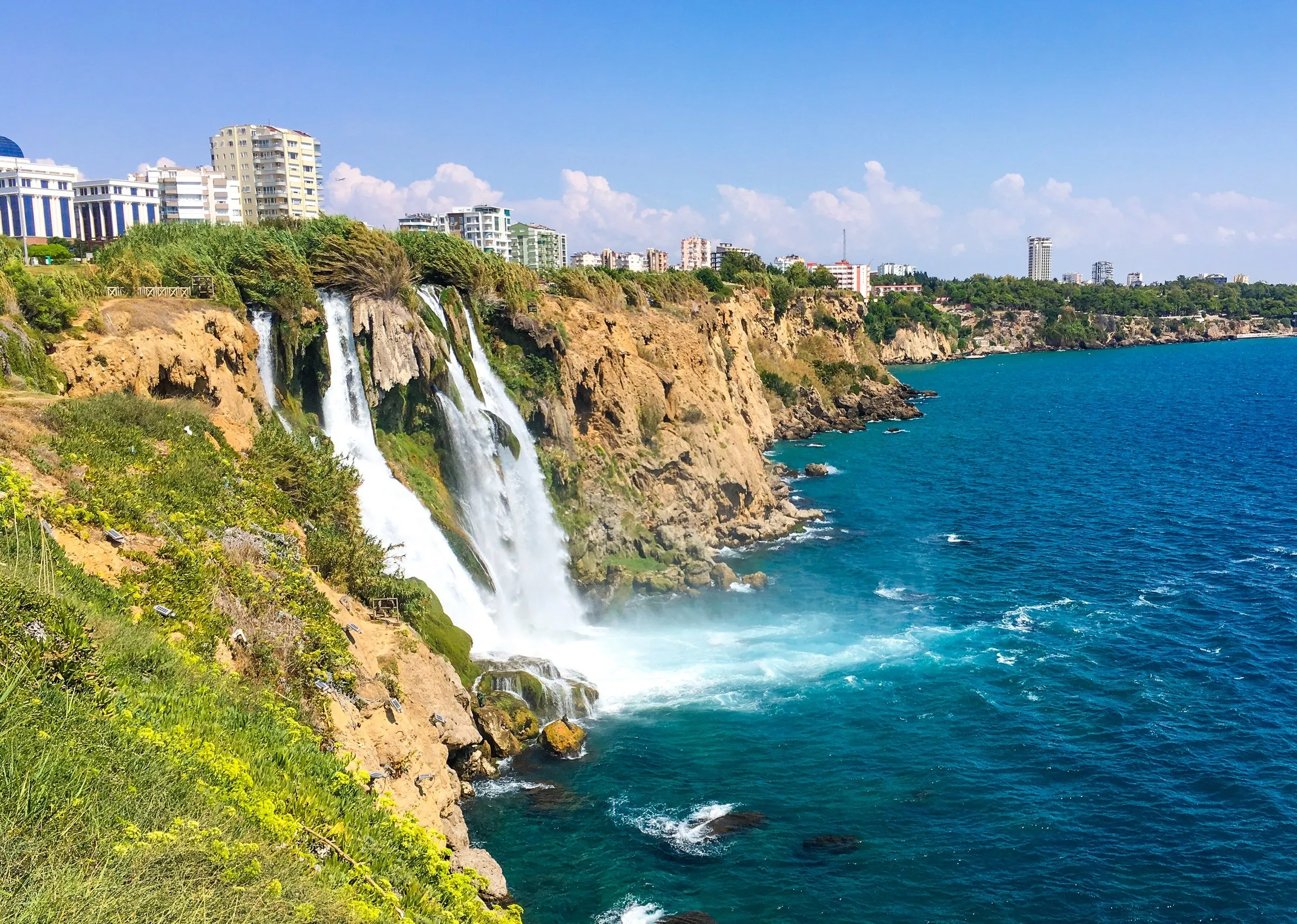 8
Two falls on the same river: the lower one drops 40 meters straight into the Mediterranean near Lara beach; the upper one, in Kepez, has a cave behind the curtain of water.
View details for Düden Waterfalls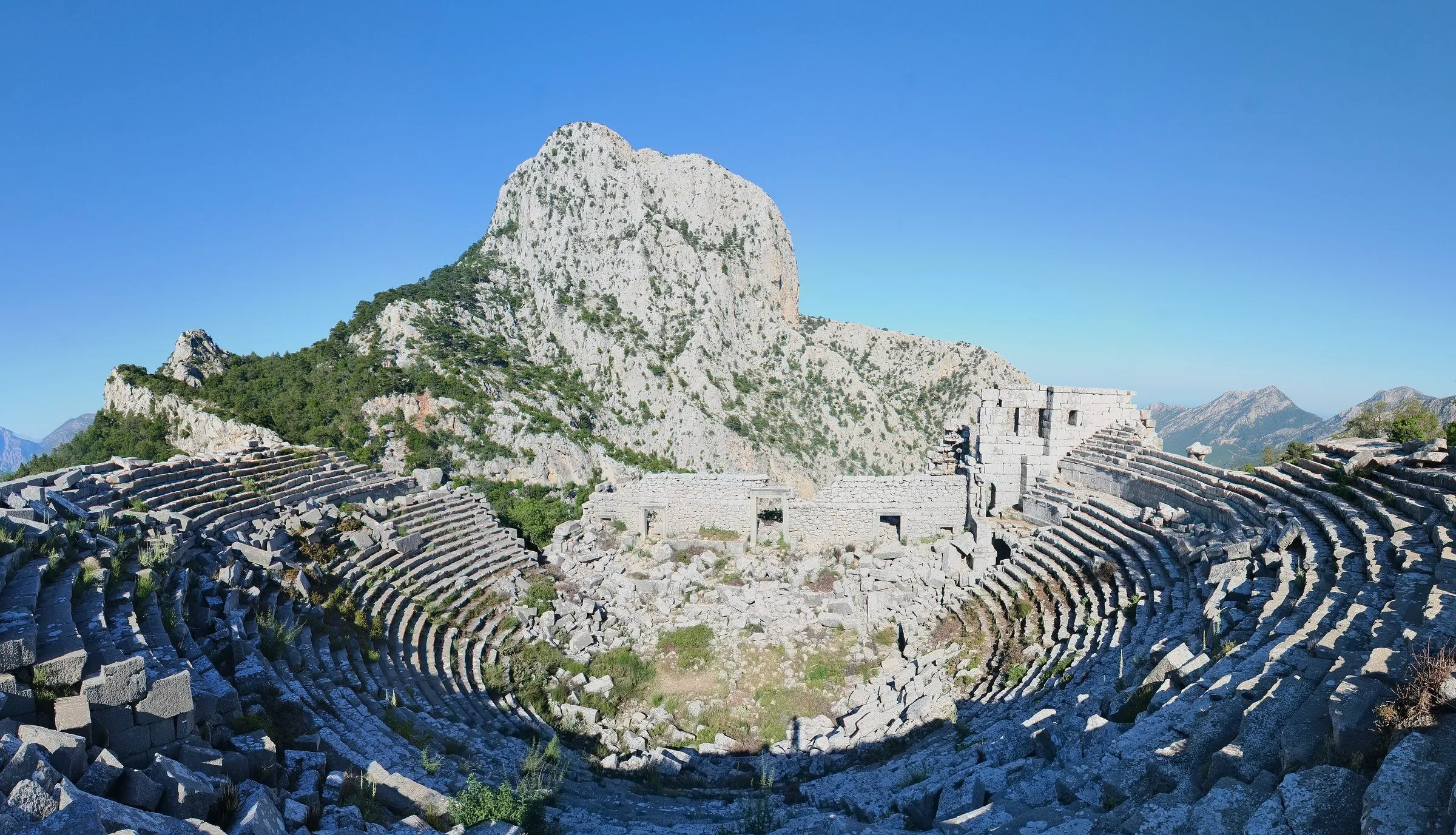 9
An ancient city at about 1,000 meters of altitude, some 30 km northwest of Antalya, which Alexander the Great besieged in 333 BC and ended up not attacking.
View details for Termessos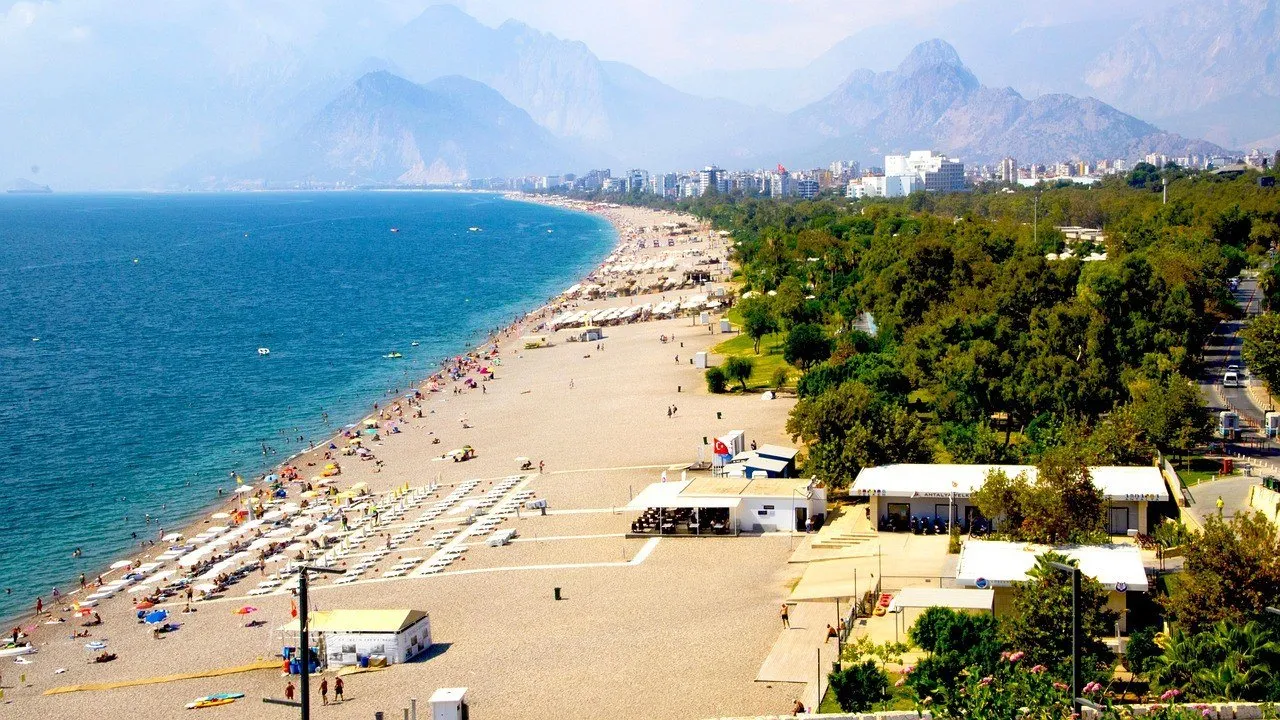 10
About 7 km of small pebbles west of the center, with clear water, a Blue Flag and the Beydağları range right behind. It has a public stretch and dozens of beaches with facilities.
View details for Konyaaltı Beach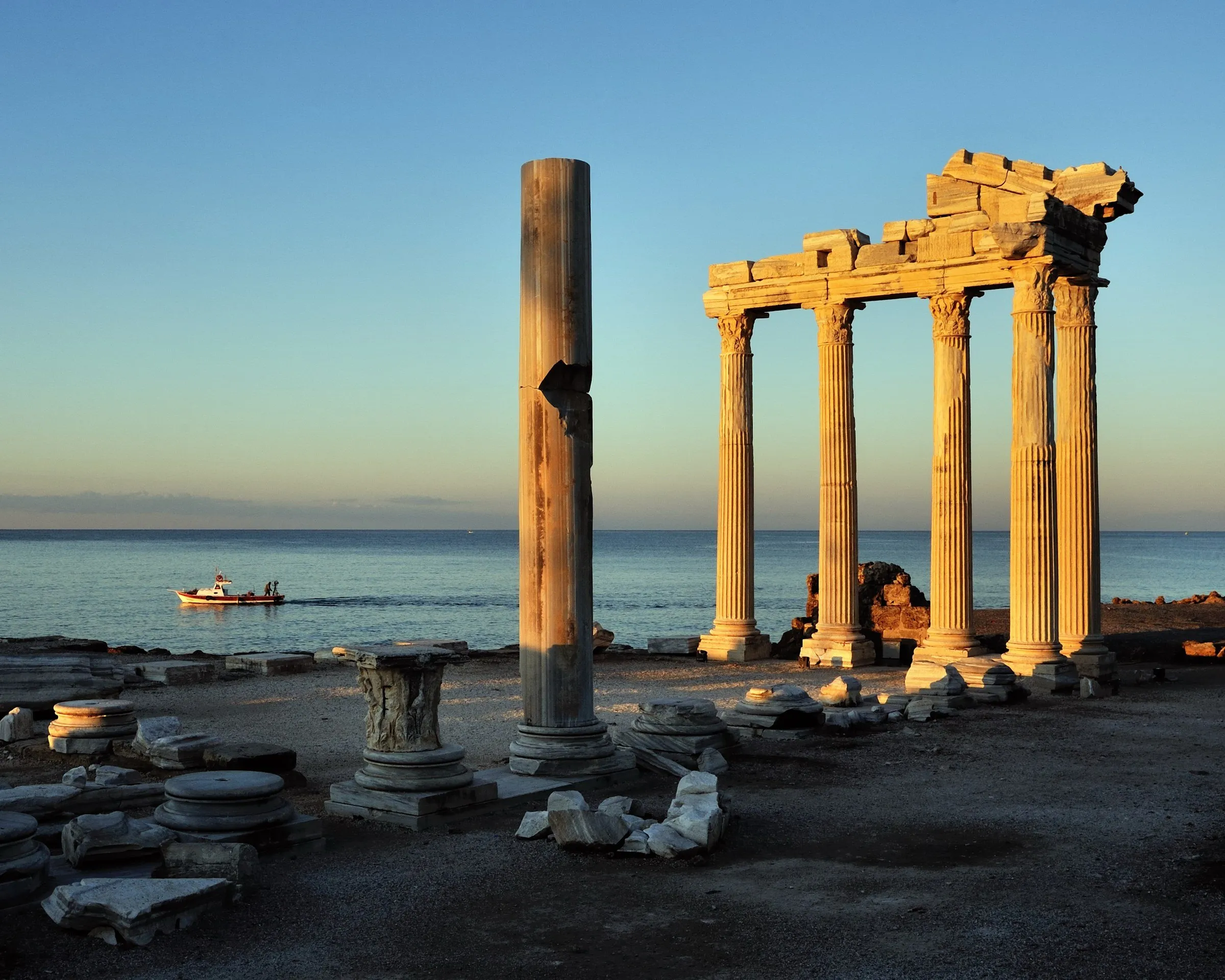 11
Ruins on a peninsula about 80 km east of Antalya, with the Temple of Apollo at the tip, a huge theater and a summer village built on top of the ancient city.
View details for Side1Hadrian visited Attaleia in the year 130, and the city answered with a white marble arch on granite pillars, with three passages and friezes of flowers and rosettes. The upper level, which probably held statues of the emperor and his family, is lost. What remains is about 8 meters tall and spent a long time built into the city wall, until it reappeared when the wall collapsed in the 1950s.
Look down as you walk through: under a transparent floor you can see the original Roman paving, with deep grooves left by generations of carts entering and leaving the city. Restored in 1959, the gate is still the most-used entrance to the old town, except that now the traffic is people holding ice cream cones.
2The minaret was probably commissioned during the reign of the Seljuk sultan Alaeddin Keykubad I, between 1220 and 1237, just a few years after the city passed to the Seljuks. The red-brick tower rises 38 meters on a square stone base, its shaft divided into eight flutes. The turquoise and dark blue tile fragments that still survive give an idea of how it once shone.
The mosque next to it, with six domes resting on twelve columns reused from older buildings, was rebuilt in 1373 and is still in use. Between prayers, visiting requires covered shoulders and knees, shoes off the carpet and a headscarf for women. Through a stretch of glass floor you can see ancient water channels found during the latest restoration.
3A horseshoe-shaped wall embraces the neighborhood, and each stretch of it was left by someone different: Hellenistic Greeks, Romans, Byzantines, Seljuks and Ottomans. Inside survive about 3,000 clay-roofed houses, many turned into small guesthouses, cafés and restaurants, along with museums and old madrasas.
The best way to explore Kaleiçi is to give up on the map. The lanes slope toward the sea, so any wrong turn ends up in the right place: the harbor. Along the way you pass the Yivli, Hadrian's Gate way up at the top and, near the southern edge, the Hıdırlık Tower. The walk back, though, is uphill.
4The harbor of ancient Attaleia is still in the same place, in a sheltered bay at the foot of Kaleiçi. Cargo ships have given way to yachts and tour boats lined up along the quay, and anyone coming down the old town's lanes reaches the water directly, without crossing a single avenue.
The most popular plan is to take a boat along the cliff-lined coast to the Lower Düden Waterfall, which drops straight into the sea. The short trip takes about 2 hours and, according to those who do it, runs year-round when the weather allows; longer ones include swimming stops. For a swim without a boat, Mermerli beach is right by the marina.
5The Hıdırlık Tower occupies the southwest corner of Kaleiçi's walls, already inside the park. Built in the 2nd century, it is about 14 meters tall and has a shape that looks designed by two architects who never spoke to each other: a square block below, a cylinder above. The result is one of the easiest silhouettes to recognize in the old town.
Next to it, Karaalioğlu Park follows the edge of the cliffs and is the easiest place in the old town to watch the sun go down over the bay, with the Beydağları range cut out against the sky across the water. The tower, lit from the side by the low sun, does the rest of the photo.
6Perge is in the Aksu district, about 15 km east of the center and outside the city. The wall dates from the 3rd century BC, and the south gate keeps two three-story towers. In the early 2nd century, Plancia Magna, a priestess of Artemis and the city's greatest benefactor, turned this entrance into a monumental complex, and her name is still tied to the ruins.
A water channel with a series of small cascades ran down the main street, and you can follow its course to the end. The horseshoe-shaped stadium and the theater, which held about 12,000 people, sit outside the walls. According to the Acts of the Apostles, Paul passed through here on his journeys.
7Outside the city, in the Serik district, some 40 to 45 km east of the center, the theater of Aspendos was designed in the 2nd century by the architect Zenon, who was born right there. The seating area is about 96 meters across and has room for something like 7,000 people. Centuries later, the Seljuks repaired the building, used it as a caravanserai and, in the 13th century, turned the stage into a palace.
And the audience filled it again. Since 1994, the State Opera and Ballet has held an annual festival there that draws about 10,000 spectators, well over the number of seats Zenon planned. Set aside some time for the 19-km Roman aqueduct, whose final stretch has a well-preserved inverted siphon.
8Lower Düden, in the Lara neighborhood about 8 km from the center, is the most photographed: the river falls roughly 40 meters from the clifftop straight into the sea, and the surrounding park has viewpoints at the edge of the cliff. A short walk along the coast leads to Lara beach, sandy and lined with resorts, the area of the city's big hotels.
Upper Düden is in the Kepez district, about 12 km northeast of the center, in a fenced park with an entrance fee. Here the water resurfaces after running hidden underground and falls among the trees. A damp, slippery cave leads behind the fall, and the noise inside drowns out any conversation.
9Termessos lies outside the city, about 30 km northwest of the center, inside Güllük Dağı-Termessos National Park, on a platform at about 1,000 meters of altitude on the mountainside. Its inhabitants were called the Solymi, a people mentioned by Homer in the Iliad. Alexander the Great besieged the city in 333 BC, sized up the climb and moved north without attacking.
A steep road climbs from the main highway, and the rest is done on foot, among fallen walls and blocks of stone. The prize is the theater, Hellenistic and remodeled by the Romans, for 4,000 to 5,000 spectators, leaning out over the Pamphylian plain. Across the slope are scattered necropoleis with tombs cut into the rock.
10Konyaaltı is a pebble beach, and that has advantages: the water stays clear and your towel goes back to the hotel without sand. The municipality cites about 7 km of shoreline covered mostly in small pebbles, with a few strips of fine sand, and the beach holds Blue Flag certification for water quality.
What sets Konyaaltı apart is the scenery: the Beydağları mountains rise right behind the sea, and swimming while looking at the range changes your idea of a beach. The shoreline has a public stretch and more than 30 beaches run by companies. Lifeguards patrol the pebble strip, and behind it lies a park with cafés and hotels.
11Side occupies a peninsula about 1 km long and 400 meters wide, in the municipality of Manavgat, some 80 km east of Antalya. It was one of the great ports of Pamphylia, and Athena, the city's protector, appeared on its coins. In the early 20th century, immigrants from Crete founded the village of Selimiye on top of the ruins, and today's daily life happens among them.
The 2nd-century theater had room for somewhere between 15,000 and 20,000 people, according to estimates, and is being restored. An old Roman bath has become a museum, with statues and sarcophagi. At the tip of the peninsula, the columns of the Temple of Apollo face the sea.
The airport (AYT) is about 13 km northeast of the center and is linked to the city by the AntRay, the light rail, which also reaches Aksu, the district of Perge. A little over 39 million passengers passed through it in 2025, a big-city airport number.
At the Yivli, shoulders and knees must be covered for everyone and hair covered for women; shoes come off before the carpet. Visits pause for the five daily prayers, whose times change through the year. Speak quietly, don't walk in front of people praying and don't photograph people at prayer.
In July and August, average highs are around 35 °C (95 °F) and it hardly rains. Do the ruins right at opening, leave the afternoon for the sea and carry water everywhere. In winter, rain is frequent, especially in December.
Perge is near the AntRay, but Aspendos, Termessos and Side are far from the city lines. A rental car, an arranged taxi or a tour are usually the simplest options; check the available buses beforehand, because routes and schedules change.
The Antalya Museum, which holds the statues from Perge, closed in July 2025 for the demolition of the building and the construction of a new one. Before planning a visit, check whether it has reopened.
The Turkish lira fluctuates a lot, and the prices of tickets, boats and taxis change from one season to the next. That is why this guide gives no prices: check close to your date and agree on the price of tours before boarding.
Antalya's cooking revolves around tahini, the sesame paste: it goes into the beans, the sauce and the meze. The classic lunch is köfte on a skewer with a side of piyaz, a pair that locals almost always order together. From the Taurus Mountains inland comes the kid-goat tandır, slow-cooked for hours, a legacy of the Yörük nomads. And the typical dessert is an ice cream deliberately burned at the bottom of the pan.
A white bean salad with tahini sauce, lemon, vinegar and garlic, topped with onion, tomato, boiled egg and parsley.
Long meatballs made only of ground meat and salt, toasted on a metal skewer and served on bread with parsley, tomato or grilled vegetables.
A creamy tahini meze with lemon juice, garlic, cumin and red pepper powder, for dipping bread or serving with meats.
The city's burnt ice cream: the base is deliberately toasted during preparation, which gives the ice cream a smoky flavor, a specialty that guides say exists only in Antalya.
We use cookies and similar technologies, such as Google Analytics, in accordance with our Privacy Policy and, by continuing to browse, you agree to these terms. You can decline at any time in the policy.