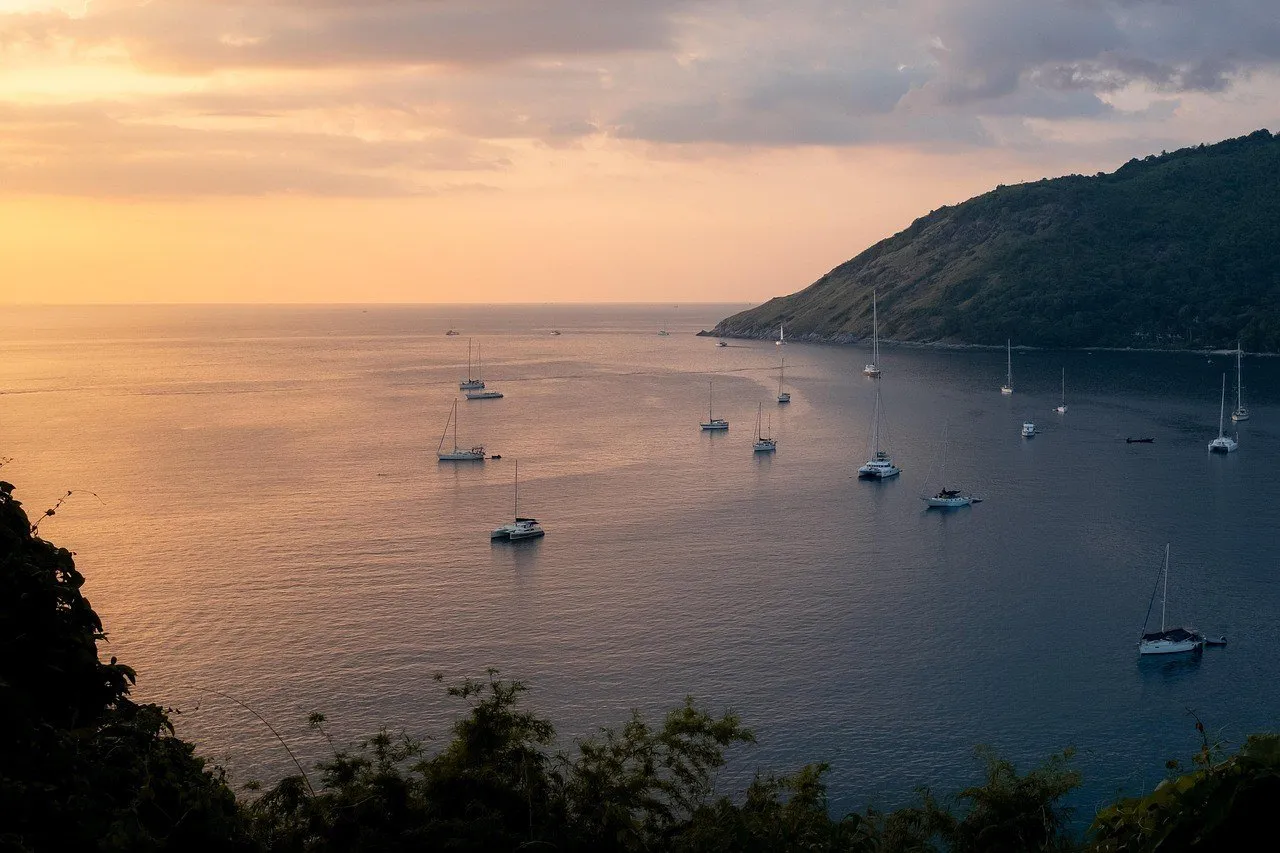
Aerial view of a Phuket bay at sunset, with anchored sailboats and a forested hill on the right.

Phuket

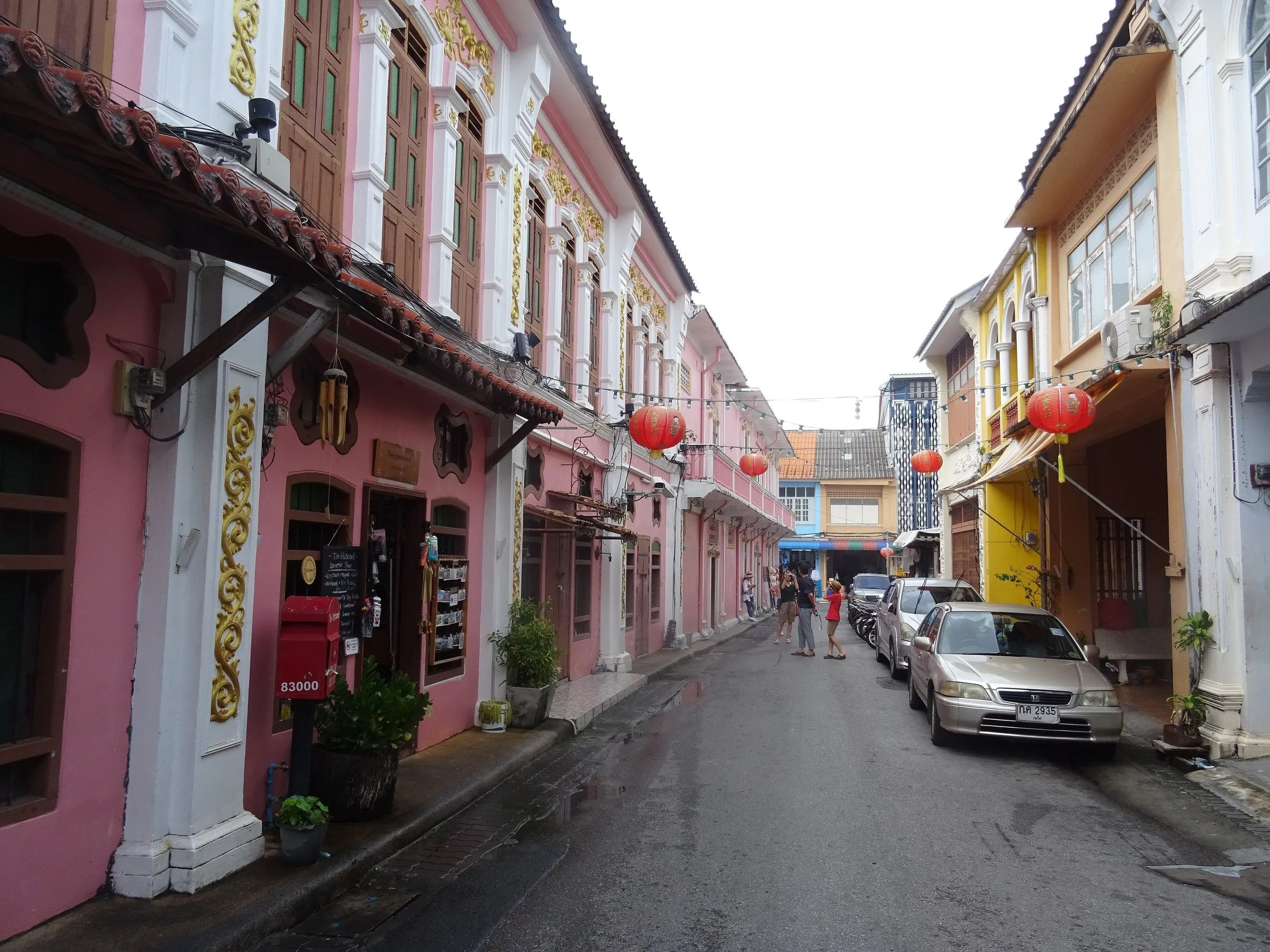
In Phuket, the first great scene may be nowhere near the sand: on Soi Romanee, the colorful shophouses where Chinese tin miners once spent their wages are now cafés for travelers escaping the sun.

Best time to go
December to MarchDry seasonRain from April to November
Suggested stay
4 to 5 days
Airport
Phuket International (HKT)
Currency
Thai baht (฿)
Language
Thai
Time zone
UTC+7

Overview

Before booking a hotel, it helps to know that Phuket is not a single city. It is an island, the largest in Thailand, and also an entire province, with three districts (Mueang Phuket, Kathu and Thalang) and almost 50 km from north to south. The name comes from the Malay word bukit, meaning hill, and it makes sense as soon as the road starts climbing between one beach and the next. In the north, the Sarasin Bridge links the island to the mainland.

Phuket's wealth came from tin, mined since the 16th century, and many residents of Chinese origin descend from the miners who arrived in the 19th century. That history still stands in Phuket Town, the provincial capital, in the Sino-Portuguese shophouses of the Old Town. The west coast holds the beaches, from Patong, the most popular and developed, to Karon, Kata and Kata Noi. The south is home to Nai Harn, Promthep Cape, Wat Chalong and the Big Buddha.

The most popular boat trips leave from Phuket but take place outside it: Phang Nga Bay belongs to the neighboring province of the same name, and the Phi Phi Islands are in Krabi. Set aside a full day for each. On the island itself, distances are deceptive: Promthep Cape is about 18 km from Phuket Town and 46 km from the airport. Between one area and another, you get around by car, taxi, ride-hailing apps like Grab and Bolt, or local bus.
Did you know?

  1. Before it became Phuket, the island was called Thalang, a word of Malay origin meaning cape, and it appeared on Western nautical charts as Junk Ceylon.

  2. In 1785, during a Burmese siege of Thalang, Thao Thep Kasattri and Thao Si Sunthon dressed the soldiers' wives as fighters to make the defense look larger. The siege ended on March 13, and the two women were honored with a monument in Thalang District.

  3. In 2015, Phuket joined the UNESCO Creative Cities Network in the field of gastronomy.

  4. The Vegetarian Festival begins on the first day of the ninth Chinese lunar month, usually between late September and early October, and the Jui Tui Shrine in Phuket Town is one of the main starting points for the processions.

Things to see in Phuket

11 attractions
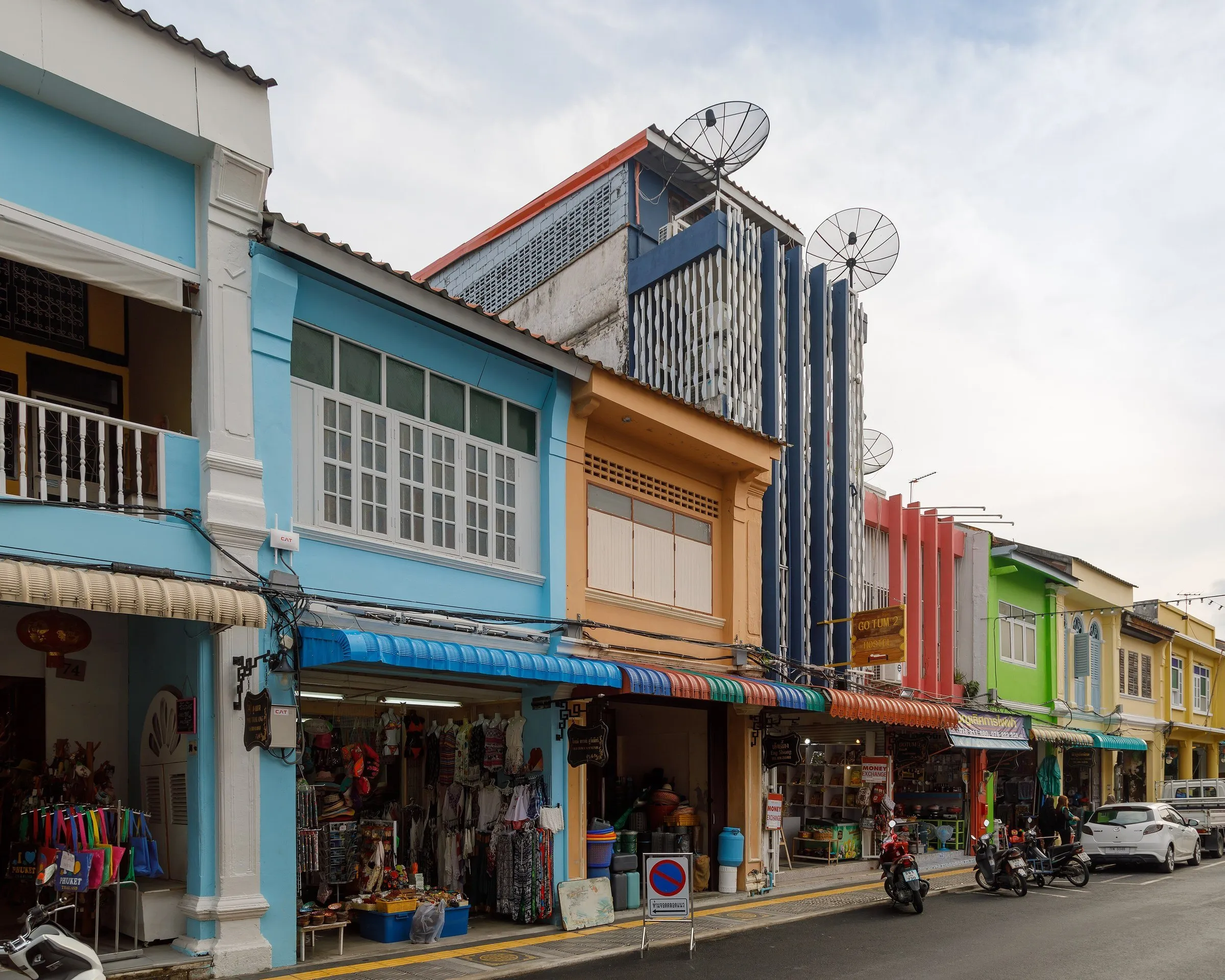
Thalang Road in Phuket's old town, with colorful two-story shophouses, shops on the ground floor and parked motorbikes.1
Neighborhoods

Thalang Road and the Sunday Market

The best-known street in the Old Town, lined with tin-era Sino-Portuguese shophouses turned cafés and shops, which close to cars and become a market on Sunday evenings.

Suggested time:2 to 3 hoursArea:Phuket Town (Old Town)
View details for Thalang Road and the Sunday Market
Soi Romanee lane in Phuket Town, with pink Sino-Portuguese shophouses and red lanterns hanging overhead.2
Neighborhoods

Soi Romanee

A short, colorful side street off Thalang Road, considered the most photographed street in the old center, once the entertainment quarter of the tin miners and now full of cafés and guesthouses.

Suggested time:30 min to 1 hourArea:Phuket Town (Old Town)
View details for Soi Romanee
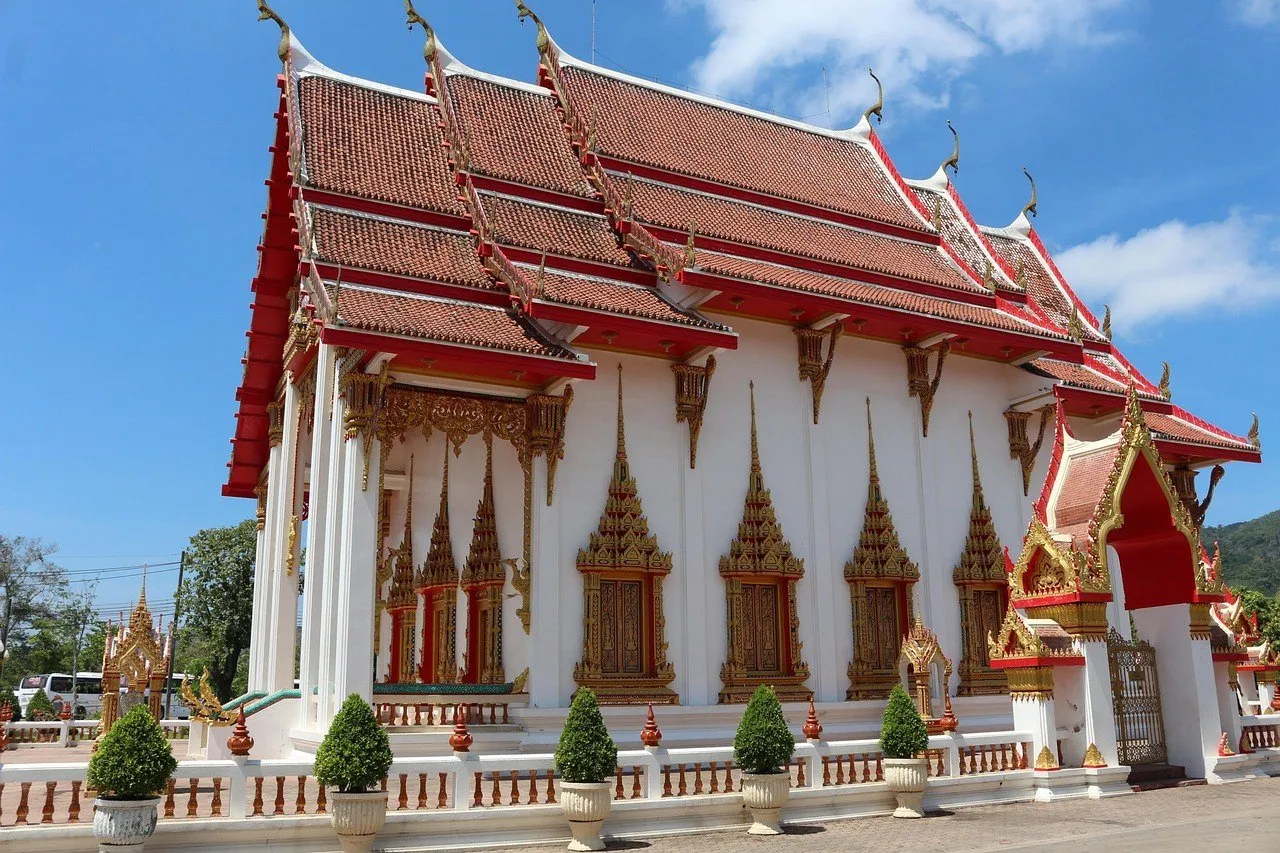
Main hall of Wat Chalong temple in Phuket, with white walls, a tiered red roof and blue sky behind.3
Temples

Wat Chalong

A temple dedicated to the monk Luang Pho Chaem, who sheltered refugees in 1876, with a 60-meter golden chedi that holds a fragment of a Buddha bone on its top floor.

Suggested time:1 to 1.5 hoursArea:Chalong (south)
View details for Wat Chalong
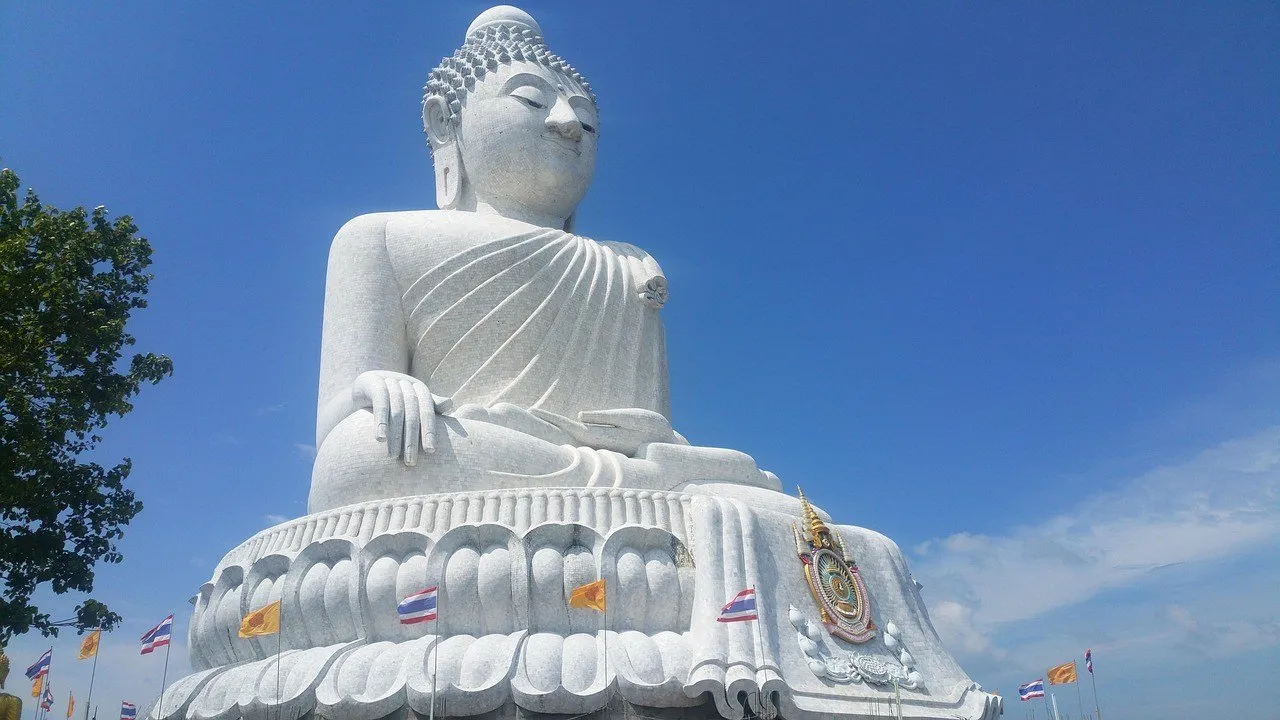
Seated white marble Big Buddha of Phuket on a lotus-flower base with bunting, against a blue sky.4
Temples

Big Buddha

A 45-meter seated Buddha clad in white Burmese marble, on top of Nakkerd Hill, facing Chalong Bay with Kata and Kata Noi on the other side.

Suggested time:1 hourArea:Nakkerd Hill (south)
View details for Big Buddha
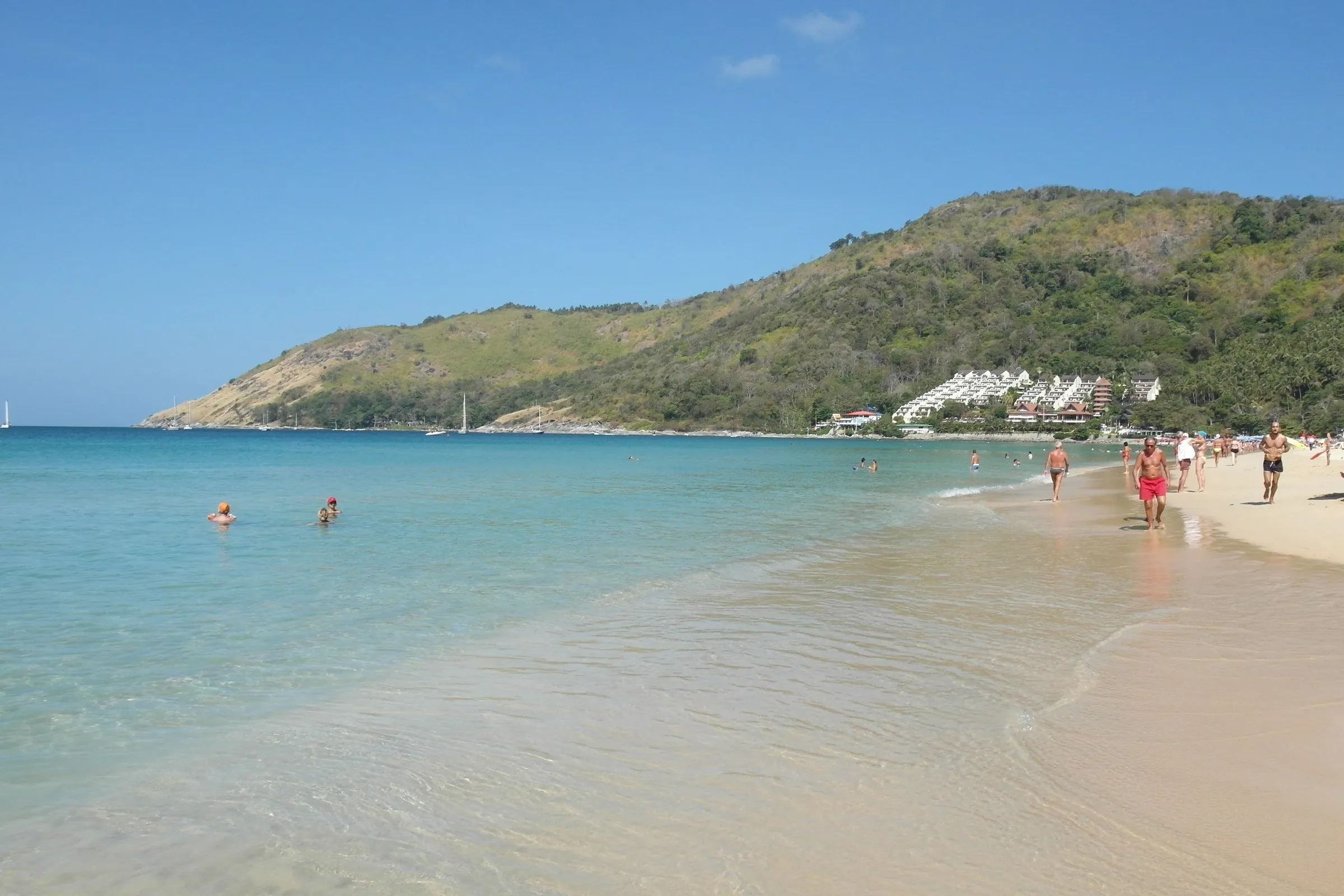
Nai Harn Beach in Phuket, with pale sand and turquoise water on the left, swimmers in the distance and a green hill behind.5
Beaches

Nai Harn Beach

Soft white sand between green hills in the south of the island, in a sheltered bay where sailboats anchor, with a lake behind it and a calmer pace than the west coast.

Suggested time:Half a dayArea:South
View details for Nai Harn Beach
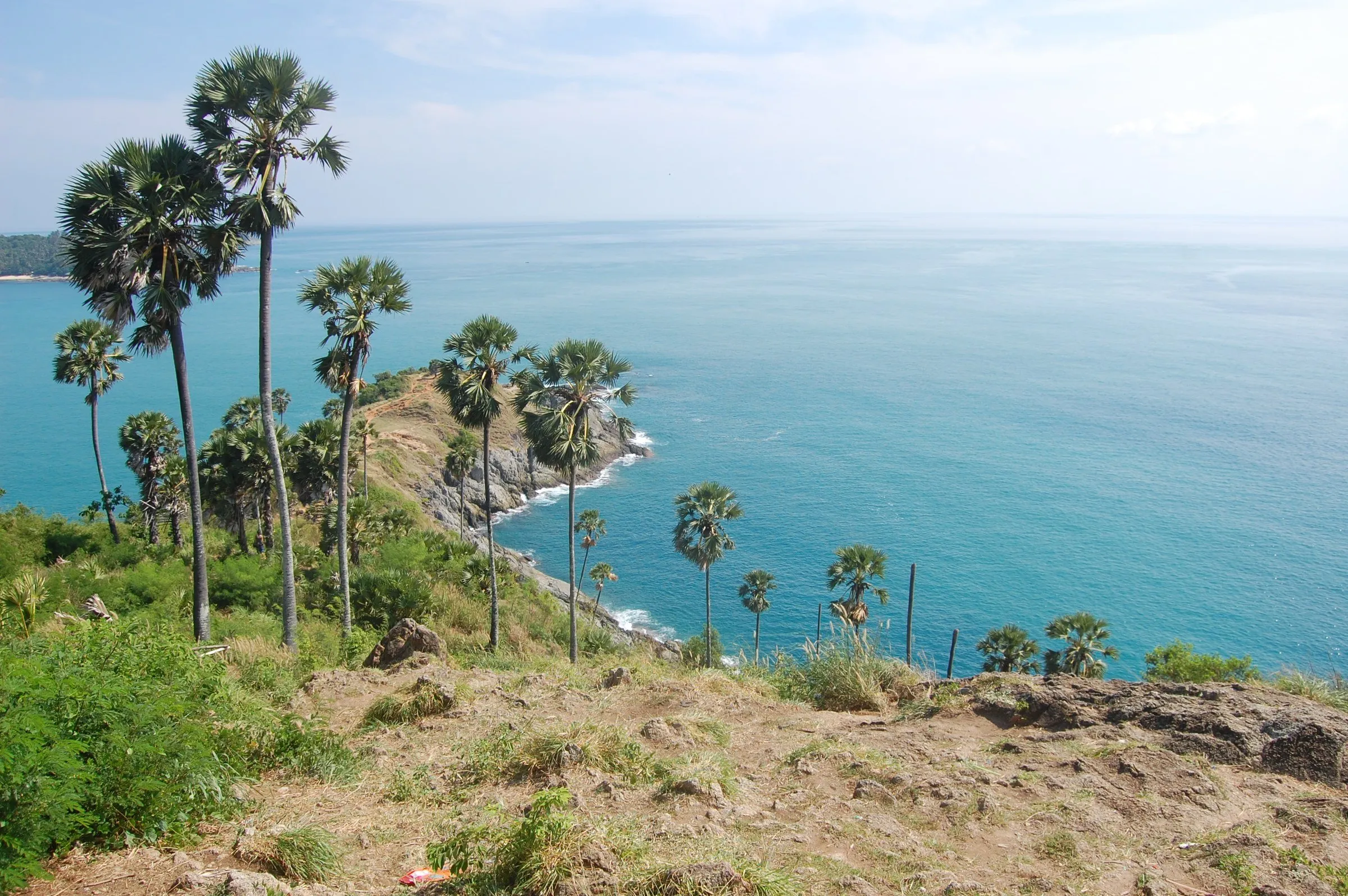
Promthep Cape in Phuket seen from above, with palm trees, a headland jutting into turquoise sea and an islet behind.6
Viewpoints

Promthep Cape (Laem Promthep)

The southernmost point of Phuket, with a white lighthouse on top of the cliff, a shrine with hundreds of elephant statues and the island's most sought-after sunset.

Suggested time:1 hourArea:Far south
View details for Promthep Cape (Laem Promthep)
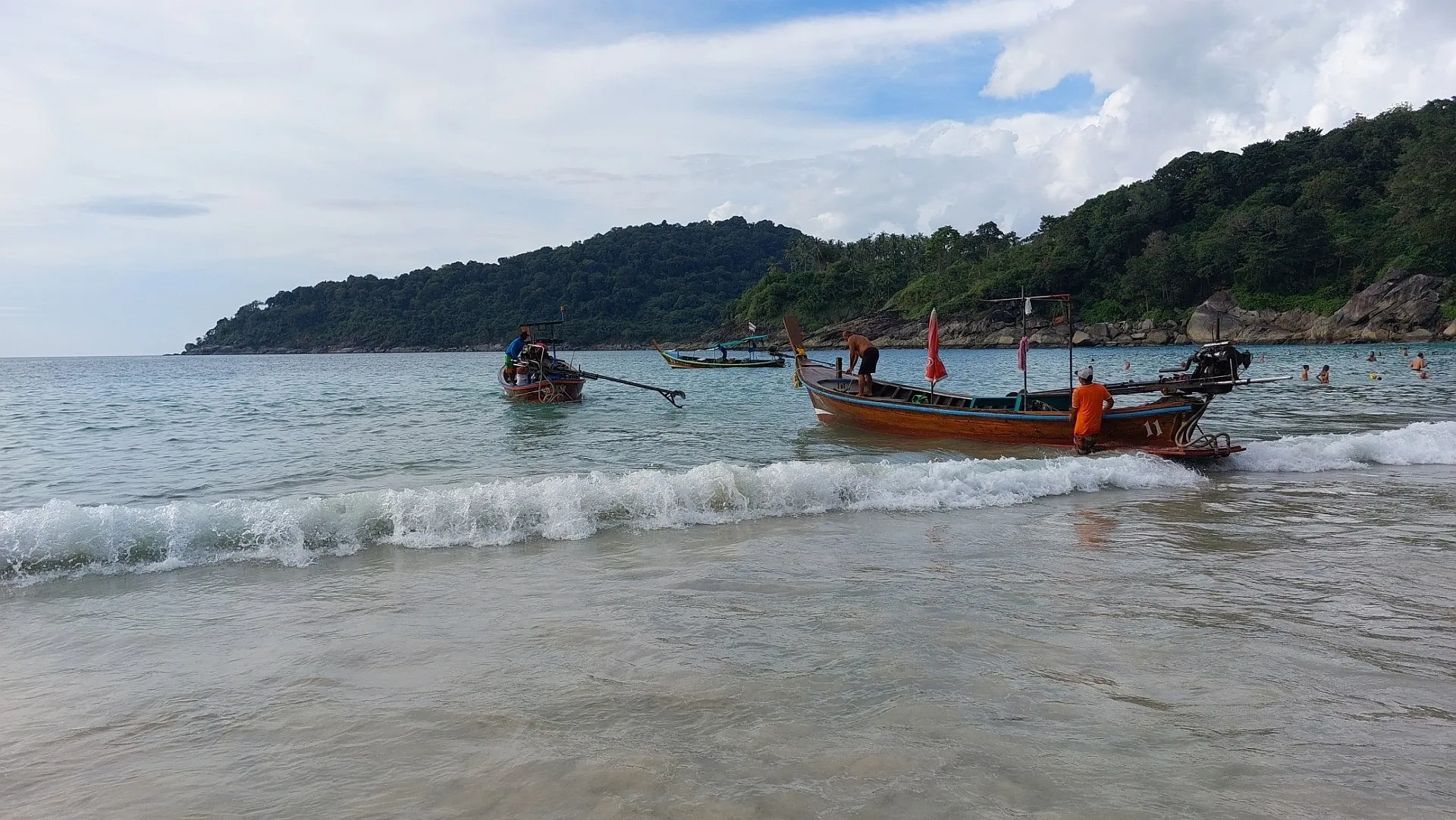
Long-tail boats in the surf at Freedom Beach in Phuket, with a forested hill and cloudy sky behind.7
Beaches

Freedom Beach

A beach of about 300 meters between Patong and Karon with no road to the sand: you arrive by long-tail boat, about 10 minutes from Patong, or by a steep trail through the forest.

Suggested time:Half a dayArea:West coast, between Patong and Karon
View details for Freedom Beach
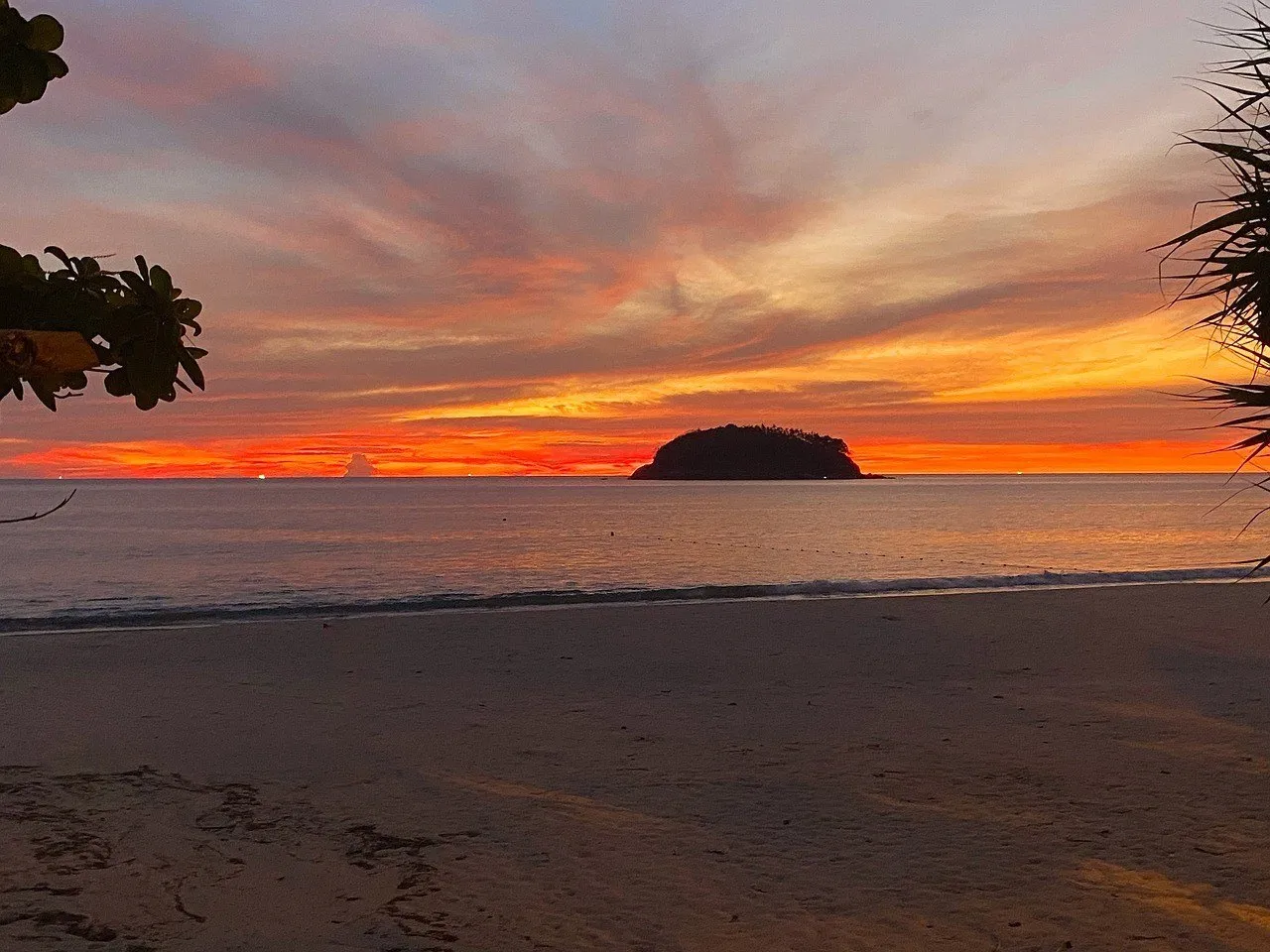
Kata Beach in Phuket at sunset, with pale sand in the foreground and Koh Pu islet outlined against the orange sky.8
Beaches

Kata and Kata Noi Beaches

Two neighboring bays split by a headland: Kata, about 1.5 km long, with restaurants and the islet of Koh Pu out front; Kata Noi, smaller, quieter and with few hotels.

Suggested time:Half a dayArea:West coast
View details for Kata and Kata Noi Beaches
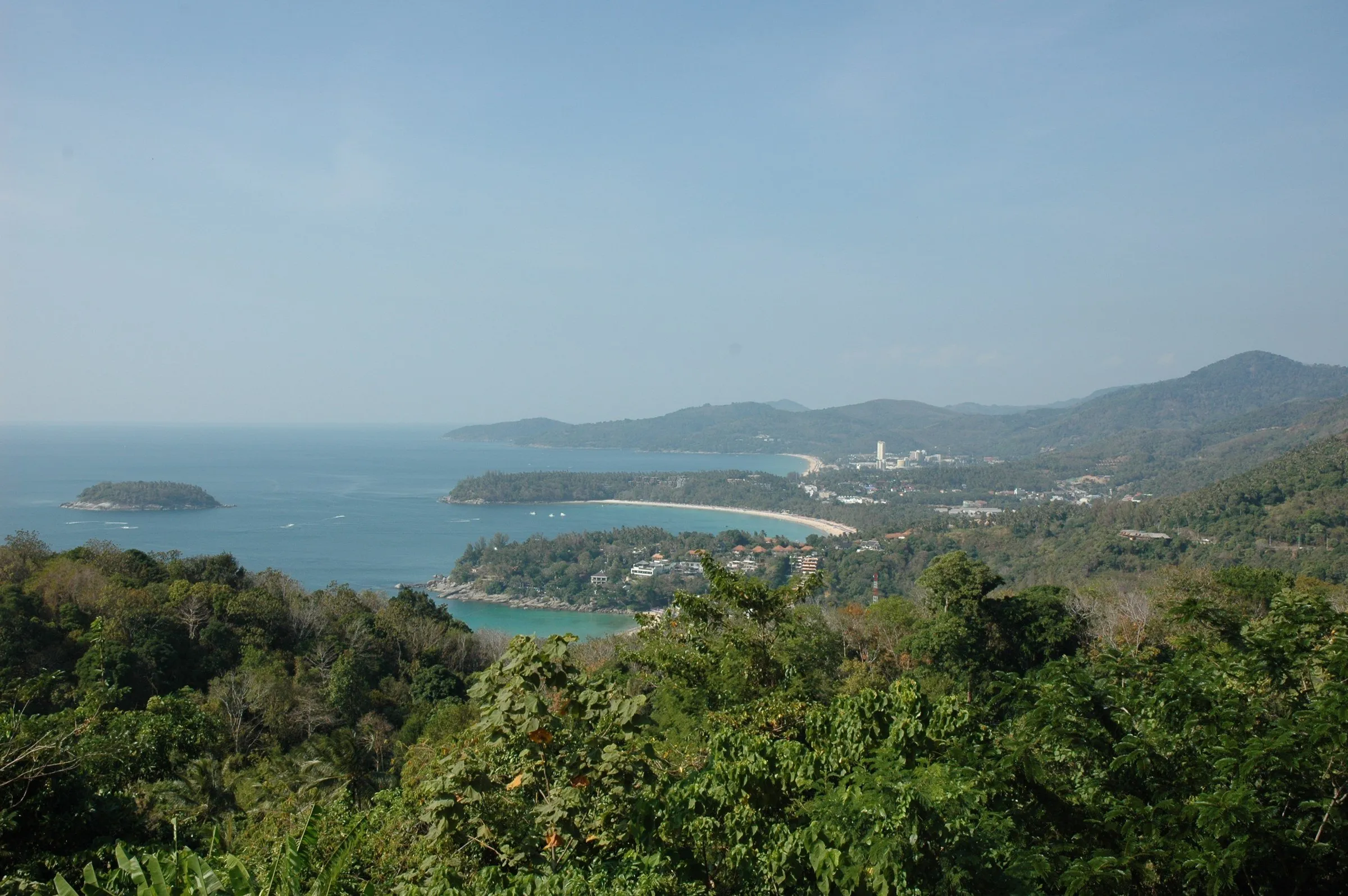
Aerial view of the bays of Kata Noi, Kata and Karon, with Koh Pu islet in the sea, behind forest in the foreground.9
Viewpoints

Karon Viewpoint

A viewpoint on the coastal road with three bays in a row: Kata Noi right below, Kata in the middle with the islet of Koh Pu, and the long beach of Karon beyond.

Suggested time:30 minArea:Road between Kata and Nai Harn
View details for Karon Viewpoint
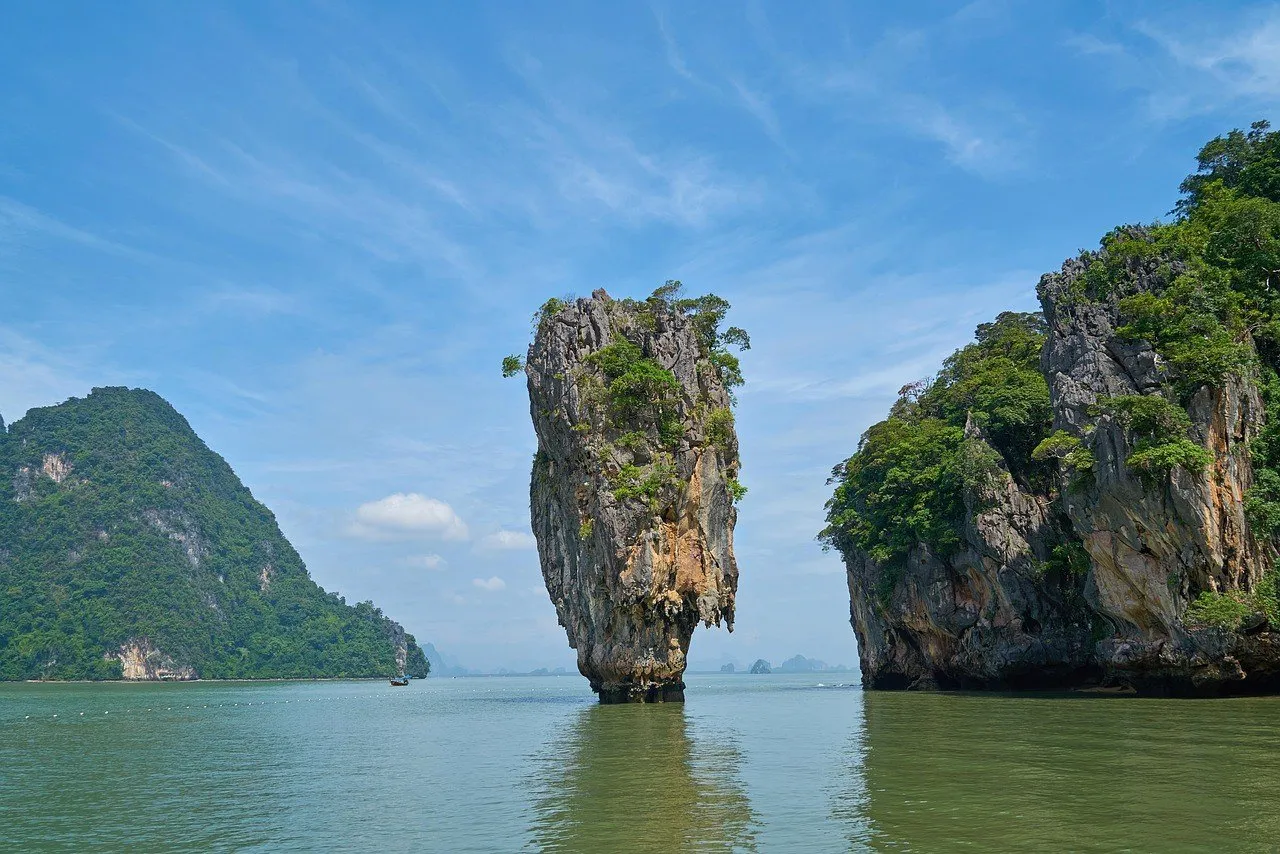
Limestone rock Ko Tapu rising from the sea in Phang Nga Bay, among forested islands, under a blue sky.10
Boat trips

Phang Nga Bay (off the island)

Off the island: a 400 km² bay between Phuket and the mainland, with limestone cliffs rising from the water, mangroves and James Bond Island. A full-day trip.

Suggested time:Full day (about 7 hours)Area:Outside Phuket: Phang Nga province
View details for Phang Nga Bay (off the island)
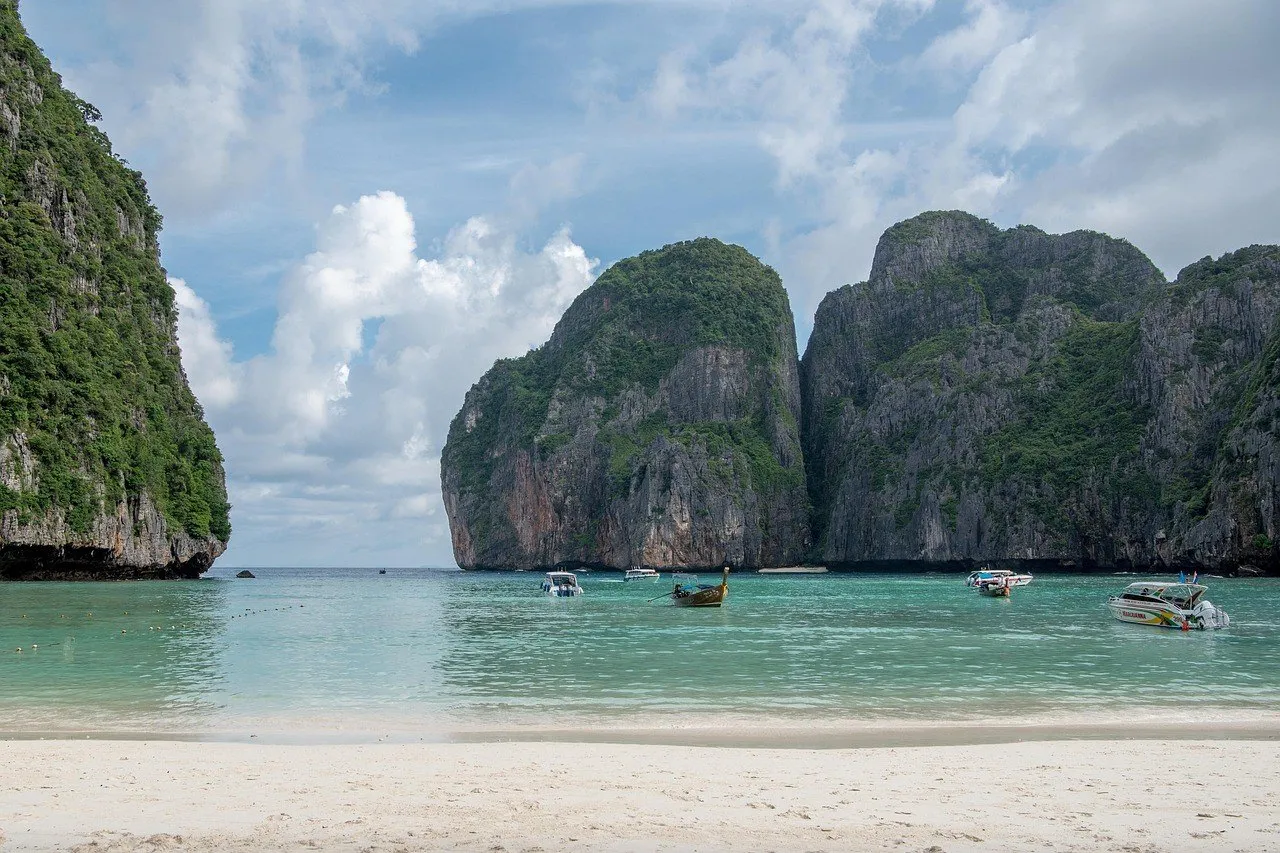
Maya Bay in the Phi Phi Islands, with forested limestone cliffs, boats in the distance, clear water and white sand.11
Boat trips

Phi Phi Islands and Maya Bay (off the island)

Outside Phuket, in Krabi province: islands about 46 km away, with inhabited Phi Phi Don and Phi Phi Leh, home to Maya Bay. A 1 to 1.5 hour boat ride from Rassada Pier.

Suggested time:Full dayArea:Outside Phuket: Krabi province
View details for Phi Phi Islands and Maya Bay (off the island)

4-day itinerary

Day 1

Phuket Town and the Old Town

  • 1Thalang Road and the Sino-Portuguese shophouses
  • 2Soi Romanee
  • Lunch of mee hokkien in the Old Town
  • Thai Hua Museum, on Krabi Road
  • Dinner in the Old Town (on Sundays, at the Thalang market)
Day 2

Temples and the south of the island

  • 3Wat Chalong in the morning
  • 4Big Buddha, on Nakkerd Hill
  • 5Afternoon at Nai Harn Beach
  • 6Sunset at Promthep Cape
Day 3

West coast

  • 7Freedom Beach in the morning, by long-tail from Patong
  • 8Afternoon at Kata and Kata Noi
  • 9Karon Viewpoint between 4 and 5 p.m.
Day 4

Boat trip off the island

  • Hotel pickup early in the morning
  • 10Option 1: Phang Nga Bay and James Bond Island
  • 11Option 2: Phi Phi Islands, leaving from Rassada Pier
  • Return and a light dinner near the hotel

Map

11 places on the map

Practical tips

The red flag is for real

On the beaches, a red flag means it is not safe to enter the sea. In monsoon season, roughly June to November, waves grow and rip currents become dangerous, as at Kata and Kata Noi. When the flag is up, stay on the sand or by the hotel pool.

Dress and conduct at temples

For Wat Chalong and the Big Buddha, cover shoulders and knees; beachwear won't do. Take off shoes, hat and sunglasses before entering the halls, step over the threshold instead of on it and, when seated, keep your feet pointed away from Buddha images. Don't touch the statues, walk around them clockwise and keep your voice down. Women should not touch monks or their robes.

Respect for the monarchy

Article 112 of the Thai Criminal Code provides for 3 to 15 years in prison, per charge, for anyone who defames, insults or threatens the king, queen, heir or regent. The law has been applied to foreigners and reaches social media posts. Treat images and mentions of the royal family seriously, in Thailand and abroad.

Visa-free entry

Entry rules depend on your nationality, and many travelers can enter Thailand for tourism without a visa for a limited stay, as listed by the Thai Ministry of Foreign Affairs. Rules change often: check the current conditions for your own passport on the ministry's or the embassy's website before you fly.

Big island, real distances

Karon Viewpoint and Promthep Cape are about 17 and 18 km from Phuket Town, and the cape is 46 km from the airport. Taxis and apps like Grab and Bolt cover most trips; with a tuk-tuk, agree on the price beforehand. Group your outings by area so you don't spend the day in the car.

The sea calendar

The driest weather runs from December to March. In the other months it rains more, and the southwest monsoon stirs up the sea: boats to Freedom Beach may not run, and Maya Bay closes in August and September.

Food and drink

Phuket's cooking is the tastiest part of the tin legacy. Hokkien immigrants brought recipes from southern China, and the island gradually gave them an accent of their own, to the point that UNESCO included Phuket in its Creative Cities network for gastronomy in 2015. Start in the Old Town: Mee Ton Poe, an open-air stall opened in 1946 and named after a neighboring banyan tree, is cited as a benchmark for noodles, and moo hong has a famous version at Raya, a restaurant set in a Sino-Portuguese shophouse in the old center.

Thick egg noodles stir-fried in dark soy sauce, with marinated pork, dried shrimp and Chinese cabbage, topped with fried egg, raw onion and pork crackling.

Pork belly slowly braised in a sauce heavy with black pepper, between sweet and salty, served with rice. A Hokkien recipe for festive days.

An omelet with cooked taro, small oysters, egg and flour, seasoned with soy sauce and topped with pork crackling. It came from China's Fujian province.

A jelly made from banana extract and the seeds of a Taiwanese fig, served with red beans. It spoils quickly, so it is sold the same day it is made.

Other cities in Thailand

View Thailand

Sources and credits

Sources

Image credits

Search destinations

Type at least 3 letters