 1
Temples and shrines
Senso-ji
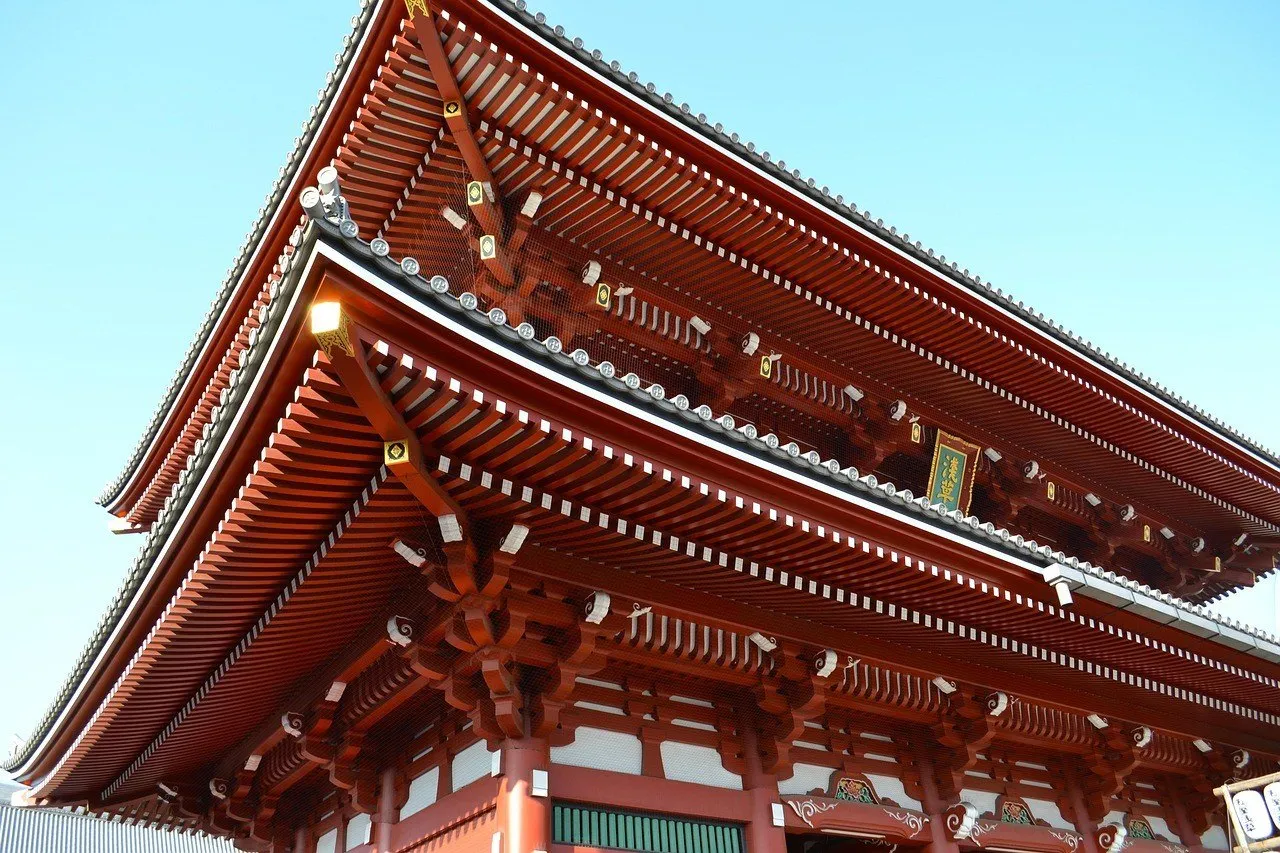
A Buddhist temple in Asakusa whose story begins, according to tradition, with a statue of Kannon found by fishermen in 628. At the entrance, a red lantern of about 700 kg.
View details for Senso-ji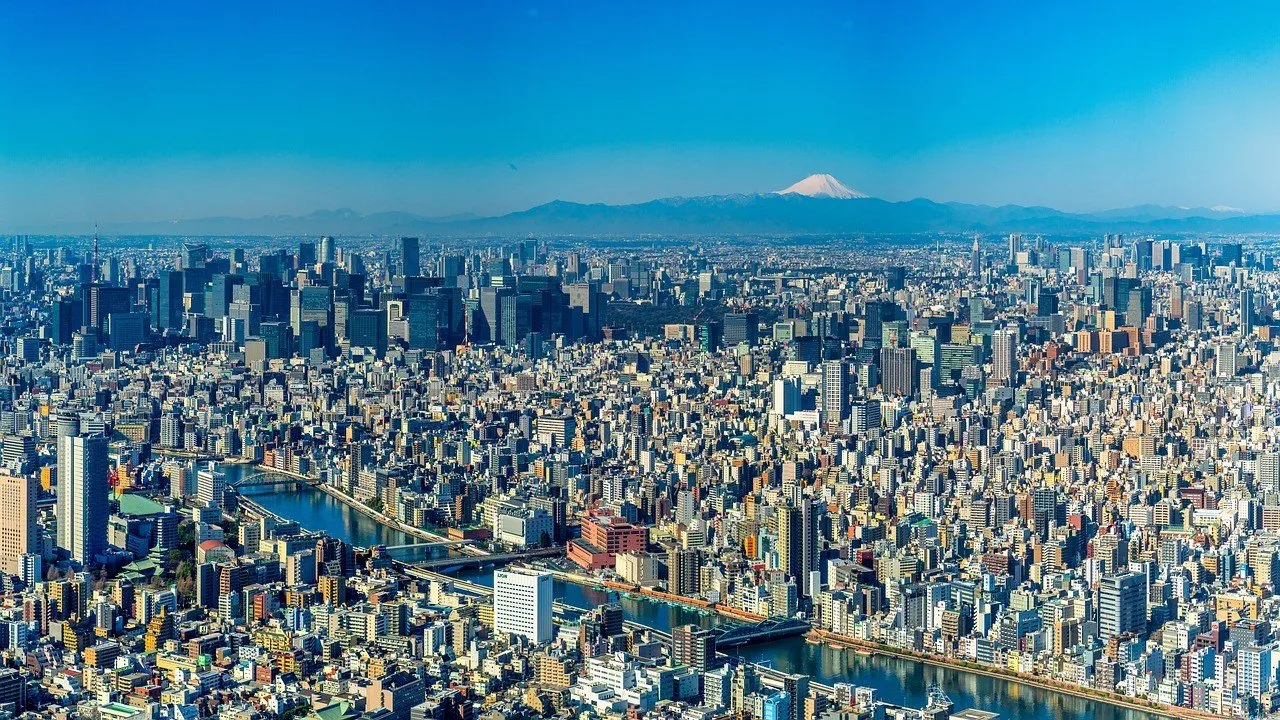
At Shibuya, the signal changes and up to three thousand people cross at once, in every direction. One train stop later, in a forest planted around a shrine, the loudest sound is your own footsteps.
In Tokyo, the line at the train door forms by itself, nobody boards before the people getting off, and a packed car manages to be quieter than most waiting rooms. That collective agreement is what keeps the city moving, and it is the first thing you learn on arrival: keep your voice down, skip phone calls on transit, and carry your trash back in your backpack, because a bin is not always nearby.
Trying to see Tokyo as a city with a single center is exhausting. Think in three blocks. In the east, Asakusa, Ueno and Yanaka hold temples, museums and streets of low houses, with Akihabara just next door. In the west, Meiji Jingu, Harajuku, Shibuya and Shinjuku pack in the forest, the crowds and the neon. Near the bay, Tsukiji, the Hamarikyu Gardens and the monjayaki griddles of Tsukishima fill a whole day with food and water nearby.
Haneda is about 15 km from the center, and the monorail plus the Yamanote Line get you to Tokyo Station in around 20 minutes. Spring and autumn are the most comfortable seasons; summer is hot and humid, with rain in June and typhoon risk in early autumn. In winter the sky tends to clear, and Mount Fuji may show up far off on the horizon.
The red lantern at Kaminarimon, the entrance gate of Senso-ji, weighs about 700 kg (1,500 lb). The current one, from 2013, is the fifth version, and it is folded up during the Sanja Matsuri festival so that tall objects can pass through the gate.
Senso-ji receives, by some estimates, more than 30 million visitors a year, which puts it among the most visited religious sites in the world.
Akihabara owes its name to Akiba, a deity who protects against fire, honored in a shrine built after a great fire in 1869.
Tsukishima, the island of the monjayaki restaurants, did not exist until 1892: it is landfill built at the mouth of the Sumida River.
Japan used daylight saving time between 1948 and 1952, during the Allied occupation, and has dropped the idea since. Tokyo's clock stays at UTC+9 all year.
1A Buddhist temple in Asakusa whose story begins, according to tradition, with a statue of Kannon found by fishermen in 628. At the entrance, a red lantern of about 700 kg.
View details for Senso-ji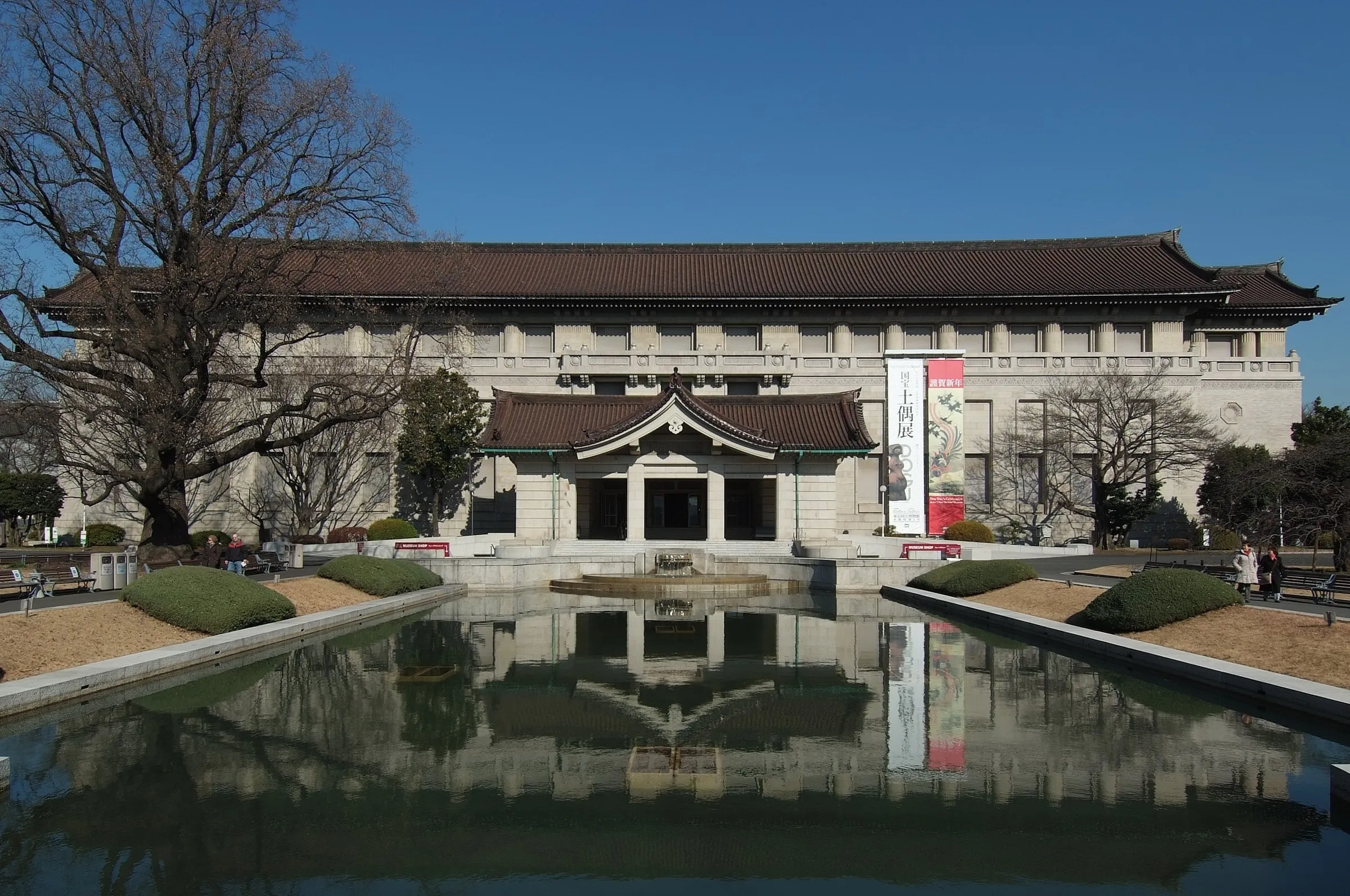 2
Japan's oldest national museum, founded in 1872 in Ueno Park, with about 120,000 cultural properties and 89 National Treasures in its collection.
View details for Tokyo National Museum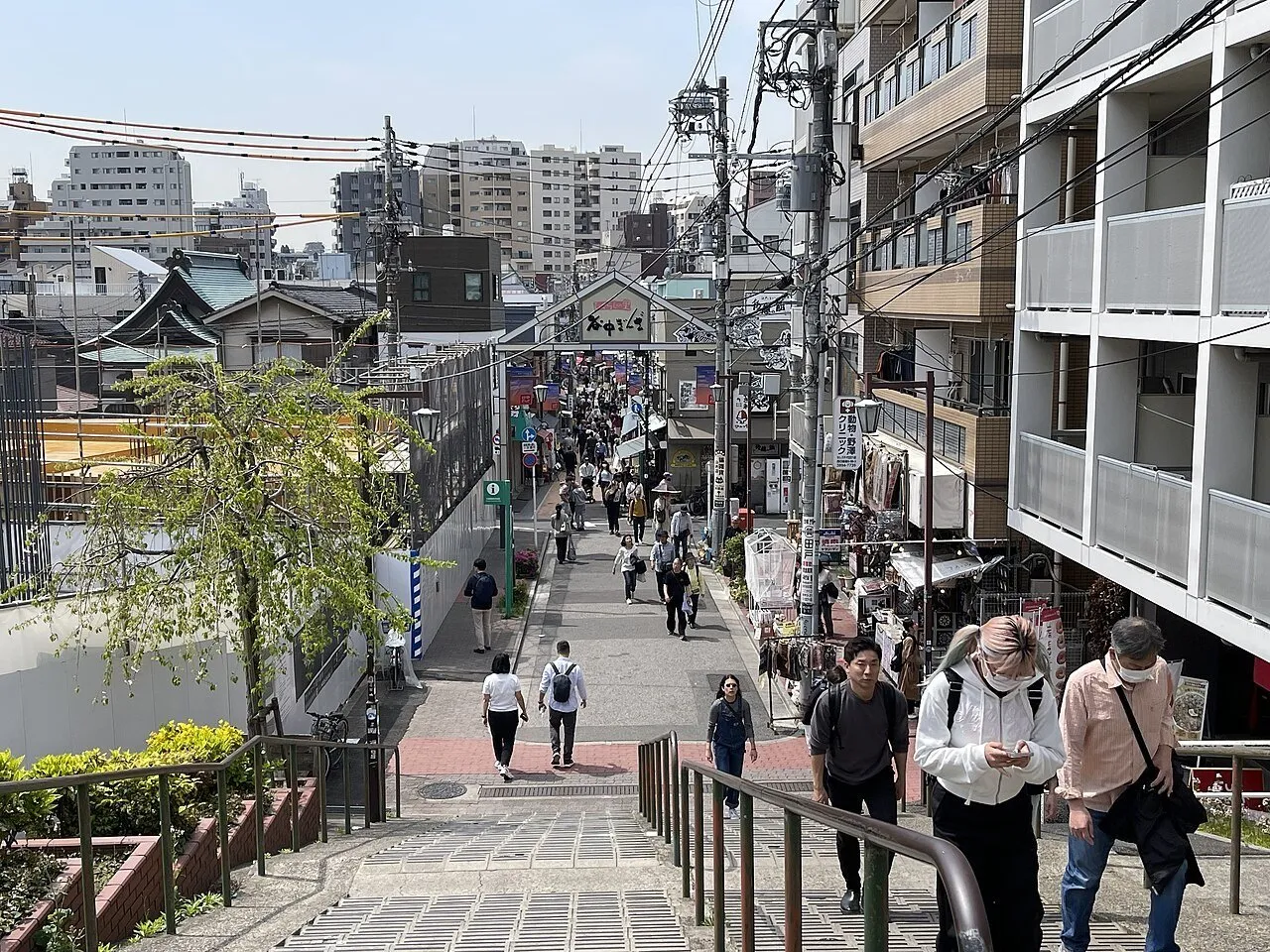 3
A neighborhood of small temples, a tree-lined cemetery and a 170-meter shopping street that escaped the wars and earthquakes. Best at the end of the afternoon, on the Yuyake Dandan staircase.
View details for Yanaka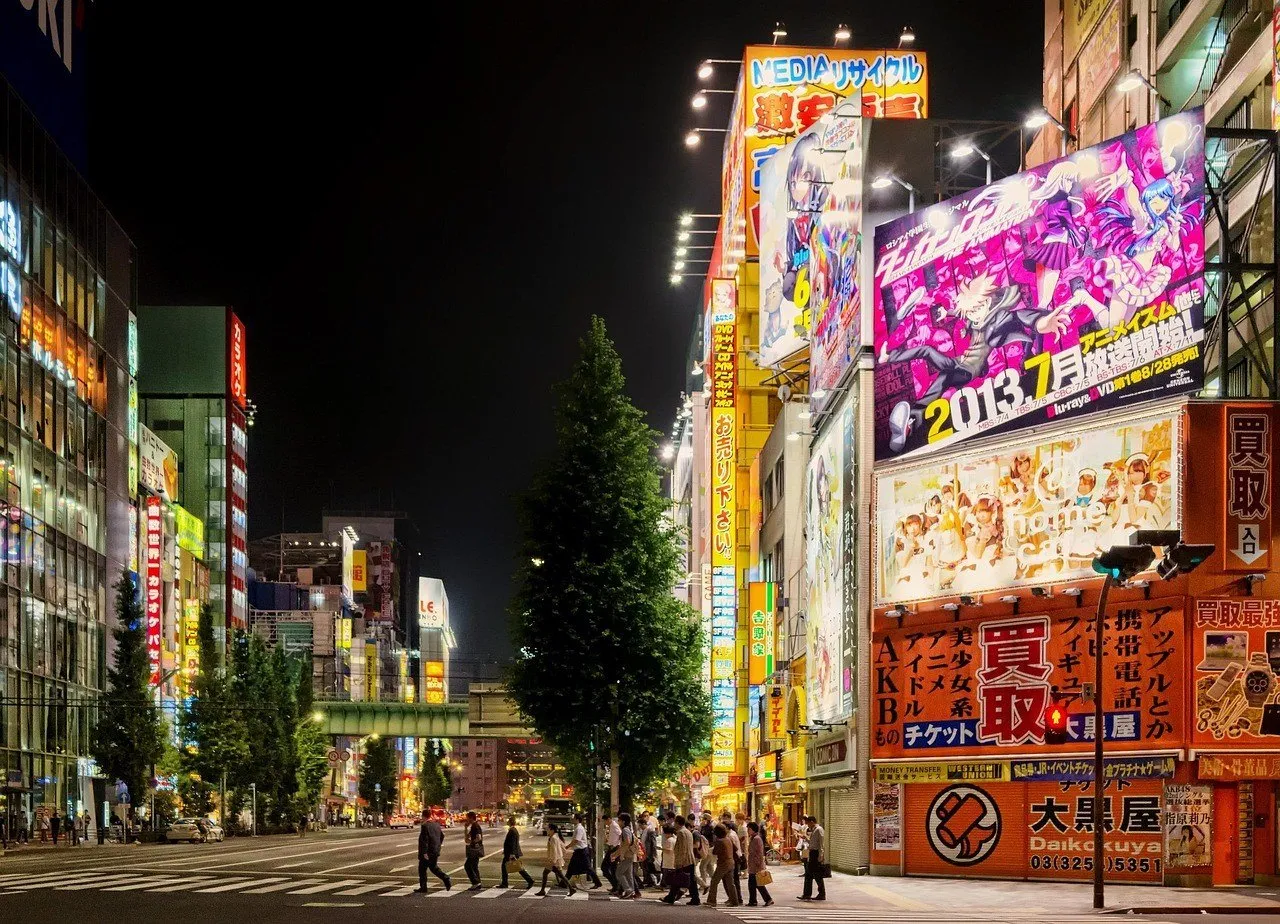 4
The district that sold household appliances in the postwar years and, from the 1980s, became the center of otaku culture, with anime, manga, video game and electronics stores.
View details for Akihabara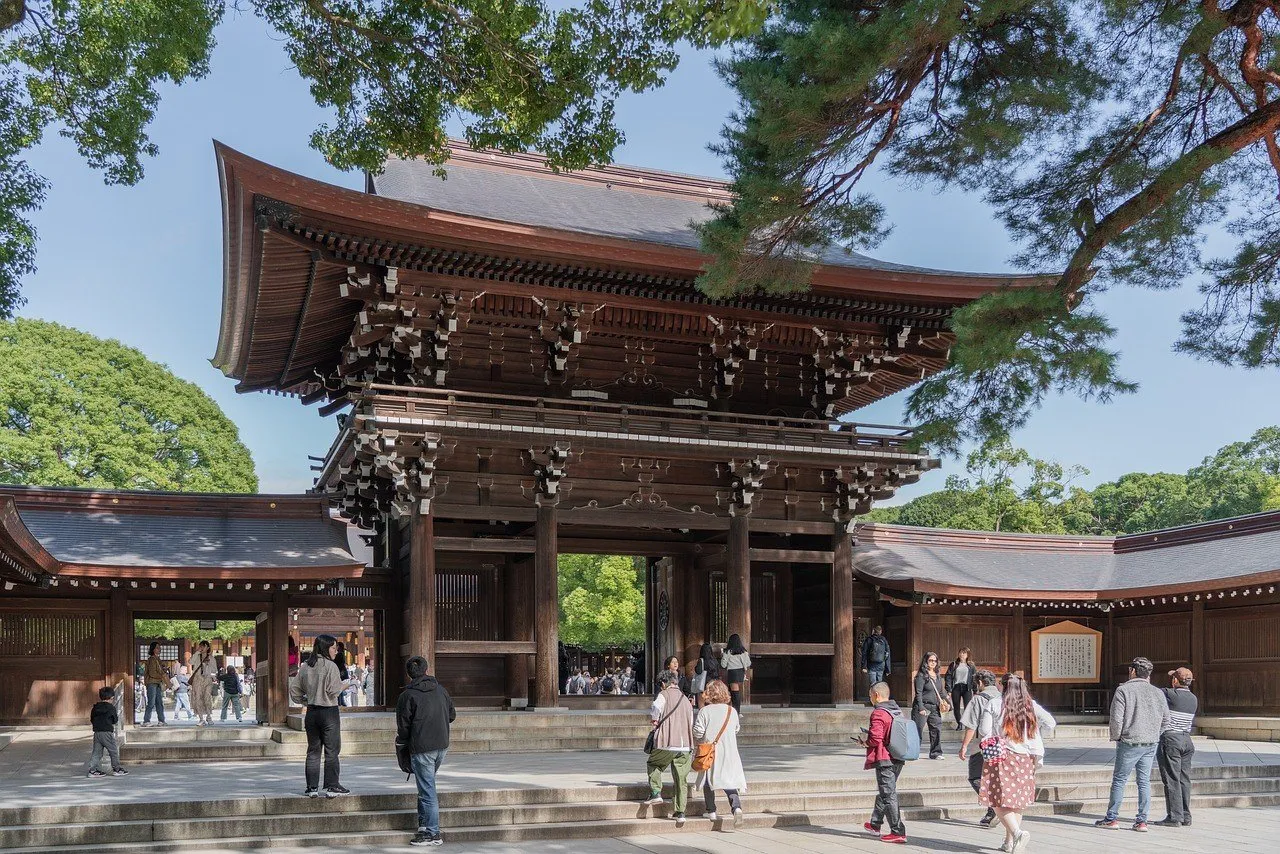 5
A Shinto shrine dedicated to Emperor Meiji and Empress Shoken, founded in 1920 in the middle of a 70-hectare forest planted with trees donated from all over Japan.
View details for Meiji Jingu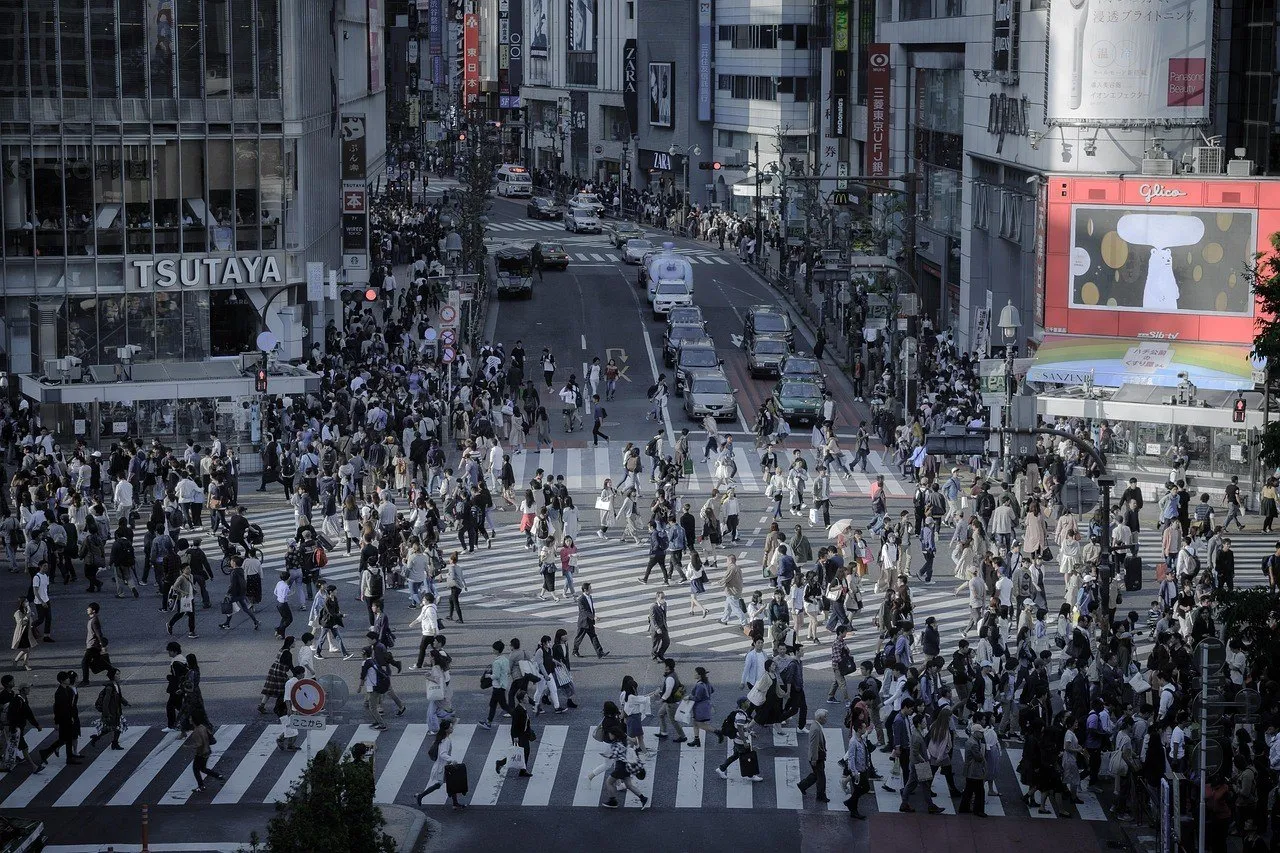 6
The intersection in front of Shibuya Station, opened in 1973, where one to three thousand people cross with each green light, including diagonally, next to Hachiko Square.
View details for Shibuya Crossing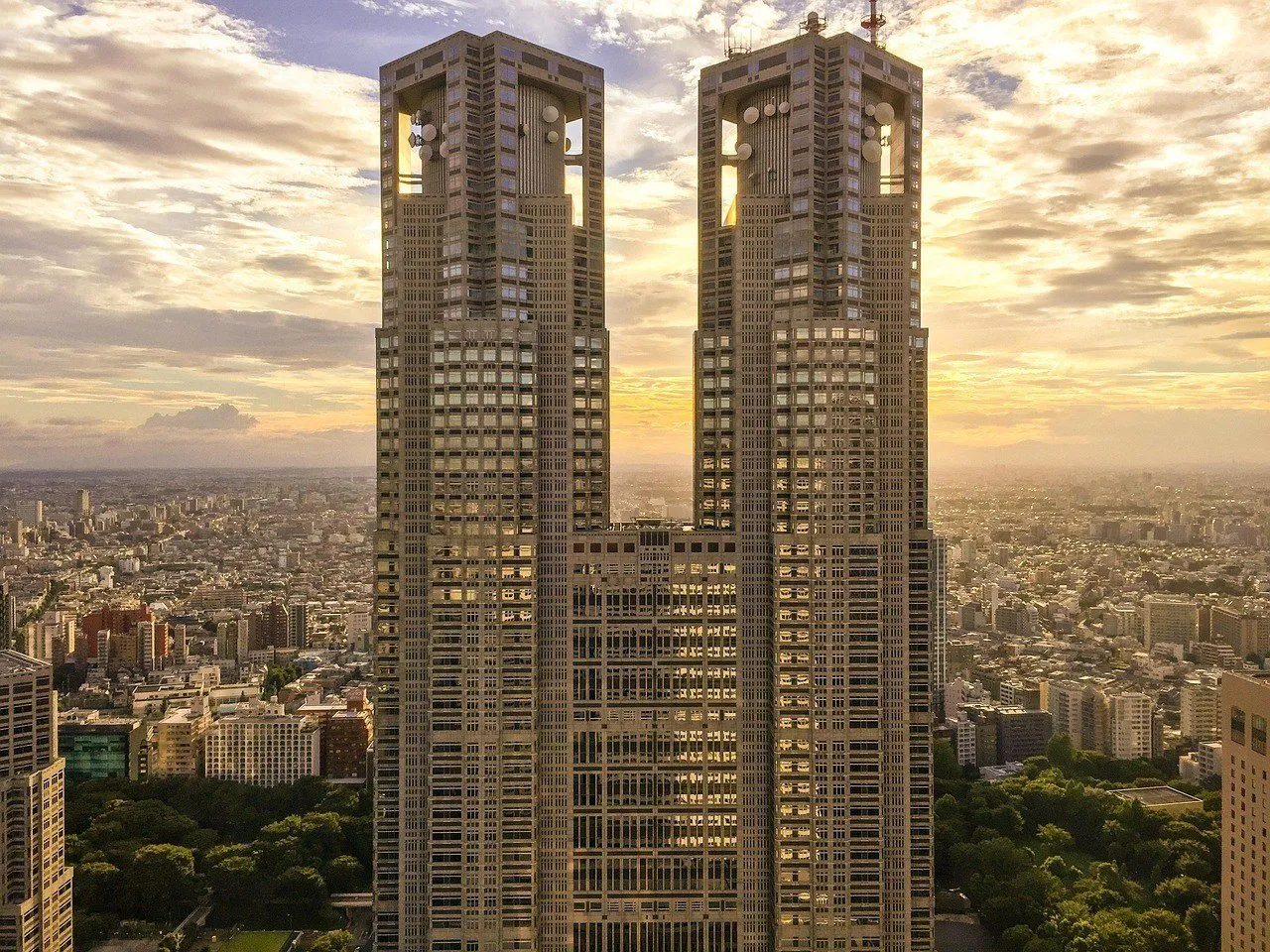 7
Two free observation decks on the 45th floor of Tokyo's city hall, designed by Kenzo Tange. On a clear day, Mount Fuji shows up, and sunset is the busiest time.
View details for Tokyo Metropolitan Government Building Observatory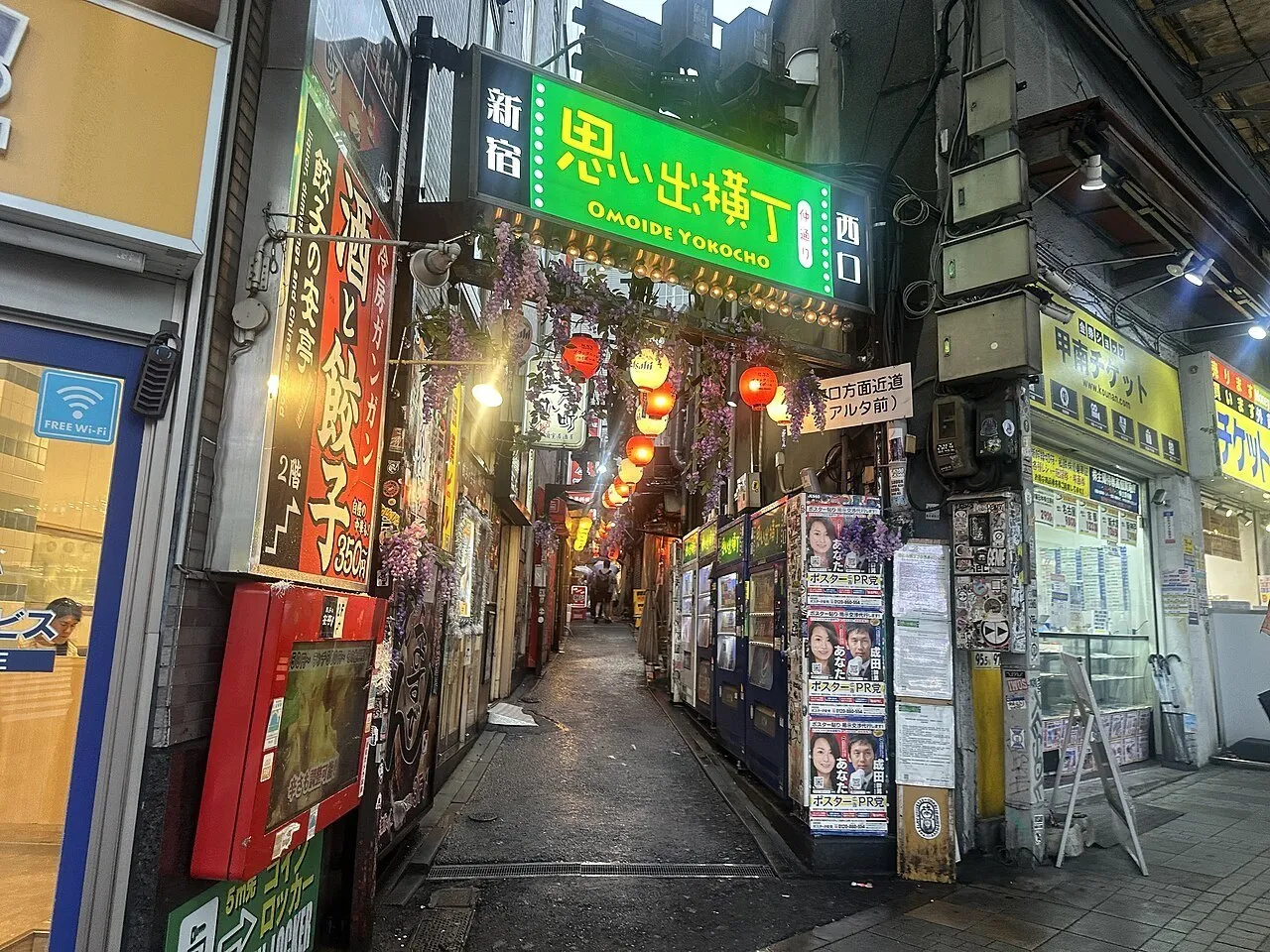 8
An alley of about 60 tiny counters next to the west exit of Shinjuku Station, born from an informal postwar market. More than half of the places serve skewers grilled over charcoal.
View details for Omoide Yokocho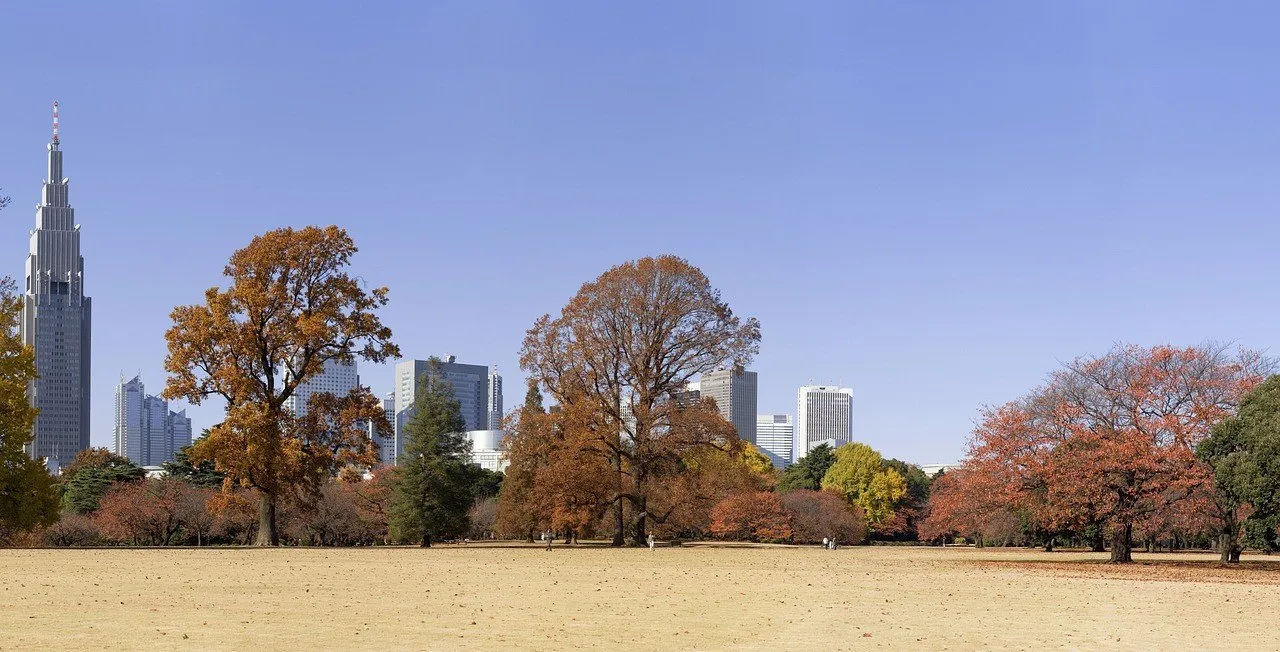 9
A former imperial garden of 58 hectares with three styles side by side, Japanese, French and English, and about 1,500 cherry trees that bloom from late March to late April.
View details for Shinjuku Gyoen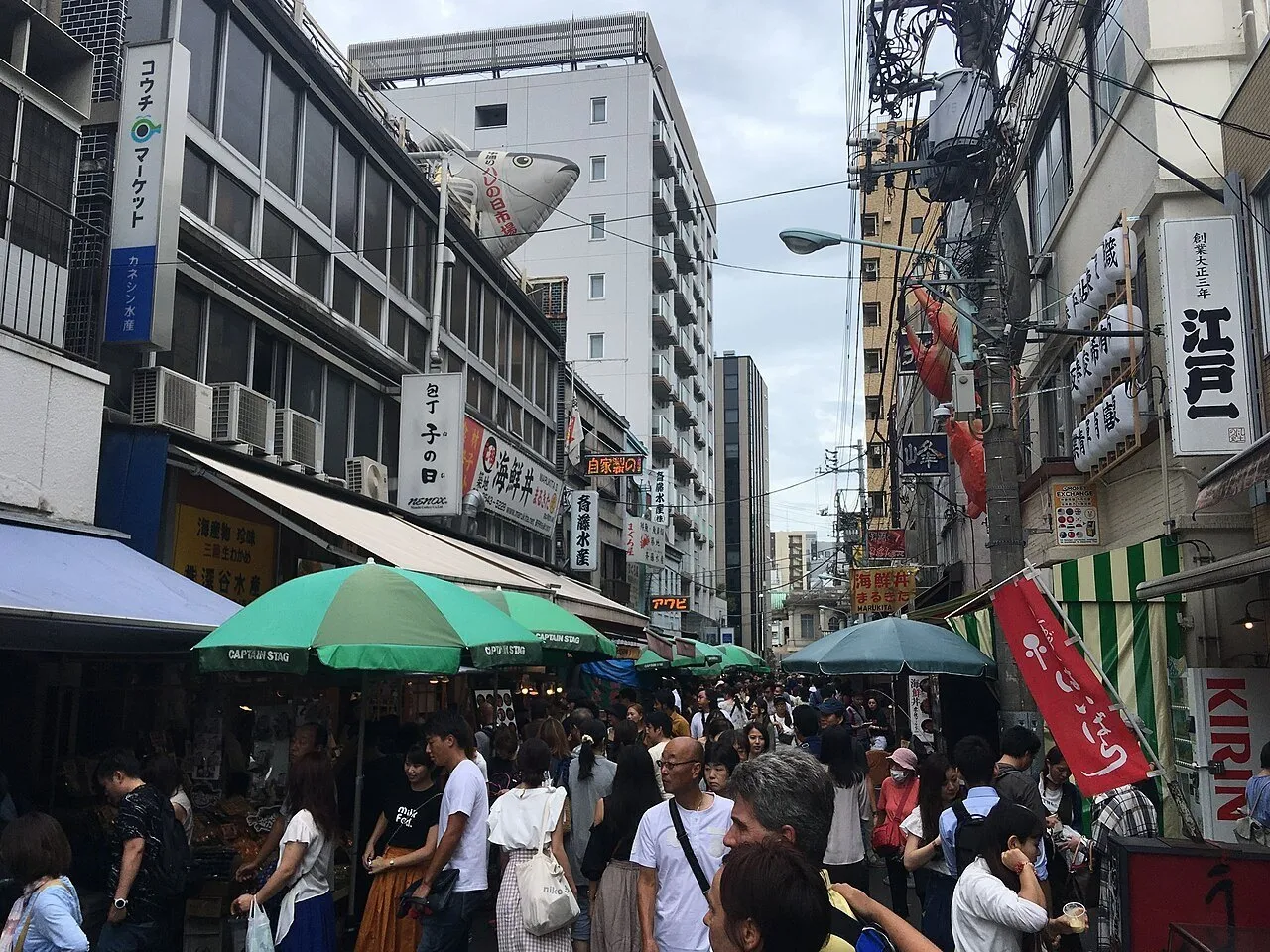 10
In 2018, the wholesale market and fish auctions moved from Tsukiji to Toyosu, but the outer market stayed: lanes of food shops and restaurants that remain busy.
View details for Tsukiji Outer Market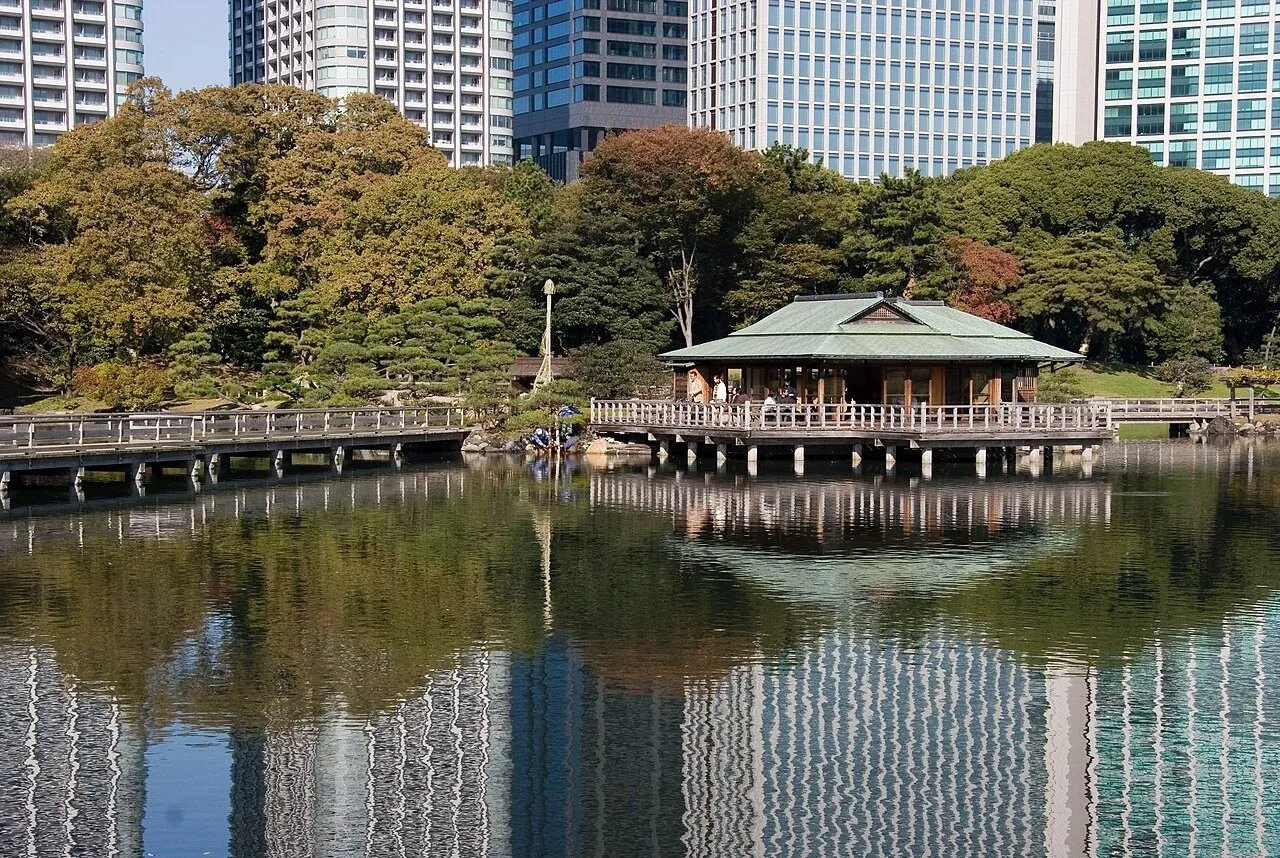 11
A garden created from 1654 on land reclaimed from Edo Bay, with a saltwater pond that rises and falls with the tide and a teahouse serving matcha in the middle of it.
View details for Hamarikyu Gardens1Tradition says that in 628 two fishermen brothers pulled a statue of Kannon out of their net in the river now called the Sumida, and the temple grew from that story. You enter through the Kaminarimon, under a red lantern almost four meters tall, and continue along the roughly 250 meters of Nakamise, a street with about 70 shops selling sweets, fans and souvenirs.
The main hall and the five-story pagoda were destroyed in the bombing of March 10, 1945 and rebuilt in the following decades. In front of the hall, incense smoke rises nonstop, and many people wave it toward themselves with their hands, asking for good health. Inside the halls, photos are usually prohibited; in the courtyards, they are generally allowed.
2Founded in 1872, it is the country's oldest national museum and holds about 120,000 cultural properties, 89 of them classified as National Treasures, according to 2023 figures. Don't try to see everything. The main building, the Honkan, tells the history of Japanese art in sequence and fills a whole morning on its own.
If you have energy left, cross over to the Gallery of Horyuji Treasures, opened in 1999, with 319 pieces from a temple in Nara. On a day of heavy rain or August heat, this is the smartest refuge in the city: silence, cool air and centuries of art in well-lit display cases. On the way out, Yanaka is a walk away.
3Yanaka came through the wars and disasters that redrew the rest of Tokyo without major damage, and you can tell from the scale of things: low houses, narrow lanes, small temples in a row. Start at Yanaka Cemetery, large and tree-lined, with quiet paths among graves and temples, a good place to slow down after a museum morning.
From the cemetery, head to Yanaka Ginza, a street of about 60 shops in 170 meters, with a Showa-era feel and traditional snacks. Before heading down, stop at the top of Yuyake Dandan, the sunset staircase: when the weather cooperates, the whole street turns orange. Look out also for the statues of the Seven Lucky Cats scattered along the way.
4Right after World War II, Akihabara earned the nickname Electric Town: this was where Tokyo bought televisions, refrigerators, washing machines and stereos. In the 1980s, when appliances lost their appeal, the shops changed their window displays and started selling computers, attracting a crowd that soon brought anime, manga and video games along with it.
Today the neighborhood is the best-known address of otaku culture, with shops for collectibles, games, fan magazines and electronics. Near the station, cosplayers hand out flyers for maid cafés, which are numerous in the area. Even people who don't follow anime tend to have fun just looking at what is for sale, shelf after shelf.
5It is hard to believe that the woods around Meiji Jingu were planted: there are about 120,000 trees of 365 species, donated by people from every region of Japan when the shrine was created. The original building, from 1920, was destroyed in the bombings of World War II; the current one was completed in 1958.
Before the offering hall stands the purification fountain. Wash your left hand, then your right, pour a little water into your cupped hand to rinse your mouth and spit to the side, never into the fountain or straight from the ladle. When it is time to pray, the sequence is coin, two bows, two claps and a final bow. Walk along the sides of the path: the center is reserved for the deities.
6Counts vary, but estimates say one to three thousand people per green light, which comes up roughly every two minutes. According to a 2014 survey, about 260,000 pedestrians pass through on a weekday and close to 390,000 on days off. All the cars stop together, and the crowd spills off the sidewalks at the same time, in a straight line and on the diagonal.
Cross once in the middle of the wave, just to feel it, and then look for a high vantage point to see the pattern the crowd makes from above. Hachiko statue square is right next door, at the station exit. At night, the area has restrictions on drinking in the street, so save the beer for a bar.
7Tokyo's city hall, designed by Kenzo Tange, splits into two towers at the top, and each has an observation deck on the 45th floor. Admission is free, which, for a panoramic view of Tokyo, almost looks like a typo. Up there you will find cafés and a sea of buildings stretching as far as the eye can see.
On clear days, Mount Fuji appears on the horizon, which is why late afternoon fills up: lots of people come up to watch the sunset and the city light up right after. The two decks have different hours and closing days, so check which one is open before crossing Shinjuku to get there.
8Around 1946, the area in front of Shinjuku's west exit was rubble. An informal market grew there, Lucky Street, with stalls separated by a single board. When enforcement made it harder to sell dishes made with flour, many began grilling pork and beef offal. Today's alley is a direct heir to that: about 60 spots, more than half serving yakitori or motsuyaki.
The counters have few seats, charcoal smoke clings to your clothes and the menu sometimes comes only in Japanese: point, smile and order calmly. In many izakayas, a starter snack called otoshi arrives without being ordered and is charged per person. It's not a scam, it's custom.
9In 1590, Tokugawa Ieyasu granted the land to a feudal lord of the Naito family for his residence in Edo. Centuries later, the place became an imperial botanical garden and, in 1906, a garden of the imperial family, with Emperor Meiji at the opening. The public was only admitted from 1949. Today it covers 58 hectares in which a Japanese garden shares space with a formal French garden and English-style lawns.
In spring, about 1,500 cherry trees turn the lawns into Shinjuku's most crowded picnic spot. In autumn, the color changes on the leaves, and the garden is among the places recommended for viewing foliage in the city.
10Many people still arrive at Tsukiji looking for the tuna auction, which has changed address: between October 6 and 11, 2018, the inner market's operations were moved to Toyosu, which opened on the 11th. What stayed here was the outer market, which remains open selling food, other goods and plenty of ready-to-eat dishes for passersby.
The fun is in grazing: a skewer here, a bowl of fish there, a sweet to finish. Buy a little of each thing and eat near the stall, without blocking the flow in the narrow lanes. If your dream is to see the auction, it now happens at Toyosu, the other shore of this story, and it takes an early start and planning.
11In 1654, Tokugawa Tsunashige, son of shogun Iemitsu, received permission to fill in a piece of Edo Bay and build a villa there. The following shoguns used the place as a secondary residence, including for falconry. Today, the skyscrapers around it form the backdrop to the pine trees, and the combination makes for the most curious photo of the day.
The Shioiri-no-ike pond takes in water from Tokyo Bay and changes level with the tide. At its center, a teahouse connected by two bridges serves matcha and Japanese sweets in the style of the tea ceremony: sit down, sip slowly and look at the water. The garden, about 25 hectares, has been open to the public since 1946.
On trains and buses, speak softly and save phone calls for later. On the platform, wait for people to get off before boarding and respect the line, including on escalators.
Use the marked bins when you find one; when there isn't one, hold on to your trash and take it with you. A small bag in your backpack solves the whole day.
Tipping is not expected, and service is already in the price. The thanks that works is a gochisosama at the end of the meal. In izakayas, expect the otoshi, the little starter charged per person.
Take off your shoes when asked, don't touch the objects on display and check the signs before taking photos: inside the halls, photography is usually prohibited. Ask permission before photographing people, including those who are praying.
Summer is hot and humid, and the heat can last into September. June is rainy season, and a typhoon can pass through in September or October. In the heat, drink water, replace salt and wear a hat or carry a parasol.
Entry rules for Japan depend on your nationality and passport, and some travelers can visit for tourism without a visa for a limited period. An exemption does not apply to work and does not guarantee entry: check the requirements for your own nationality with the Japanese embassy or consulate before you travel.
In Tokyo, one of the best meals of the trip can come from an eight-seat counter or from a ticket machine at the door of a ramen shop, where you pay first and hand the ticket to the staff. Wait for someone to show you to your seat, even if you see an empty table, order at least one dish per person and say itadakimasu before eating. Pointing at the picture on the menu is perfectly accepted.
The style born in Edo, old Tokyo, as a quick meal for working people. Try the tuna marinated in soy sauce (zuke), the kohada and the anago, by hand and in a single bite.
A runny flour batter with cabbage and ginger, plus octopus, shrimp or cheese, which you spread yourself on the griddle at the table. Tsukishima has more than 80 specialized restaurants.
Skewers of chicken or offal grilled over charcoal, the food that gave rise to Omoide Yokocho. Order a few, a drink, and repeat.
We use cookies and similar technologies, such as Google Analytics, in accordance with our Privacy Policy and, by continuing to browse, you agree to these terms. You can decline at any time in the policy.