 1
Colonial architecture
Gateway of India
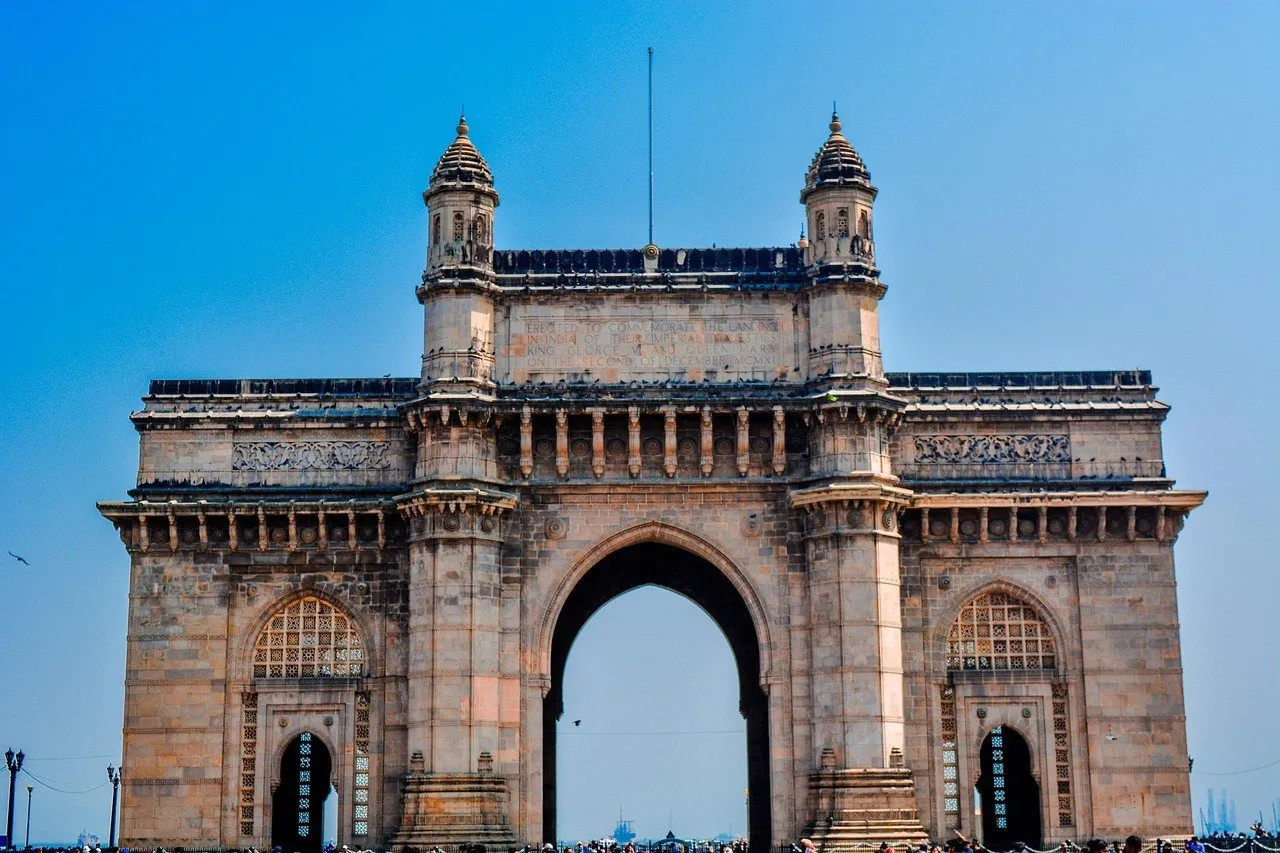
A 26-meter basalt arch on the harbor edge, built to commemorate King George V's arrival in 1911 and the departure point for ferries to Elephanta.
View details for Gateway of India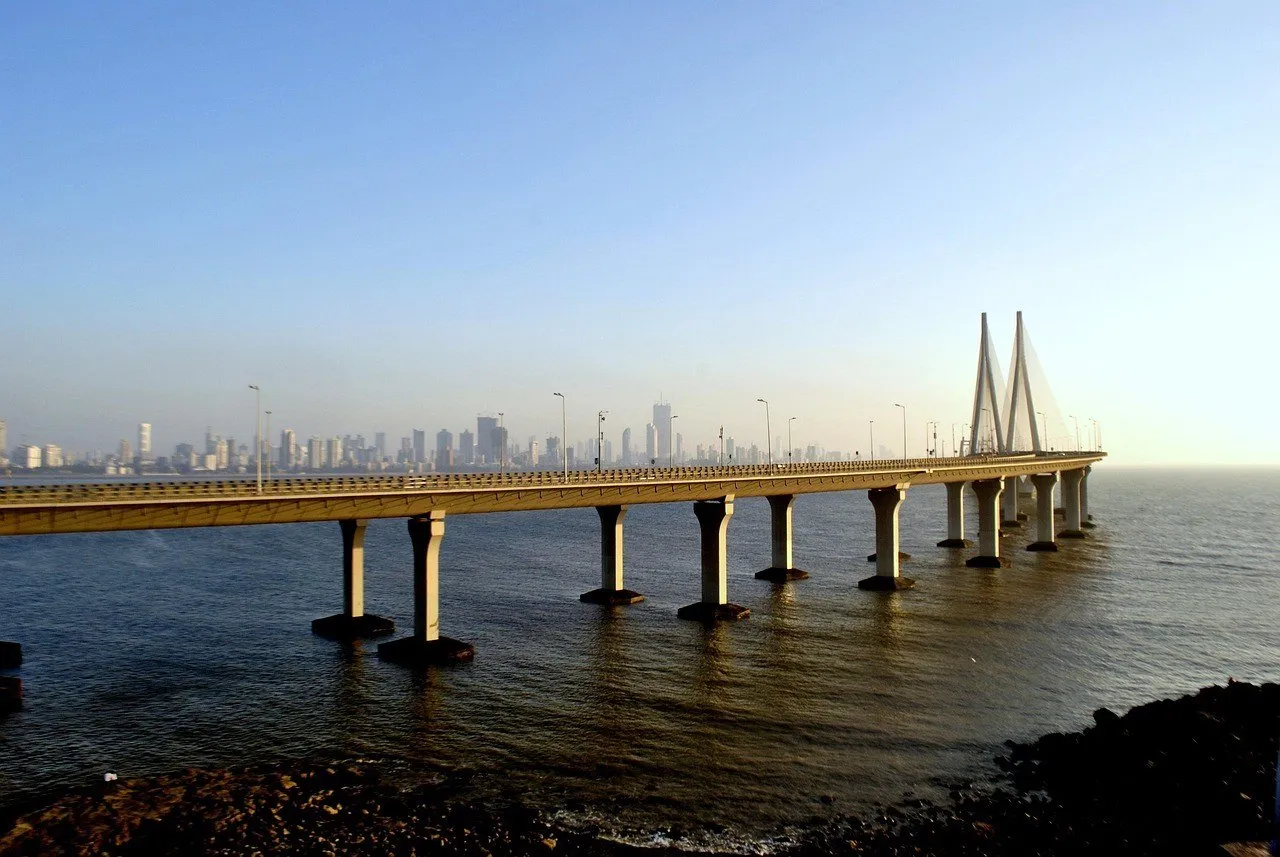
In Mumbai, sunset comes with an audience: all kinds of people sit on the Marine Drive sea wall, backs to the Art Deco buildings, while the curve of the waterfront switches on the lights that earned it the nickname Queen's Necklace.
Mumbai began as an archipelago of seven islands that landfill and causeways gradually stitched into a single strip of land between the harbor and the Arabian Sea. The Portuguese took the islands in 1535 and handed them to the English in 1661, as part of Catherine of Braganza's dowry; in 1668, the British Crown leased them to the East India Company for 10 pounds a year. The official name was Bombay until 1995. Today the metropolitan region has more than 20 million people, but almost everything a visitor is looking for sits in the south, between Colaba, the Fort and the waterfront.
Think of the city in layers. In the south are Victorian and Art Deco Mumbai, with Chhatrapati Shivaji Maharaj Terminus station, the Gothic buildings around the Oval Maidan and the Gateway of India, where the boats to Elephanta leave from. The waterfront runs along Marine Drive to Chowpatty, and faith shows up at neighboring addresses: the Mahalaxmi temple, the Sufi shrine of Haji Ali and, in Prabhadevi, Siddhivinayak. Bandra, already out in the suburbs, rounds things off with a seaside promenade and a Portuguese watchtower.
It is also the home of Bollywood, a name that blends Bombay and Hollywood: the Hindi-language film industry turns out somewhere between 150 and 200 films a year, most of them in Goregaon studios such as Film City. And it is a city that works hard. Suburban trains carry millions of people every day, and residential neighborhoods like Dharavi hold around 15,000 small one-room factories, with a strong recycling presence. Step into this rhythm with respect: avoid the train at rush hour and ask permission before photographing anyone at work.
The statue on top of the dome of the former Victoria Terminus is often mistaken for Queen Victoria, but it is an allegorical figure of Progress, holding a torch in one hand and a wheel in the other. The statue of Victoria that once stood on the facade vanished in the 1950s and was never found.
The Portuguese named the island Elephanta after a large stone elephant they found there. The sculpture was reassembled and now stands in Jijamata Udyan, the city zoo.
During Ganesh Chaturthi, Mumbai's biggest festival, the city sets up almost 5,000 pandals, the temporary pavilions dedicated to Ganesha.
Marine Drive has an official name, Netaji Subhash Chandra Bose Road, that almost nobody uses.
1A 26-meter basalt arch on the harbor edge, built to commemorate King George V's arrival in 1911 and the departure point for ferries to Elephanta.
View details for Gateway of India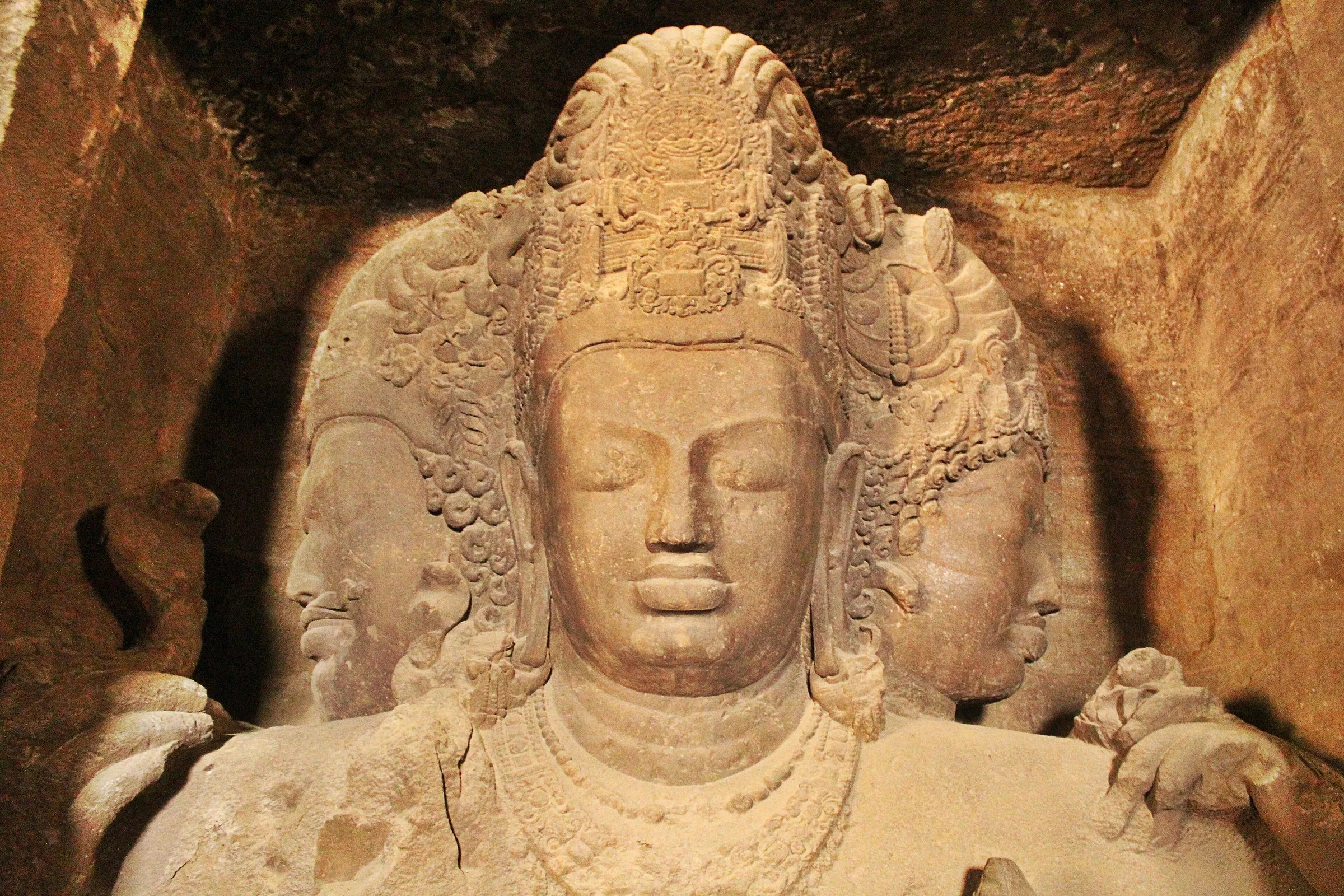 2
Rock-cut temples on an island in the harbor, dedicated mainly to Shiva and a UNESCO World Heritage Site since 1987. You get there by ferry from the Gateway of India.
View details for Elephanta Caves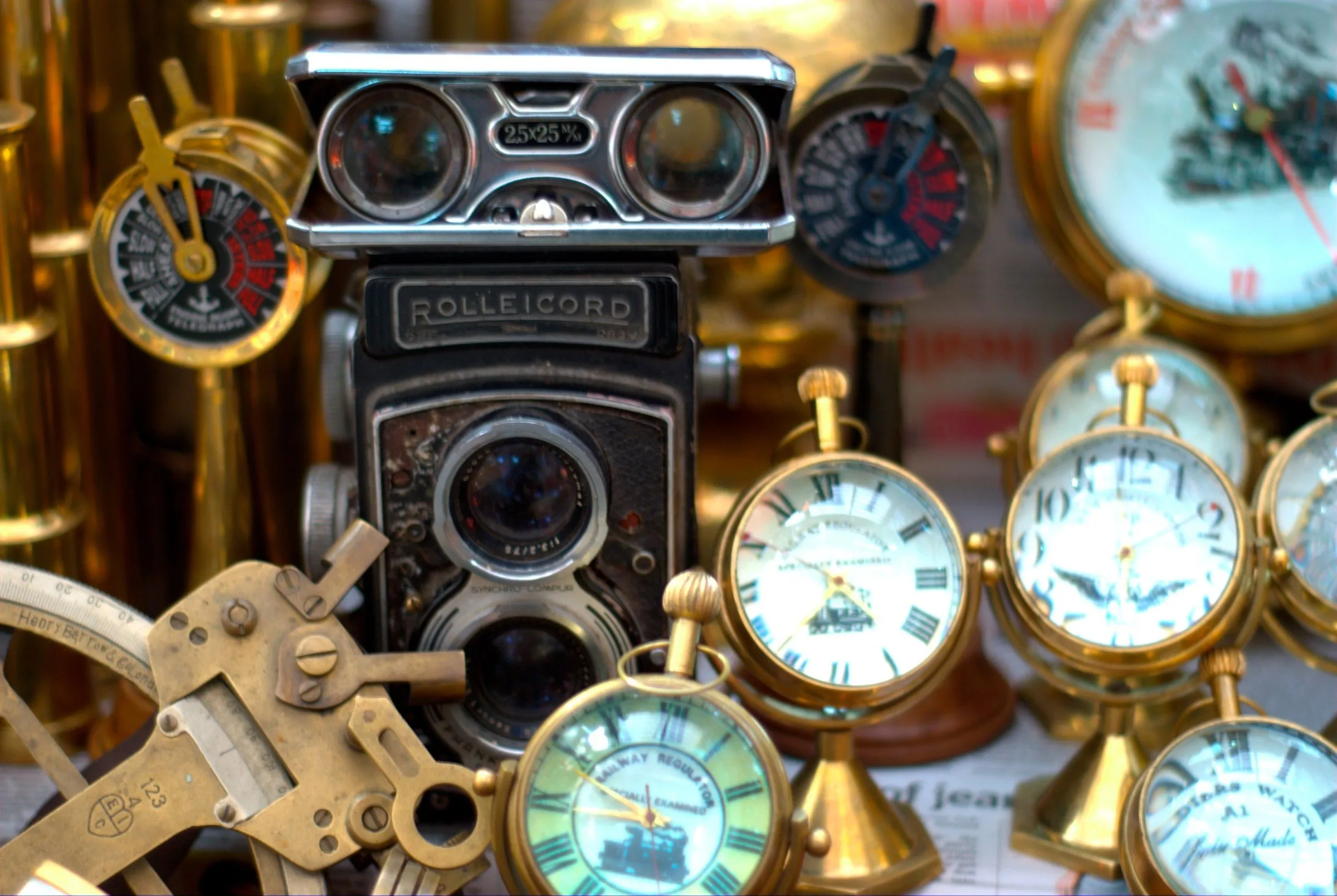 3
A shopping avenue opened in 1838 to link Colaba with the rest of the city, with street vendors on the sidewalks, books, clothes, costume jewelry and cafés founded in the 19th century.
View details for Colaba Causeway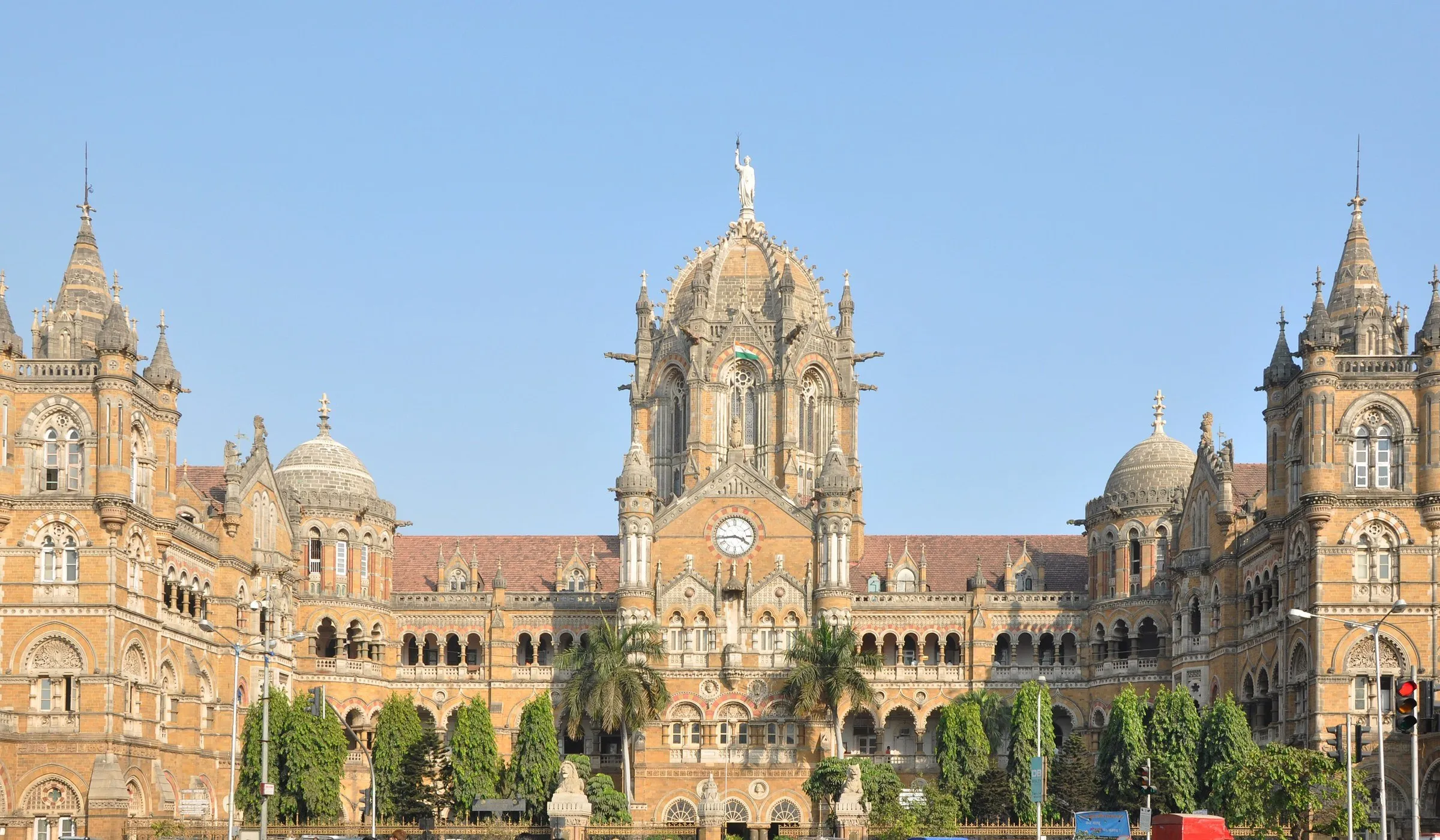 4
The former Victoria Terminus, a Victorian Gothic railway station with Indian influences, designed by F. W. Stevens, completed in 1887 and a World Heritage Site since 2004.
View details for Chhatrapati Shivaji Maharaj Terminus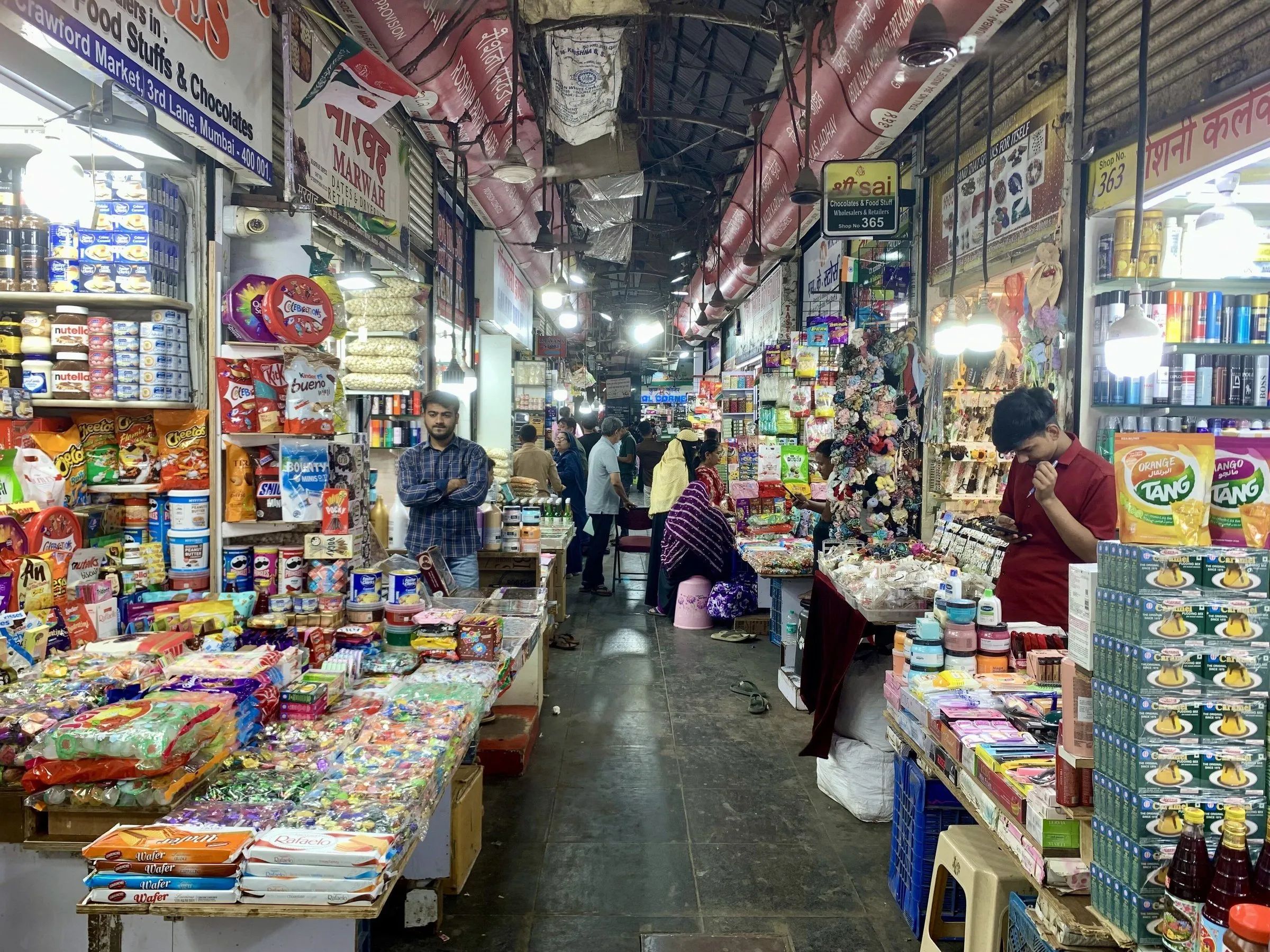 5
A municipal market from 1869, now officially Mahatma Jyotiba Phule Mandai, with fruit, vegetables, clothes and toys beneath panels carved by Rudyard Kipling's father.
View details for Crawford Market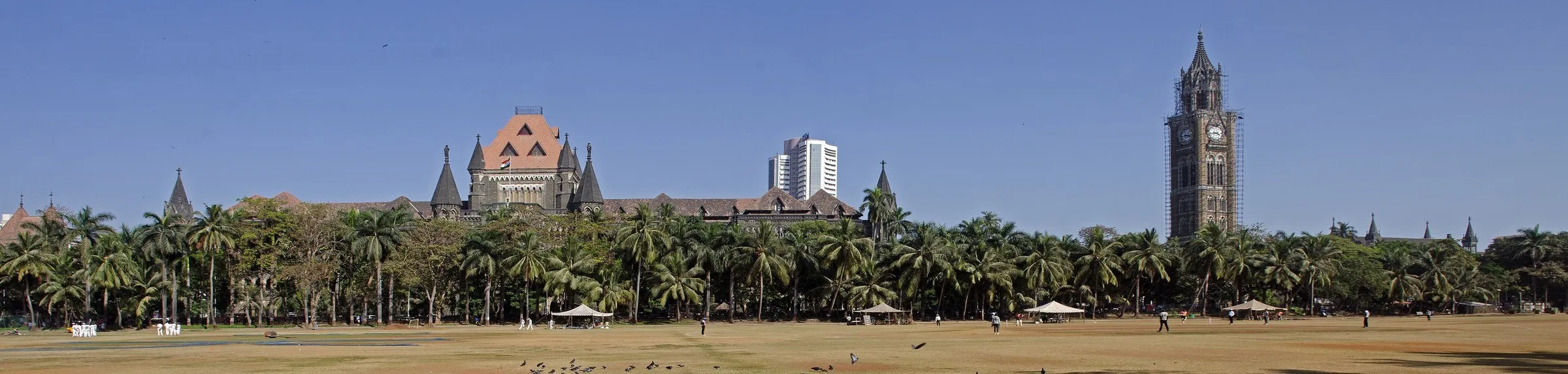 6
A green in the heart of the Fort with Victorian Gothic buildings on one side and Art Deco on the other: the ensemble that became a UNESCO World Heritage Site in 2018.
View details for Oval Maidan and the Victorian and Art Deco ensemble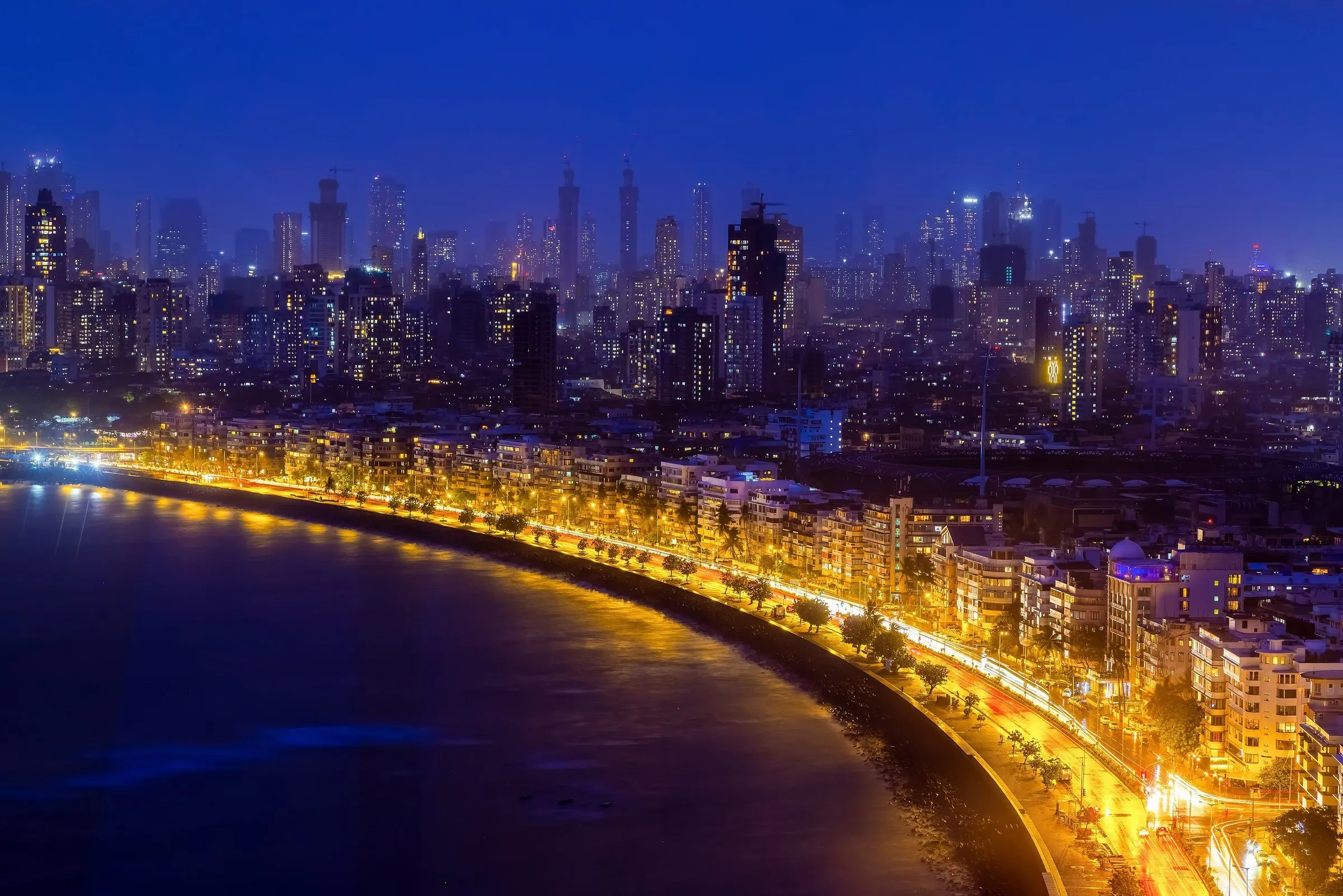 7
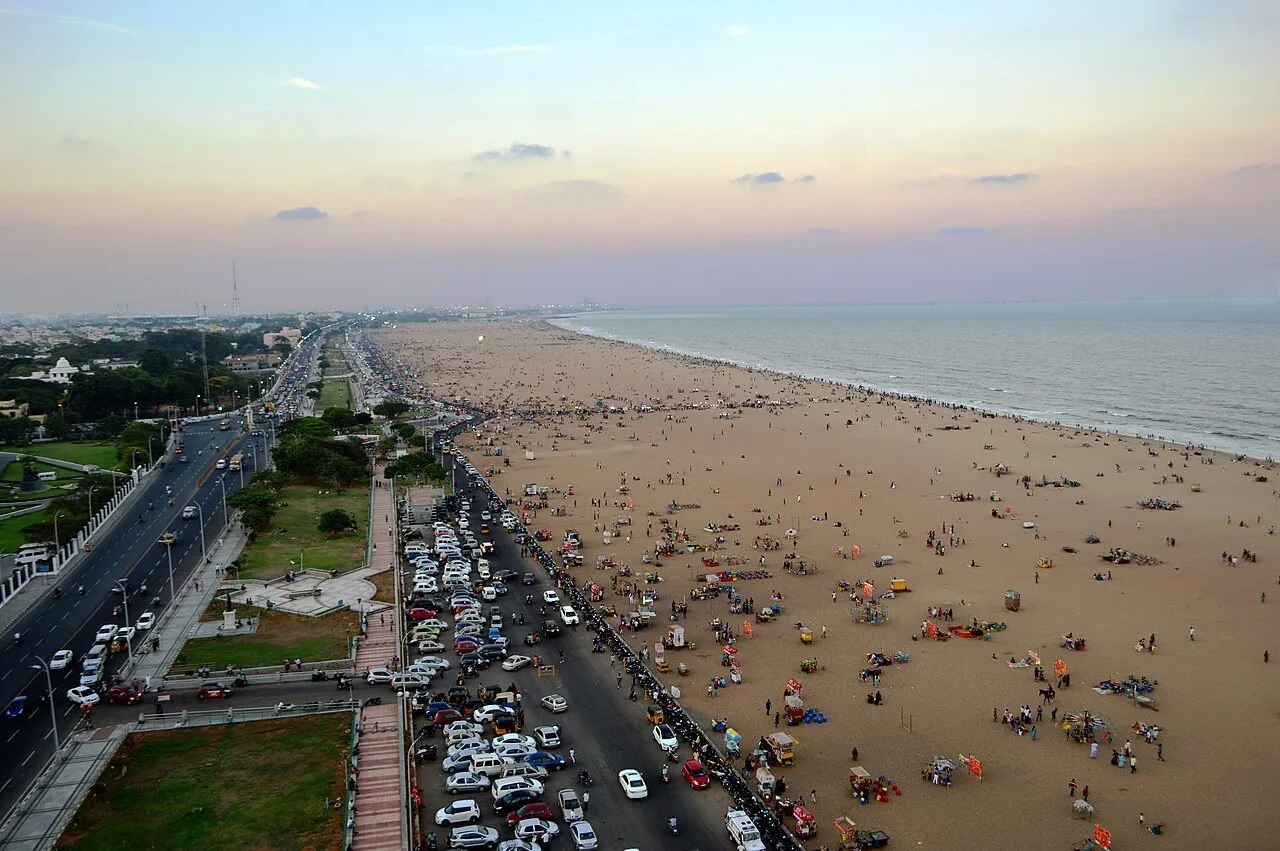
A curving promenade of about 3 km along Back Bay, from Nariman Point to Girgaon Chowpatty beach, famous for its sunset and for lights that look like a necklace.
View details for Marine Drive and Girgaon Chowpatty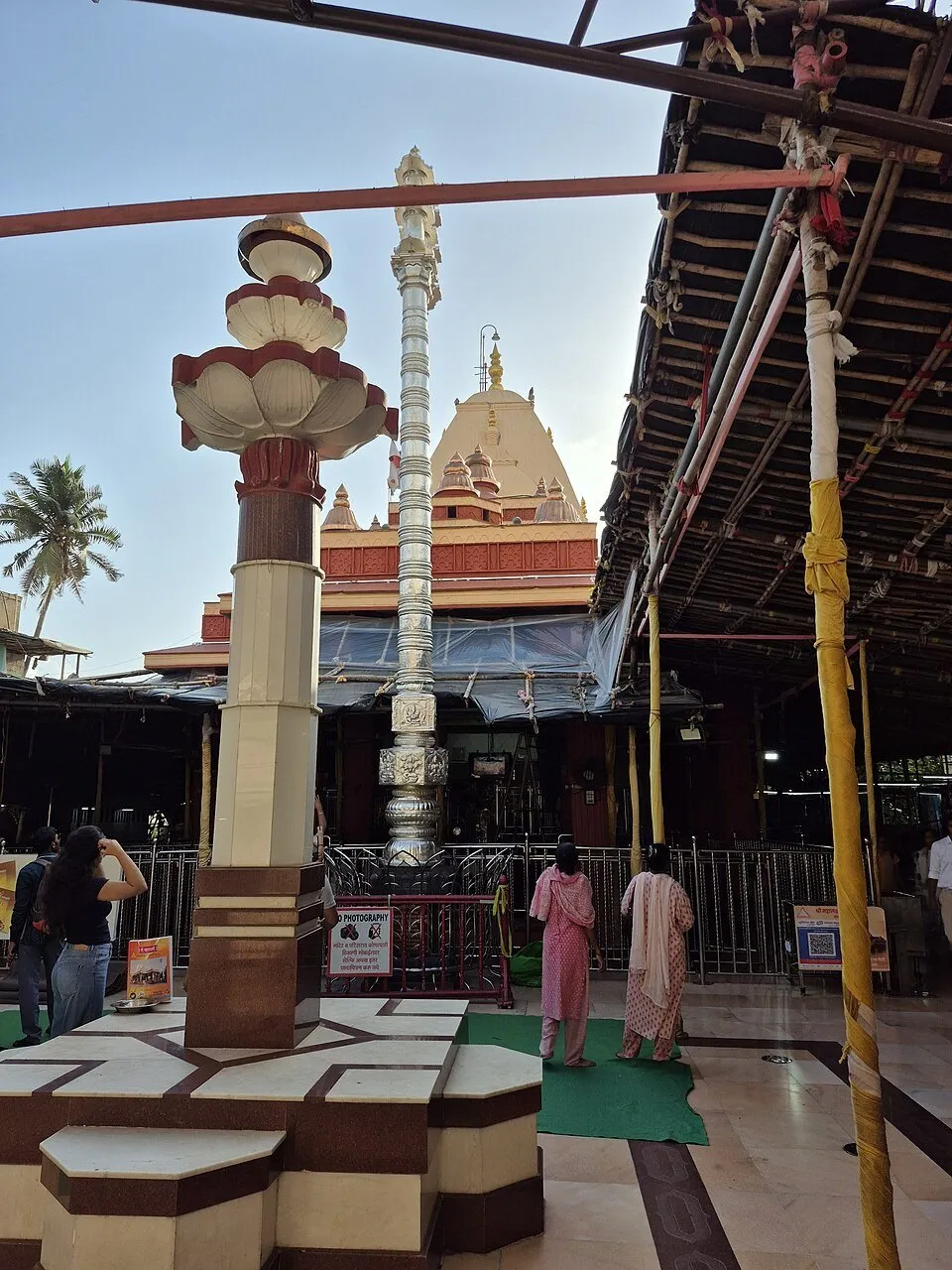 8
A Hindu temple from 1831 dedicated to the goddess Mahalakshmi, alongside Mahakali and Mahasaraswati, by the sea in south Mumbai and the setting for festivals such as Navratri and Diwali.
View details for Mahalaxmi Temple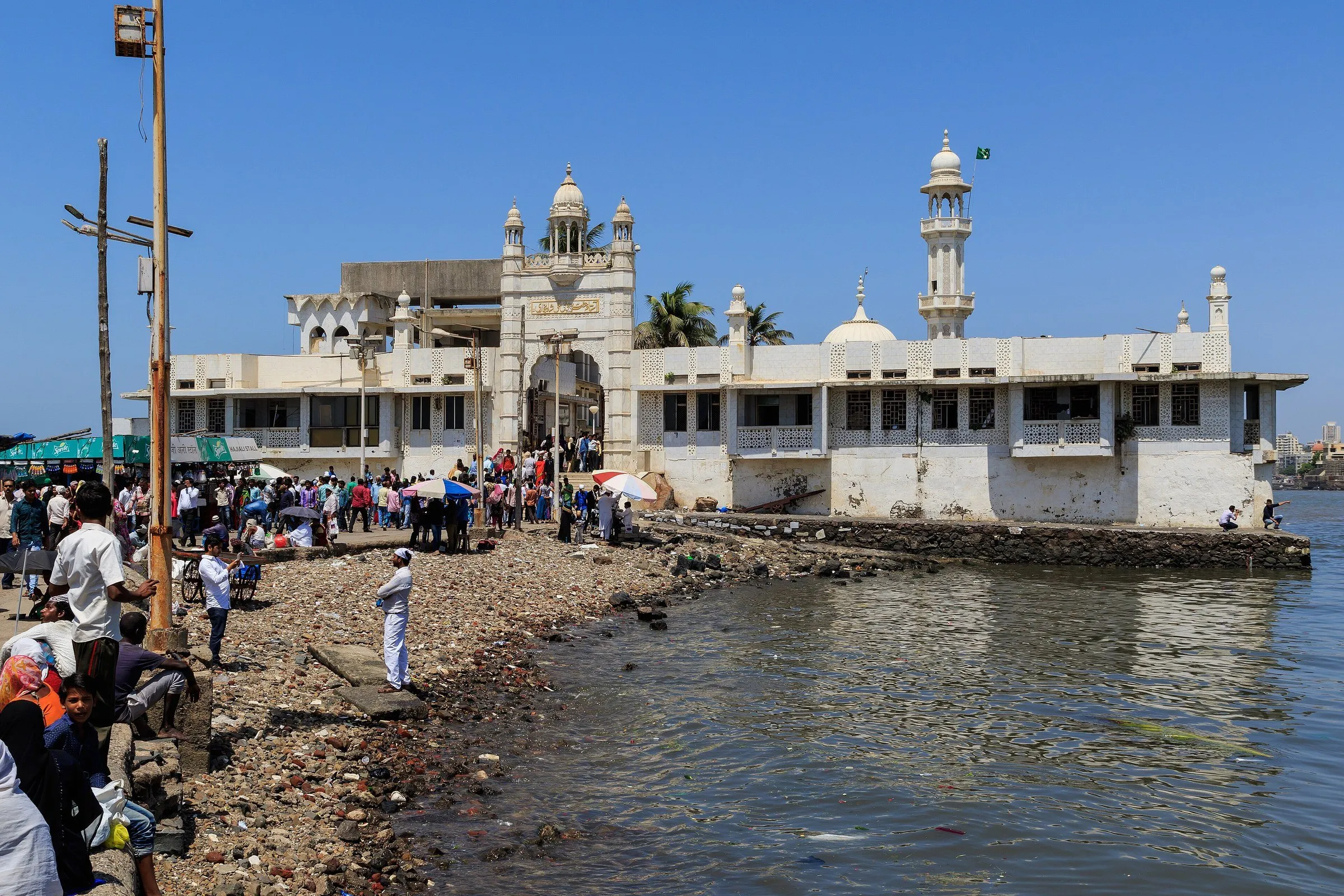 9
A Sufi shrine from 1431 on a small islet off Worli, linked to the shore by a narrow causeway of almost 1 km that is only passable at low tide.
View details for Haji Ali Dargah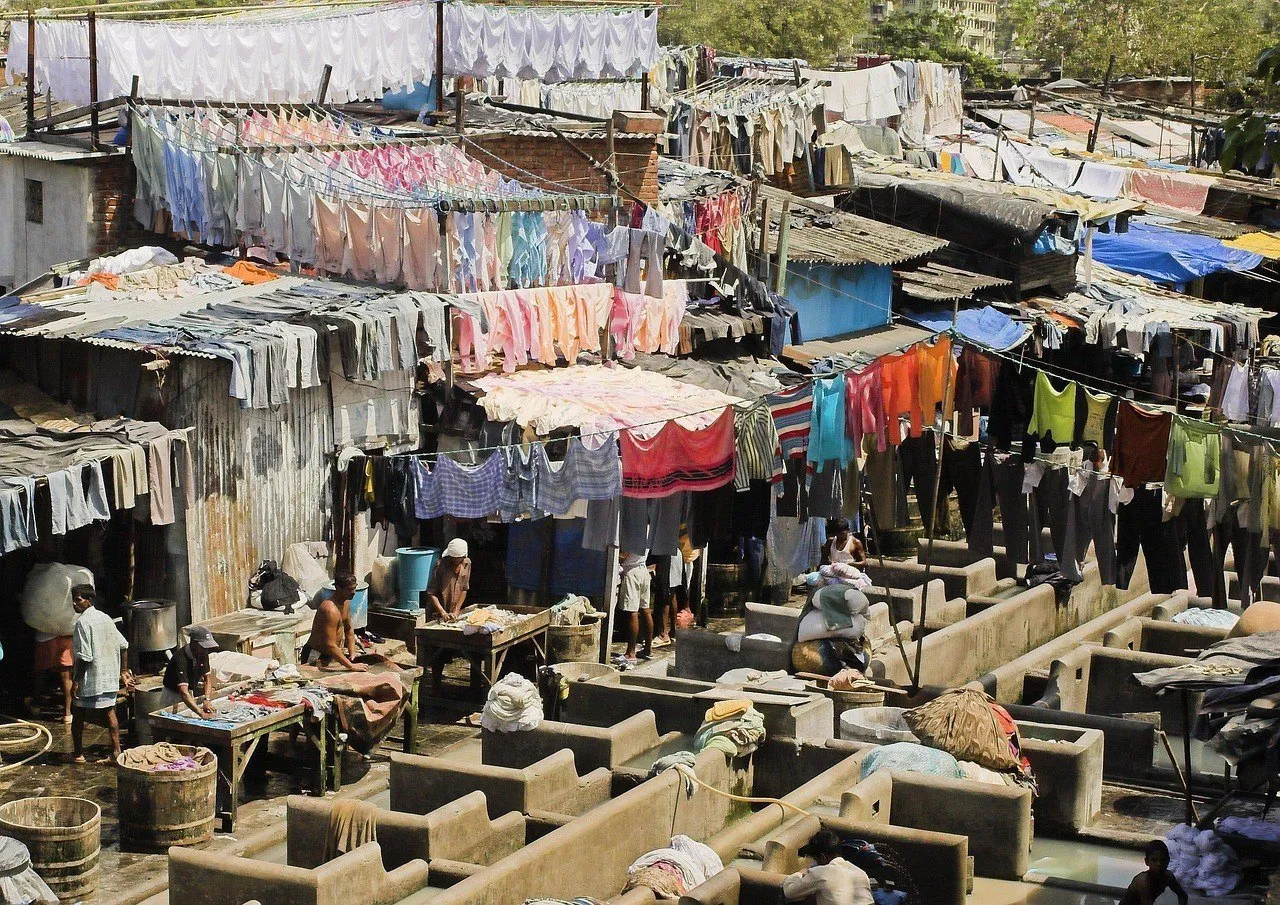 10
An open-air laundry that has operated since 1890 next to Mahalaxmi station, with rows of concrete tanks where thousands of people wash clothes by hand.
View details for Dhobi Ghat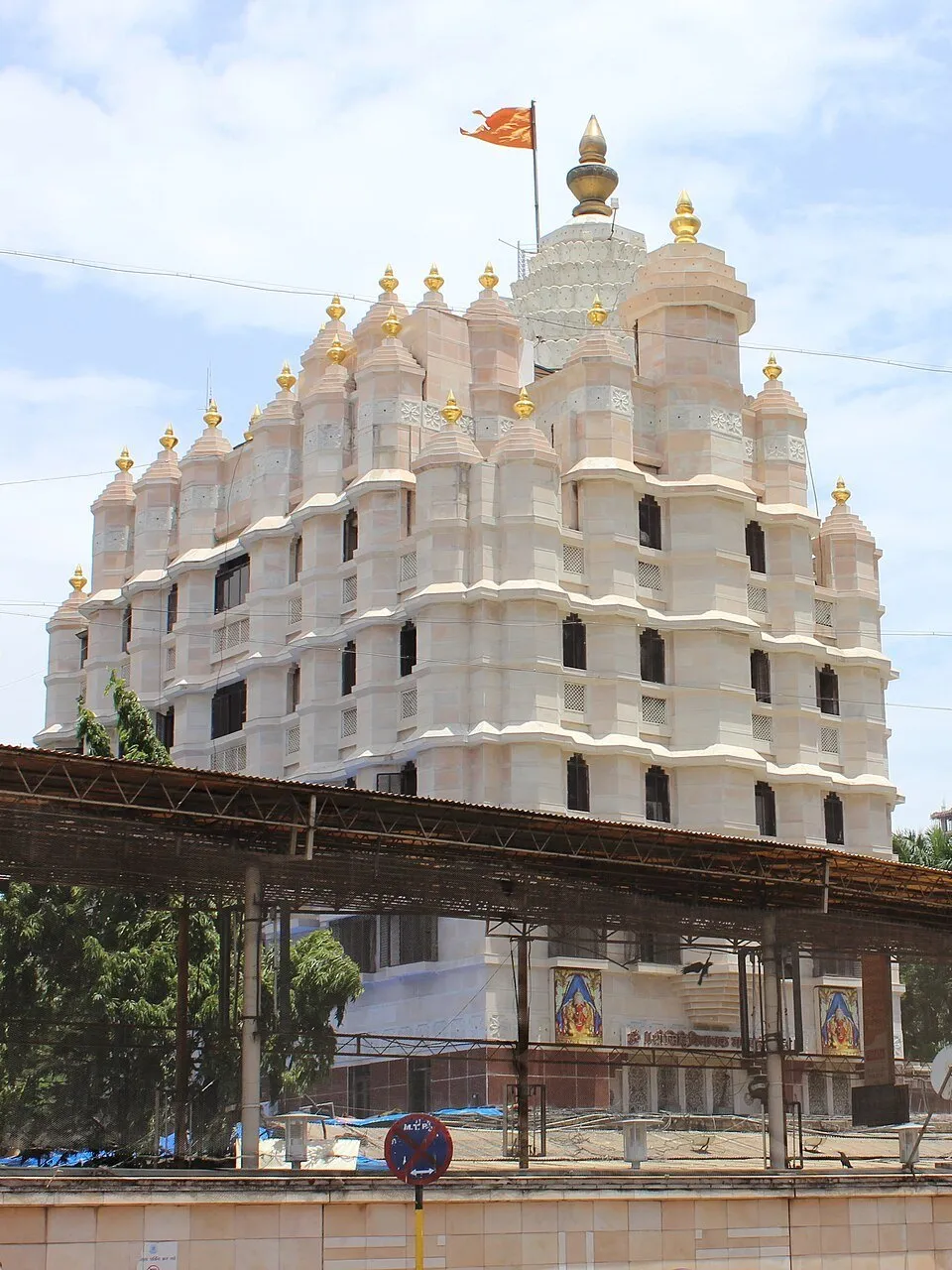 11
A temple dedicated to Ganesha in Prabhadevi, consecrated in 1801, with carved wooden doors and one of the most sought-after Hindu sites in Mumbai.
View details for Siddhivinayak Temple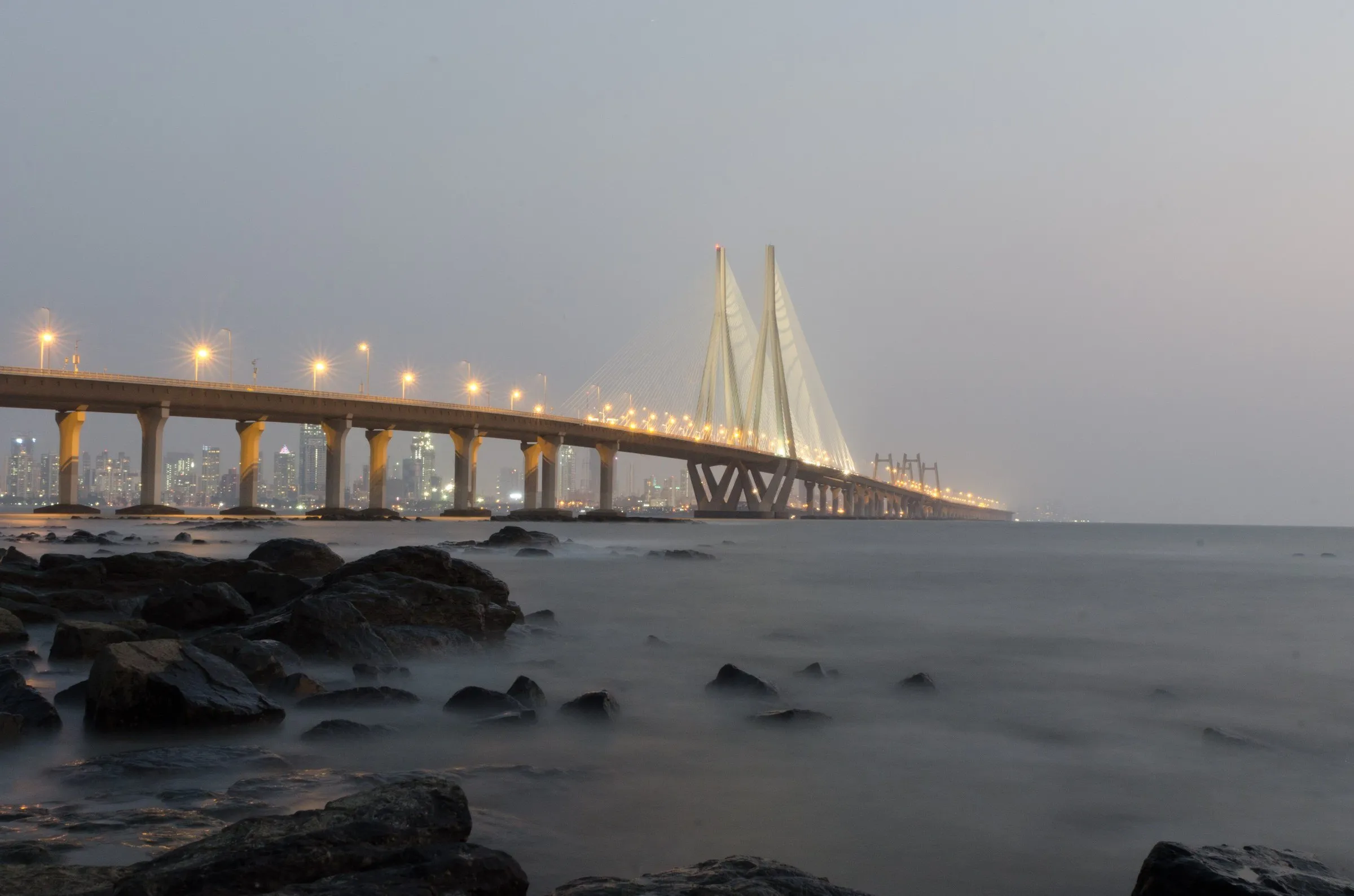 12
A 1.2 km seaside promenade in Bandra that ends at Castella de Aguada, the watchtower the Portuguese built in 1640 over Mahim Bay.
View details for Bandstand and Bandra Fort1Facing the harbor, with the Taj Mahal Palace hotel across the square, the arch marks the spot where George V and Queen Mary landed in 1911, the first visit to India by a British monarch. The foundation stone was laid in 1913, George Wittet's design blended the Indo-Saracenic style with details from Gujarati architecture, and the work was only finished in 1924: 26 meters of basalt and concrete.
History added an irony to the monument: in February 1948, the last British troops left independent India by marching through it. In front, a statue of the Maratha warrior Shivaji has stood since 1961 where a statue of George V once did. And the boats to Elephanta leave from the piers next door.
2The crossing, about an hour long, is already part of the outing: the Gateway fades behind you while the island, which locals call Gharapuri, the city of caves, grows on the horizon. From the pier, a little tourist train helps at the start, but reaching the Great Cave means tackling some 120 steep steps.
Inside, the rock-cut hall is dedicated mainly to Shiva, and the star is the Sadashiva, a three-faced bust more than 5 meters tall. Most scholars date the complex to between the 5th and 7th centuries. There are five Hindu caves on the western hill and two Buddhist ones on the eastern hill, where there are mounds of much older stupas, from around the 2nd century BCE.
3Until the end of the 1830s, Colaba could only be reached at low tide. The Causeway, completed in 1838 by the East India Company, solved the problem and became a shopping street; its official name today is Shahid Bhagat Singh Road. On the sidewalks, vendors offer shawls, rugs, sandals, handicrafts and small antiques, and the shops sell everything from electronics to cosmetics, plus a bookstall on the pavement.
Two cafés show how old the street is: Leopold and Mondegar, both opened by Iranian immigrants in 1871, still serve anyone who needs a break between one stall and the next. Nearby are the Regal Cinema, the National Gallery of Modern Art and the Chhatrapati Shivaji Maharaj Museum.
4You can spend a good while gazing at the facade and forget that this is a fully working railway station, headquarters of the Central Railway, with 18 platforms. Frederick William Stevens began construction in 1878 and finished it in 1887, the year of Queen Victoria's Golden Jubilee, which gave the building its first name. The mix of Victorian Gothic Revival with themes from traditional Indian architecture earned it World Heritage status in 2004.
Look up: the ribbed octagonal dome was raised without centering, a novelty for its time, and ends in the statue of Progress. The station became Chhatrapati Shivaji Terminus in 1996 and gained Maharaj in its name in 2017. Since 2022, the facade's LED lighting changes theme on holidays and special dates.
5The building of pale, reddish stone was finished in 1869, designed by William Emerson, and carried the name of Arthur Crawford, the city's first municipal commissioner. Its official name today honors the social reformer Jotirao Phule, but the old nickname holds on. At the entrance, look for the panels showing workers, carved by John Lockwood Kipling, father of the writer Rudyard Kipling.
In 1882, this was the first building in India lit by electricity. The wholesale fruit trade moved to Navi Mumbai in 1996, but the market did not empty out: fruit, vegetables, clothes, fabrics, costume jewelry and toys share the aisles, under a 15-meter skylight. There is also a section with live animals, which you can skip without guilt.
6Stop in the middle of the Oval Maidan and turn slowly on the spot. To the east are the 19th-century Gothic public buildings: the Bombay High Court, the Fort campus of the University of Mumbai and the Rajabai Clock Tower. To the west, on the reclaimed strip of Back Bay, the Art Deco residential buildings and the Eros cinema answer back with curved lines, friezes and pale colors.
In 2018, UNESCO recognized both sides as a single ensemble, with 94 protected buildings. In a single glance, you see the imperial Bombay of the courts and the metropolis that was growing on the landfill, among cinemas and apartment blocks. And it's worth knowing that Mumbai has the second-largest collection of Art Deco buildings in the world, behind only Miami.
7The six-lane avenue runs over reclaimed land, and the promenade of about 3 kilometers follows the curve of the bay from Nariman Point in the south to Girgaon Chowpatty, at the foot of Malabar Hill. The low wall facing the sea is the most contested bench in the city in the late afternoon. When it gets dark, the streetlights form an arc that, seen from above, looks like a string of pearls: hence the Queen's Necklace.
On the landward side, notice the Art Deco buildings put up by wealthy Parsi families, such as Kapur Mahal, Zaver Mahal and Keval Mahal, from the late 1930s. At the northern end, Chowpatty beach is bhel puri and kulfi territory, the right way to end the day with your feet in the sand and something in your hands.
8It was a Hindu merchant, Dhakji Dadaji, who had the temple built in 1831, on Bhulabhai Desai Road, in the same neighborhood where the walkway to Haji Ali starts. The honored deity is Mahalakshmi, the central goddess of the Devi Mahatmya text, and in the shrine she appears alongside Mahakali and Mahasaraswati, the three goddesses of the Tridevi.
It is a temple of daily worship, and a visit follows the rhythm of the faithful: take off your shoes before going in, wear clothes that cover shoulders and knees and take the queue without hurry. Lakshmi puja, Navratri, Diwali and Gudi Padwa are among the most celebrated dates, and on those days the crowds grow considerably.
9The walk is half of the visit: a narrow causeway almost a kilometer long, with no railings, leaves the Mahalaxmi area and crosses the sea to the islet. At high tide it is submerged, so the tide table sets the schedule. At the end of the path is the tomb of Pir Haji Ali Shah Bukhari, a Sufi saint of the Chishti order and a former merchant from Bukhara, in present-day Uzbekistan.
The dargah, from 1431, is an example of Indo-Islamic architecture, with marble columns decorated with mirrors and the 99 names of Allah in Arabic patterns. There are separate prayer rooms for men and women. To go in, take off your shoes, dress modestly and bring a scarf: women are generally expected to cover their heads.
10Rows and rows of concrete tanks, each with its own flogging stone, and clotheslines as far as the eye can see. The Dhobi Ghat has operated since 1890 next to Mahalaxmi station on the Western Railway line, and it is described as the largest open-air laundry in the world. More than 7,000 people work there in shifts of 18 to 20 hours, and about 200 families live on site.
More than 100,000 items pass through the tanks every day, arriving from neighborhood laundries, mid-sized hotels, caterers and garment makers, collected from Colaba all the way to Virar. Remember that it is a place of work and home, not a backdrop: watch from outside, don't get in the way of people carrying bundles and ask permission before photographing anyone up close.
11The temple was consecrated on November 19, 1801, at the initiative of Laxman Vithu and Deubai Patil, and is dedicated to Siddhi Vinayak, the Ganesha who grants wishes. It became one of the city's most popular Hindu temples, and the trust that runs it is the richest among Mumbai's temples, sustained by donations from devotees.
In the sanctum, the wooden doors and columns carry carvings of the Ashtavinayaka, the eight manifestations of Ganesha worshiped in Maharashtra, and the inner ceiling is covered in gold. Since 2025, the temple trust has asked for clothing that covers the body: short skirts, ripped pants and garments that leave parts of the body exposed are not allowed in. At night, the outer dome is lit with colored lights.
12In Bandra, the sea breaks close to the 1.2-kilometer promenade where the neighborhood jogs, strolls and sits to watch the day end. On Sundays, Artist's Court usually hosts music sessions open to anyone passing by, and the amphitheater at Land's End hosts events like Celebrate Bandra. On the horizon, the cable-stayed Bandra-Worli Sea Link connects the neighborhood to Worli over the water.
At the end of the road, next to the Taj Land's End hotel, stands Castella de Aguada, Bandra Fort: a watchtower the Portuguese built in 1640, keeping an eye on Mahim Bay and the Arabian Sea. The stones have served as a backdrop for Bollywood films such as Dil Chahta Hai.
Many nationalities can apply for the e-Tourist Visa on India's official portal, with 30-day, 1-year and 5-year versions, and Mumbai is one of the accepted airports of entry. Check on the portal whether your nationality is eligible. The application can be made from 120 days up to at least 4 days before arrival, and the passport needs 6 months of validity and two blank pages. Travel with the authorization printed out and the status GRANTED.
India requires a yellow fever vaccination certificate, from 9 months of age, from travelers arriving from countries with a risk of transmission; check whether the countries you travel from are on that list. Without the document, a traveler may be isolated for up to 6 days. The CDC also recommends hepatitis A and typhoid vaccines and notes malaria transmission in Mumbai: book a consultation before the trip.
From June to September the rain is heavy, peaking in July, and the city receives about 2,200 mm a year. Avoid walking through floodwater because of the risk of leptospirosis, and use repellent: dengue and chikungunya circulate in the country.
Besides Chhatrapati Shivaji Maharaj (BOM), the region has the new Navi Mumbai airport (NMI), which began operating commercial flights in December 2025. Check the code on your ticket before calling a car.
In temples and at Haji Ali, take off your shoes, cover shoulders and knees and bring a scarf for your head. At Siddhivinayak, the dress code has applied since 2025 and bars short skirts and ripped pants.
Choose busy stalls, where the food comes hot off the griddle, drink sealed water and wash your hands before eating, or use hand sanitizer: the CDC warns about food- and waterborne diseases.
Mumbai eats on its feet, on the sidewalk, between one train and the next. Vada pav became famous for being cheap enough for textile mill workers, and today the city has more than 20,000 stalls selling it; pav bhaji was born as a quick lunch for those same workers. On the waterfront, Chowpatty and Juhu are the places for bhel puri and kulfi, in Dadar the thing to order is Marathi cooking, with misal pav and thalipeeth, and Mohammed Ali Road and the streets around Crawford Market have more street food. For a sit-down meal, the Colaba cafés founded by Iranians in the 19th century are still open.
A spiced potato fritter, coated in chickpea-flour batter and fried, tucked in a small bun, with garlic and coconut chutney and a green chili on the side. Its nickname is the Bombay burger.
Mashed vegetables in a thick sauce, with potato, peas, bell pepper and tomato, cooked on the griddle with plenty of butter and served with bread toasted on the same griddle.
The classic snack of Chowpatty beach, put together on the spot by waterfront vendors and eaten right there, facing the sea.
We use cookies and similar technologies, such as Google Analytics, in accordance with our Privacy Policy and, by continuing to browse, you agree to these terms. You can decline at any time in the policy.